
1-805-484-2992
Quotes - Engineering - SalesThree cultured duties, three different exchangers
Cheese milk is still water-thin when it reaches the exchanger, so a multi-section plate frame carries the whole duty: regeneration, a hot-water heater to 161°F for 15 seconds or a lower thermization step, and a trim section that stops at set temperature instead of at a cold-storage figure. The vat, not the cold room, decides the outlet.
Cheddar rooms usually set near 88°F, while mozzarella runs higher. A frame sized around one variety's set point can come up short when the make schedule changes, so we ask for the full range of set temperatures at quote time and size the heater and trim section for both ends.
Yogurt base is heated to 185–195°F and held for several minutes so the whey proteins unfold and later give the gel its body. That step still runs on plate, because the base is smooth and unbroken.
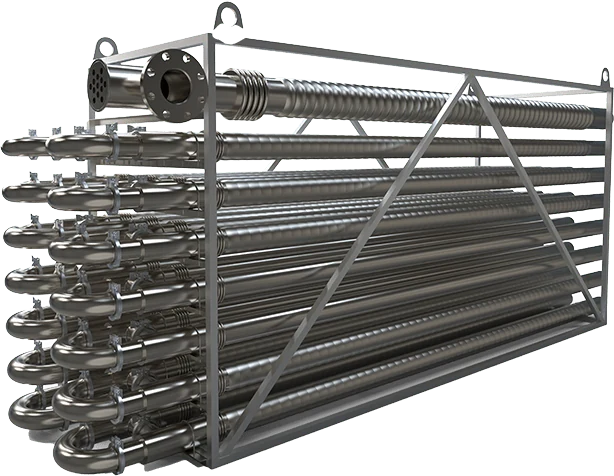
The difficult duty comes after incubation, when the set gel is broken and has to be cooled without losing viscosity. That cooling belongs in corrugated or smooth tube-in-tube, sized for low wall shear and a modest pressure drop.
Sour cream combines two awkward properties: milkfat of 18 percent or more, which swells EPDM gaskets, and a cultured body that thickens sharply as it cools. Pasteurizing and cooling to culture temperature run on a plate frame fitted with NBR.
Cup-set sour cream is chilled in a cooling room. A tank-cultured product is broken, pumped and cooled before filling, and that is where a tubular cooler takes over from the plate.
Cottage cheese puts three streams through exchangers: skim milk pasteurized to a warm vat outlet, curd wash water chilled to the high 30s, and cream dressing pasteurized and cooled to 40°F or lower.
The dressing is the thick one, so it runs on a wide-gap channel or a tube rather than a standard plate pack.
The mix is thin and runs on a plate. After culturing, the curd is a weak gel heated to about 171–180°F ahead of the separator, which is a job for corrugated or multi-tube units.
Cold-pack cream cheese is cooled before filling, where a scraped-surface exchanger keeps the wall clean as the product sets.
A yogurt base is taken to 185–195°F and held 5 to 10 minutes, far past milk pasteurization, because the heat builds the gel. The base is richer than milk and leaves the frame warm, at incubation temperature, so the heater carries more of the duty and regeneration tops out early.
The frame that heats the base also cools it to the culture's temperature, batch after batch.
The cheese and cultured side of a dairy handles milk twice: once as a liquid that behaves like water, and once as a gel or curd that does not. The exchanger choice follows that change. Before the culture goes in, or before the coagulum is broken, a gasketed plate frame does the heating and cooling at a close approach. After the break the product needs wide, smooth tubular passages that move it without tearing the body apart.
Three checks before choosing plate or tube on a cultured line
- Has the curd or gel been broken before this exchanger
- Does the stream carry fruit, fines or curd pieces
- Is the fat high enough that gaskets need NBR instead of EPDM
Which construction each cultured stream takes
Each row follows one stream through the plant. The construction changes at the point where the product stops behaving like milk.
| CULTURED STREAM | CONSTRUCTION | WHY |
| Cheese milk, pasteurize and trim to set | Gasketed plate, multi-section frame | Water-like milk, so regeneration and a close approach pay off in a compact frame |
| Yogurt base, heat before the hold | Gasketed plate with regeneration | Base is unbroken; plates reach 185–195°F efficiently while a tube or vessel carries the hold |
| Stirred yogurt after the break | Corrugated tube-in-tube | Low shear keeps viscosity; no gasket edges or contact points to tear the gel |
| Cultured product carrying fruit or pieces | Single-tube | An open bore passes pieces up to about 1 in without packing or bridging |
| Tank-cultured sour cream | Corrugated tube-in-tube, larger bore | Heavy, high-fat body; a larger bore holds pressure drop down at low velocity |
What changes between the make room and the cultured room
A plant may run cheese milk at dawn and yogurt base by noon through seperate frames that share one utility loop. Four details decide whether those exchangers stay on spec through a full production day, and they are not the details that govern a bottling pasteurizer.
Set temperature control
Cheese milk leaves the trim section at coagulation temperature, not cold. Tempered or tower water on that section holds 86–95°F without overshoot, and the controller trims the water side so product flow through the holding tube never changes.
Culture and phage control
- Self-draining product side so no film sits between runs
- Tri-clamp fittings that open for inspection
- 32 Ra product contact, 20 Ra where QA writes it in
- Cultured and uncultured product kept in separate units
Shear after the break
Every bend, reducer and tight channel after the break costs viscosity. Tubular coolers for broken gel are sized at low velocity, with long-radius return bends and the fewest passes that still reach temperature. A plate pack would need a channel too tight to keep the body intact.
Gaskets and fat
Cheese milk and most yogurt base sit at fat levels EPDM handles. Cream-based sour cream pushes toward NBR or HNBR, which must also survive the hot caustic and acid of the CIP cycle. Give us the fat range and the cleaning chemistry together.
What fermented-product plants ask
It can if every section is sized for the harder of the two duties, which is usually the yogurt base at 185–195°F with a hold of several minutes. The outlet then has to swing between set temperature and incubation temperature. Most plants find two frames easier to schedule, clean and validate, especially when cheese milk runs around the clock.
They can, if the set is sized for both heaters running at once. Yogurt base needs water above 195°F, while a cheese milk heater wants water only 2–5°F above 161°F, so each frame needs its own control loop off the shared supply. One loop run at the yogurt temperature would push the cheese milk heater wall far hotter than it needs and shorten its run.
Double wall answers a raw-to-pasteurized leak path, and that path exists only in a milk-to-milk regenerator. A cheese milk or yogurt base frame with regeneration falls under the same pressure-differential rule as a bottling unit. After the break there is no raw product on either side, so a tubular cooler on cultured gel does not need double wall for that reason.
Many plants take broken yogurt to about 40–45°F in one stage. Where texture matters more than throughput, the product is cooled first to 60–75°F, filled, and finished in the cold room so the gel firms back up in the cup. The two-stage route needs a shorter exchanger but asks more of the cooling room.
Related
Dairy Solutions
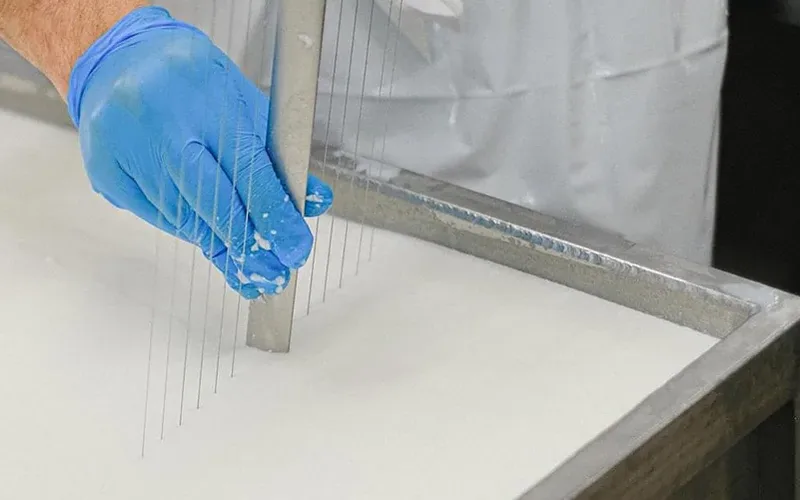
Cheese Milk
Cheese milk heat exchanger for pasteurizing or thermizing, then trimming the milk to vat set temperature. Plate frame sizing, regeneration and outlet control.
+ Learn More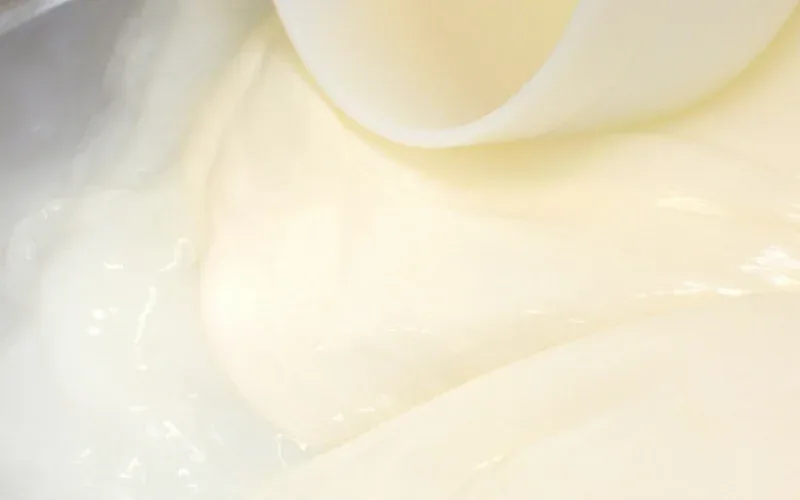
Dairy Solutions
Yogurt & Cultured Product
Tube in tube yogurt cooling after the break, plus plate heating of the milk base to 185–195°F and cooling to incubation temperature.
+ Learn More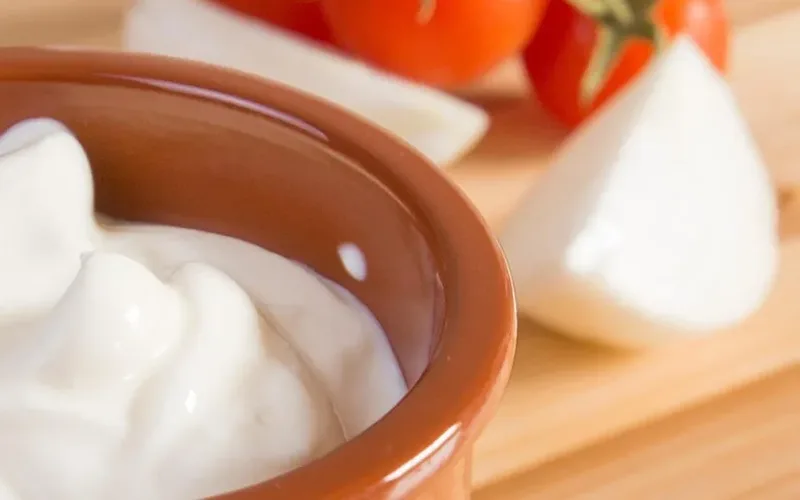
Dairy Solutions
Sour Cream
Sour cream processing heat exchangers: NBR-gasketed plate to pasteurize the cream and reach culture temperature, tubular cooling once it has cultured.
+ Learn More