
1-805-484-2992
Quotes - Engineering - SalesThe steel can match; the verification does not
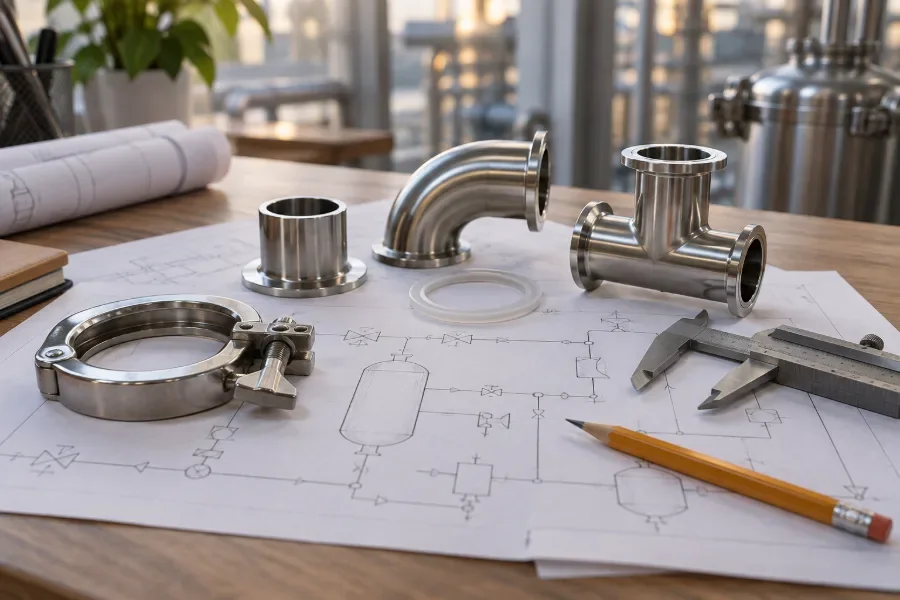
Food-grade is not a standard. In practice it means product-contact materials that comply with FDA rules, a sanitary finish, sanitary connections and a design that cleans and drains. Our food-grade dairy units are built that way, in 316L at 32 Ra with tri-clamp ends, and in steel and finish they can be hard to tell apart from a 3-A unit.
What 3-A adds is a published standard, an evaluation of the design against it by a Certified Conformance Evaluator under the Third Party Verification program, and the symbol on the nameplate as evidence of both. For a regulatory inspector walking a Grade A plant, that symbol replaces a discussion about every gasket groove and every weld.
So the question is less about construction than about who will inspect the unit and what they will accept. That turns on the plant's grade, the stream the exchanger sits on, and the customer specifications the plant sells against. The final answer belongs to your inspector and your QA manager. This page is meant to help you put the right question to them before an order is placed, not after the unit arrives.
Three answers that settle 3-A or food-grade
- Is the plant listed as Grade A under the PMO
- Is the unit part of the pasteurizing system
- Does a customer contract name the 3-A symbol
Where each one usually lands
These are tendencies, not rules. State programs differ, and a customer specification can override everything in the right-hand column, so treat this as a starting point for the conversation with your inspector.
Symbol usually expected
- Grade A HTST: Regenerator, heater and cooler sections
- Raw milk receiving: Coolers ahead of Grade A silos
- Cream and mix: Pasteurizer sections in a Grade A plant
- ESL and UHT: Heating and cooling on the regulated path
- Customer contracts: Retail or co-pack specs that name 3-A
Food-grade often accepted
- Pilot and R&D: Trial runs not sold as Grade A product
- Ingredient streams: Some whey and permeate duties outside Grade A
- Utility-only units: Hot-water sets that never touch product
- Manufacturing grade: Where the state program accepts it
Making the call before the order
Ask the inspector in writing
The surest route is a short note to the regulatory inspector who covers the plant: the duty, the construction, a general arrangement drawing and the question of whether a 3-A unit is expected. A written answer settles the specification and protects the project engineer when someone new asks the question again a year later.
The cost of guessing low
A food-grade unit that arrives at a Grade A plant whose inspector expects the symbol cannot be fixed by adding a nameplate. The mark comes only through an authorization covering that equipment. The usual outcome is a delay while the unit is replaced, and a temporary arrangement on the line in the meantime. That is a far larger cost than the difference between the two builds at quote stage.
The cost of guessing high
Asking for 3-A where it is not needed costs comparatively little. It narrows the choice of design slightly and adds documentation. It does not fix a sizing mistake: a 3-A plate frame on a cultured product that should have gone corrugated tube will still shear the curd. The symbol follows the construction choice; it never replaces it.
Replacement packs and the frame's status
When the existing frame is 3-A, buy new plates and gaskets that keep it that way. A cheaper pack that is food-grade only can leave the frame's status in doubt at the next inspection.
- Read the existing nameplate for the 3-A symbol
- Match alloy class, gap and port layout
- Keep compound records for every new gasket
When the symbol matters
No. The PMO accepts equipment built to the 3-A Sanitary Standards as meeting it's construction rules but does not require the symbol. In practice many Grade A inspectors treat 3-A conformance as the expected evidence that product-contact equipment is sanitary. How firmly that is applied varies by state, which is the reason to get the answer from the inspector who will walk your plant.
Often, yes. Manufacturing-grade plants answer to the state or federal program they are listed under, and many surveyors still look for 3-A on equipment in the pasteurizing system for cheese milk. Customers buying cheese or whey ingredients may also write it into their supplier specifications. Check both before settling on a food-grade cheese-milk heater.
Not ours. Our food-grade dairy units use the same 316L product side, the same 32 Ra finish, the same tri-clamp connections and the same FDA-compliant elastomers as a 3-A build. The difference is the third-party evaluation and the symbol, along with the drawing review and paperwork that come with them.
Not by adding a mark. The symbol can only be applied to equipment covered by an authorization, which follows a TPV evaluation of the design. If there is any chance the unit will move into a Grade A service or a customer will ask for the symbol, specify 3-A from the start. Changing course later almost always means a new unit.
Not when it never touches product. A hot-water set heats water that circulates on the utility side of the pasteurizer, so it is judged on its pressure rating, not on sanitary design. Where that set is a U-tube exchanger it is quoted through our sister site for U-tube units; the product-side dairy section stays here.
Related
Materials & Certifications
3-A Plate Exchangers
A 3-A plate heat exchanger is built to the 3-A 11 series, now 11-10. What the standard asks of plates, gaskets, ports and inspection access on dairy duty.
+ Learn More
Materials & Certifications
3-A Tubular Exchangers
A 3-A tubular heat exchanger is built to the 3-A 12 series, now 12-08. What it asks of tube bores, return bends, welds and drainage on dairy duty.
+ Learn More
Materials & Certifications
3-A Sanitary
3-A sanitary standards for dairy heat exchangers: the plate and tubular standards, the symbol and its third-party check, and what 3-A leaves to other rules.
+ Learn More