
1-805-484-2992
Quotes - Engineering - SalesWhere a tube earns its place over a plate
A plate channel 3–5 mm deep is the cheapest way to move heat into milk, and it is the wrong place for a strawberry piece, a ribbon of fruit pulp or a stirred yogurt that loses body every time it is squeezed. Tube-in-tube units give the product an open round bore with no gasket along the run, so pieces travel through whole, viscous product moves at low shear, and a pressure that would blow a gasket line becomes a wall-thickness calculation.
The trade is surface. A tubular unit carries less area per foot of floor than a plate frame and runs a wider approach, so we pick the tube type for the product first and then add length, never the other way around.
Product side
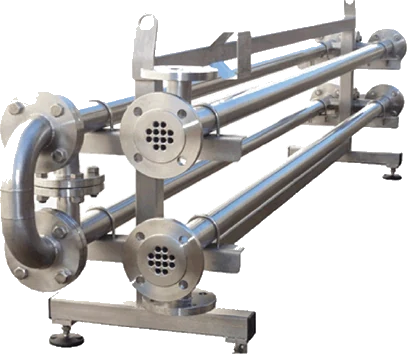
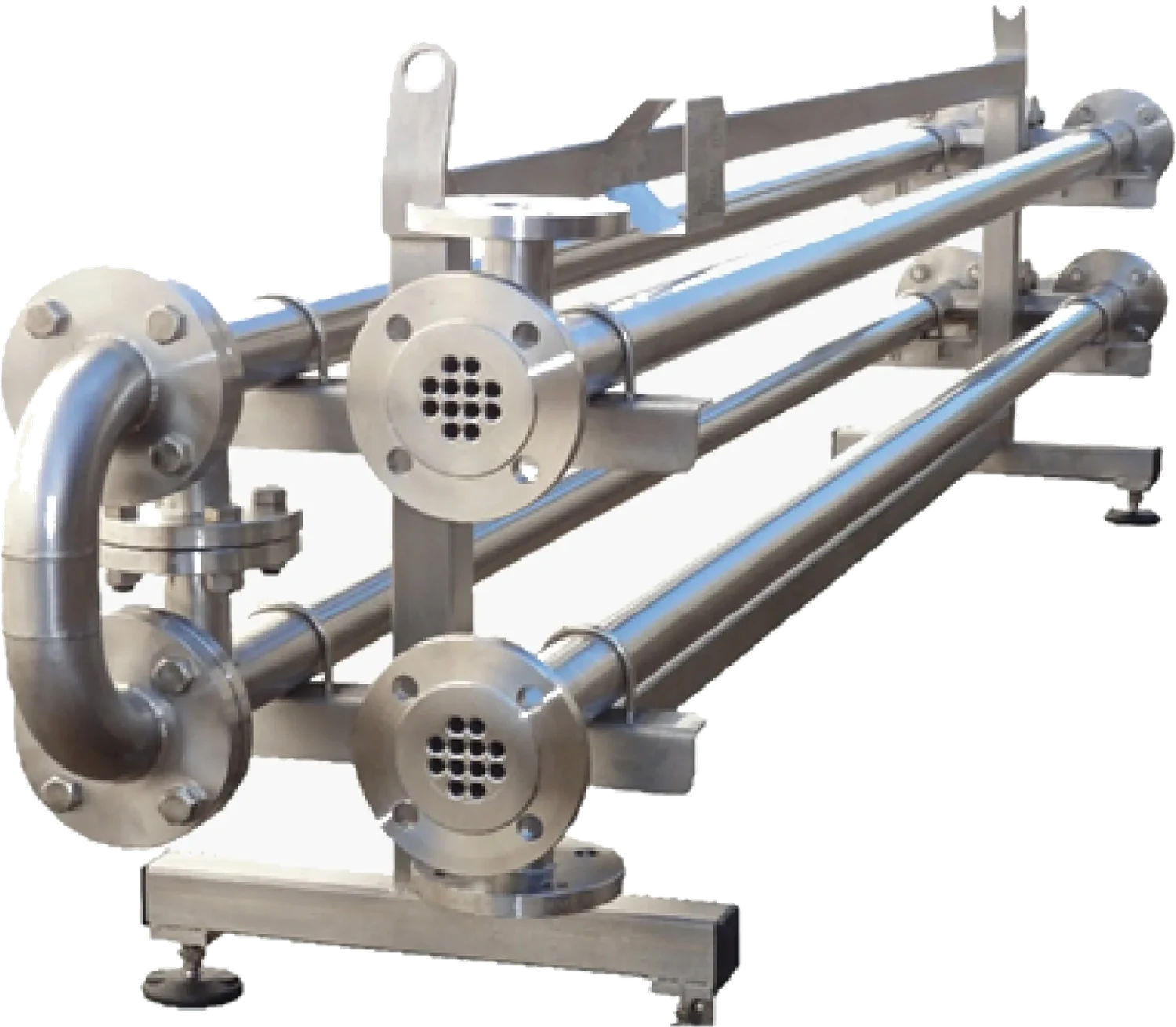
- 316L tube, 32 Ra bore, 20 Ra when the audit asks
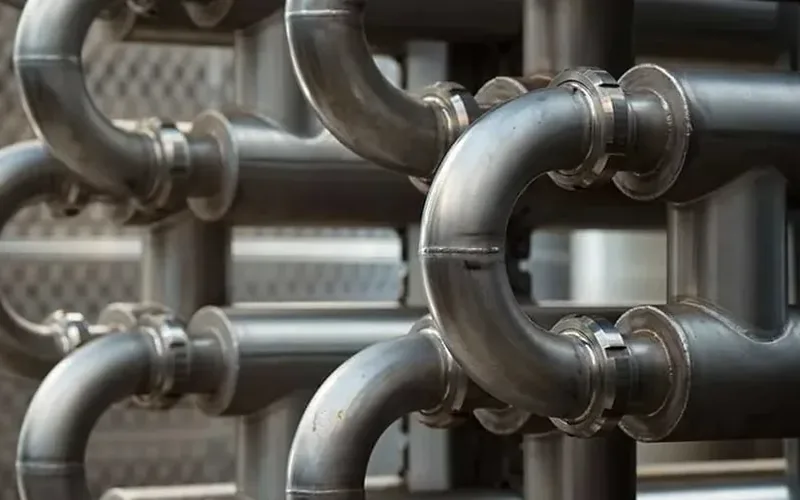
- Tri-clamp return bends and end connections
- Inner tube 1–4 in, set by piece size and viscosity
- Self-draining pitch on the whole product path
- Clamp gaskets only at joints, none along the run
Utility side
- Hot water, or plant steam through a hot-water set
- Chilled water or propylene glycol for cooling
- Counter-current flow in the jacket or shell
- ASME Section VIII jacket above 15 psig
Built for the plant
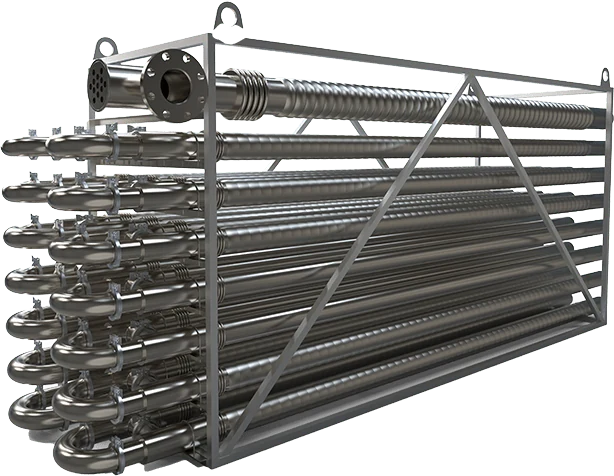
- Stacked hairpins on a stainless frame
- Heating, regeneration and cooling in one train
- 3-A 12-08 tubular where the inspector expects it
- Hydrostatic test on both sides before shipment
Talk to an Application SpecialistChoose the tube by what the product carries and how much shear it can stand, then buy length to close the approach.
The rule we size every tubular unit by.
How we size a tubular train
Reading the product first
Three questions settle the tube type before any thermal work starts. Does the stream carry anything larger than a fine fiber? Is the product thin enough at its coldest point to run turbulent in a 1 in bore? Will it lose texture if it is sheared? Pieces send us to a single tube, smooth or finely pulped product to a multi-tube bundle, and thick cultured product to a corrugated tube.
Some products fail all three tests at once: they are thick, they set or bake onto a hot wall, and they must be worked while they cool. Cold-pack cream cheese, process cheese and puddings are the usual examples. Those move past a tube to a scraped-surface heat exchanger, where blades keep the wall clean.
- Largest piece: its length, width and firmness
- Viscosity at the inlet and outlet temperatures, not at room temperature
- Whether the product has been cultured and broken
- Fat and total solids percent
Approach and length
A tubular cooler on chilled water typically closes to within 5–10°F of the water, against the 2–4°F a plate cooler reaches, because laminar product in a round bore gives up heat more slowly than turbulent milk in a plate channel. Asking a tubular unit for a plate's approach is the common mistake: the train grows long, the pressure drop climbs past what the product pump can deliver, and the product spends longer in the tube. Where a close approach matters, a regeneration section or a colder utility is the better answer than more hairpins.
Regeneration in a tube train
Tubular units regenerate too, either product against product or through a closed water loop that carries heat from the hot pasteurized stream back to the cold raw one. The loop gives up a few points of regeneration and adds a pump, but it puts two walls and a body of water between raw and pasteurized product. Where product meets product directly, the PMO rule still holds: pasteurized at least 1 psi above raw.
Cleaning a tube train
CIP in a tube needs velocity, and a large bore needs a lot of flow to get it. Reaching 5 ft/s in a 3 in tube takes roughly 100 gpm; a 4 in tube needs about 180 gpm. We put the CIP flow on the quote so the plant does not find out after start-up that its CIP supply pump cannot clean the unit it just bought.
Before you size a tubular unit
Round bores give less surface per foot than a plate pack, and thick or piece-laden product often runs laminar, which lowers the film coefficient. The unit makes up the difference with length, stacked as hairpins so the floor footprint stays reasonable. If the length looks excessive, the usual fixes are a hotter or colder utility, a wider approach, or a corrugated tube where the product allows it.
It can heat, regenerate and cool in a single stacked train, with the holding tube fitted between the heating and regeneration sections. The holding tube and flow-diversion valve sit outside our scope, so we leave the connections where your PMO layout needs them and give the system builder the pressure drop of each section.
Viscosity at the coldest and hottest points the product reaches in the exchanger, in centipoise, ideally measured at a shear rate close to what a tube applies. Cultured product and mix thin out as they move, so a cup reading taken at rest overstates what the tube sees. If you have only one lab reading, send it with its temperature and we will flag the assumption on the quote.
Differently. There are no gaskets to replace along the run, so the inspection points are the clamp joints and the return bends. Opening the bends lets QA look down each straight leg with a light or a borescope. A plate pack has to be opened and every plate checked, but every surface is in plain view once the frame is apart.
Related
Heat Exchangers
Single Tube
Single tube heat exchanger with a full sanitary bore for dairy product carrying fruit pieces, pulp or grains, built in 316L to 3-A 12-08.
+ Learn More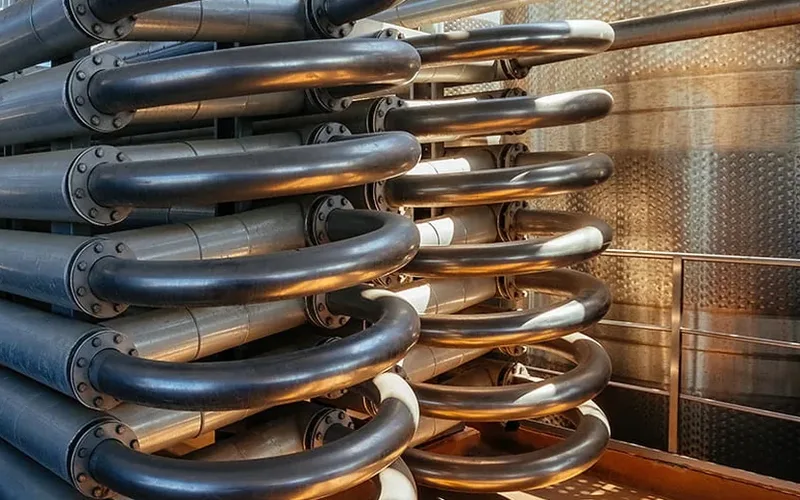
Heat Exchangers
Multi-Tube
Multi tube heat exchanger for dairy: parallel 316L product tubes in one shell for capacity on milk, cream, whey and fine-particle product.
+ Learn More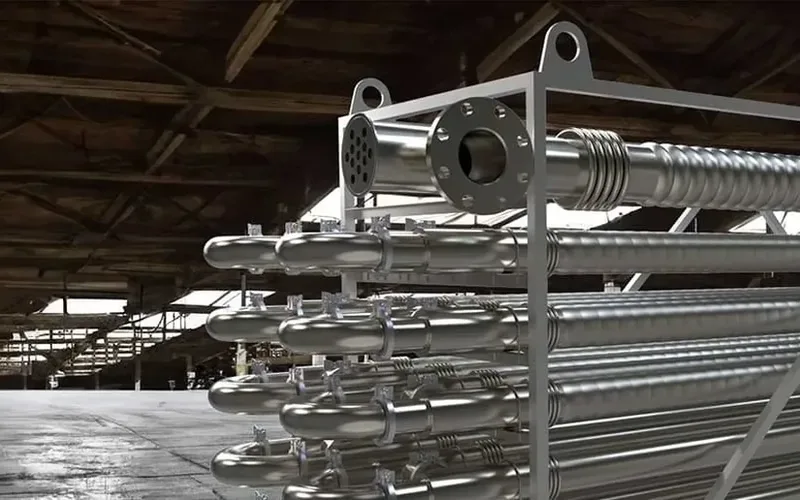
Heat Exchangers
Corrugated Tube
Corrugated tube heat exchanger for viscous and cultured dairy product: low-shear cooling of stirred yogurt, sour cream and kefir after the break.
+ Learn More