
1-805-484-2992
Quotes - Engineering - SalesWhere the 12 series puts its attention
The 3-A tubular standard, the 12 series, covers heat exchangers that carry product through tubes: single-tube and multi-tube tube-in-tube, corrugated tube, and straight-tube shells with product on the tube side. The current edition is 12-08. Where the plate standard is preoccupied with gaskets, the tubular standard is preoccupied with welds, bores and bends, because those are the places a tubular unit holds product.
A dairy tubular run can be a hundred feet or more of tube folded into a compact stack. Every inch of bore has to be smooth, every product-side weld ground flush, and every bend either opened through removable fittings or visible from a removable head. A weld nobody can see is the first thing an inspector asks about.
Drainage is the other theme. A horizontal stack of tubes holds product and rinse water unless it is pitched, so a tubular unit is designed and installed with a fall toward its drain point, or stood vertical. Plants that lose the pitch during installation, usually on a skid that was never shimmed, find standing water in the lowest bends after every wash.
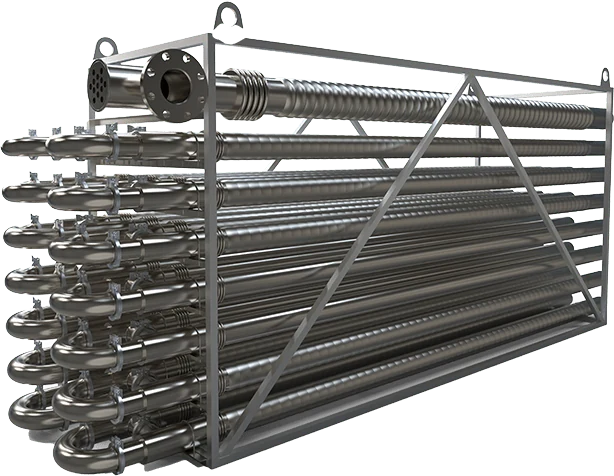
Three places a 3-A tubular unit is checked first
- Product-side welds ground flush and smooth
- Return bends that open for a look down each bore
- A continuous fall from inlet to drain point
How each tubular design meets 12-08
The standard applies one set of rules to every tubular design, but each design meets them in a different place. This is where the evaluator, and later the plant inspector, tends to look on each one.
Tube-in-tube designs
- Single tube: Bore open end to end through removable bends
- Multi-tube: Inner tubes viewed from the opened header ends
- Corrugated tube: Profile rolled without crevices or laps
- Inner tube size: Typically 1–4 in on dairy duty
- Product seals: O-rings or gaskets at the removable bends
Straight tube and shell
- Product side: Tube bores, headers and end covers
- Inspection: Heads come off to sight and brush each tube
- Tube-to-tubesheet: Welded and finished on the product face
- Utility shell: ASME Section VIII above 15 psig
- Draining: Pitched or vertical as the design requires
Buying a tubular unit to the 12 series
Why a dairy duty ends up tubular
Tubular construction is chosen by the product, then built to the standard. Cultured product after the break, fruit preparations with pieces, high-pressure UHT heating and duties the plant insists on brushing all point away from a gasketed plate. The tube-in-tube pages explain which design fits which product; this page is about what the standard asks of whichever one you choose.
Welds and the records behind them
On a tubular unit almost every product seal is a weld. Automatic orbital welding gives a consistent bead on sanitary tube, and each product-side weld is then finished to match the bore. It is reasonable to ask for weld records and a borescope look at welds that cannot be seen directly once the unit is assembled.
- Weld procedure and welder qualification on file
- Borescope record for hidden product-side welds
- Finish readings at bores and at welds
- Material certificates for tube and fittings
Milk-to-milk tubular regenerators
A tubular regenerator does the same job as a plate regenerator and answers to the same PMO rule: pasteurized product held at the higher pressure so any leak runs toward raw. The tube wall is the barrier instead of a gasket, which removes the gasket failure but not the need to prove the wall is sound. The pressure differential page covers how that is met.
Seals at removable bends
Removable return bends are how a single-tube unit stays inspectable, and each one adds a product seal. Those O-rings or gaskets are product contact, sit at wash temperature every day, and are chosen by fat and wash chemistry just as plate gaskets are. Seals that are left in service until they harden are where a tubular unit starts to collect soil.
Tubular standard questions
Yes. When product runs inside the tubes and the utility on the shell side, the 12 series applies to the product path: the bores, the tube-to-tubesheet joints, the headers and the end covers. The shell itself is utility side. Where it carries hot water or steam above 15 psig, the shell is designed and stamped to ASME Section VIII as a separate matter from 3-A.
The design sets a continuous fall to one drain point, and sanitary practice typically uses 1/16 to 1/8 in per foot. The bigger risk is in the field: a stack set level on an unshimmed skid holds water in every low bend. We show the required fall and the drain point on the drawing so the installer has a figure to set it to.
Not when the corrugation is rolled cleanly. The profile has to be free of laps, folds and crevices so it cleans like a smooth tube, and its finish is checked like any other bore. Corrugation raises turbulence and heat transfer at a given velocity, which suits viscous cultured product, and it does not change how the unit is inspected.
Yes, a tubular unit is designed to clean in place at the velocity the plant's CIP supply can reach. Opening it is for inspection, not routine cleaning. Brush-clean straight-tube units are the exception by choice: plants that handle heavy soil or want a mechanical clean between runs pick them because the heads come off and each tube can be brushed.
Related
Materials & Certifications
3-A Plate Exchangers
A 3-A plate heat exchanger is built to the 3-A 11 series, now 11-10. What the standard asks of plates, gaskets, ports and inspection access on dairy duty.
+ Learn More
Materials & Certifications
3-A or Food-Grade
3-A vs food grade heat exchanger: when the inspector expects the 3-A symbol on a dairy unit, and when sanitary food-grade construction is accepted.
+ Learn More
Materials & Certifications
3-A Sanitary
3-A sanitary standards for dairy heat exchangers: the plate and tubular standards, the symbol and its third-party check, and what 3-A leaves to other rules.
+ Learn More