
1-805-484-2992
Quotes - Engineering - SalesSelection, step two
What the sizing actually needs
Once the construction is chosen, the exchanger is sized from three groups of facts. The product group says how the milk, cream or mix behaves: fat, total solids, viscosity at the cold end, and anything solid in the stream. The flow group sets the load: how much product per hour, and its temperatures in and out. The utility group sets the driving force: what heats or cools the product, how hot or cold that medium is, and how close the two sides may come.
With one of the three missing we can still quote, but we have to assume, and assumptions in dairy sizing tend to be generous ones that add plates. A chilled-water temperature guessed 3°F warm, or a fat content taken as whole milk when the line also runs cream, changes the surface by more than most plants expect, and it shows up as a price difference against a competing bid that guessed the other way.
The three pages below take each group in turn, with the values plants usually send and the ones they tend to forget. We use all three groups on every sizing, whatever the product.
The three groups of numbers
Product, Fat & Solids
- Fat percent and total solids for each product
- Viscosity at the coldest point, if the lab has it
- Fines, pulp or pieces, with the largest size
Flows & Temperatures
- Product flow in lb/h or gal/h, normal and maximum
- Product inlet and outlet temperatures
- Allowable pressure drop on the product side
Utility & Approach
- Hot water, steam through a hot-water set, chilled water or glycol
- Supply and return temperatures of the utility
- The approach needed at the critical end
Describe the product
Fat, solids, viscosity and particulates
State the flow
Normal and peak, in lb/h or gal/h
Fix the temperatures
Product in and out, utility supply and return
Check the drop
Pressure drop on each side against pump head
How the numbers become surface
The heat load comes from flow, specific heat and temperature change. The surface comes from that load divided by the overall coefficient and the mean temperature difference, and the coefficient depends heavily on the product: thin milk in a plate channel moves several times more heat per square foot than cold cream in a tube. That is why the product group is read first, before any flow is plugged in.
Normal versus peak flow
Size to the flow the timing pump or the line actually delivers at its fastest, not to the filler's nameplate. On an HTST the holding tube is timed at maximum flow, and the exchanger has to make temperature at that same flow with fouling already on the plates late in the run, not on a clean pack at startup.
Pressure drop is part of the size
A plate pack can meet the thermal duty and still fail on pressure. Viscous products, extra passes for a close approach, and double-wall plates all raise the drop. Tell us the pump and what the line can spare; we arrange the passes to fit, and say plainly when a lower drop needs a longer frame or a wider channel.
Data the plant forgets
Product temperature at the cold end of a cooler, CIP flow and temperature, the glycol concentration, and the shortest run between cleans. None of these appear on a process flow sheet, and each one can move the selection. A short note on each saves a round of questions after the request arrives.
If a figure is unknown, say so. A blank is better than a guess we cannot see, because we can bracket an unknown value and show what it does to the surface.
Call and talk it through with an engineer: 1-805-484-2992
Sizing questions
Enough to hold outlet temperature at the end of the run, not at the start. Protein deposit builds fastest at the hot end of a milk heater, so heater sections get more margin than coolers, and high-solids products more than skim. We size from the run length you state, so a plant cleaning every 10 hours gets a diffrent pack from one running 20.
No. Skim and whole milk sit close to 8.6 lb per gallon, so a pump-curve figure in gpm becomes gal/h at 60 and lb/h at that density. Cream runs lighter and ice cream mix heavier, enough that we ask for the product rather than apply one figure to every stream on the line.
A gasketed plate frame can often take more plates, a changed pass arrangement or a new section, provided the carrying bars have room. A tubular unit is harder to change, so a likely future product is worth naming at quote time. We size the present duty and note what the frame could accept later.
CIP has to scrub every channel faster than production does. On a pack sized for low product velocity, the CIP pump may not reach the turbulence the cleaning program assumes, and soil stays behind at the far ends of the plates. We check the new unit against your CIP flow and temperature so the existing cleaning program still works.
Yes. Every quote states the hot-water, chilled-water or glycol flow the exchanger needs and the supply and return temperatures it was sized on, so the plant can check its chiller and boiler capacity. A U-tube hot-water set is quoted through our U-tube line on the same figures; chillers and CIP skids stay with the plant's own suppliers.
Related
Sizing & Selection
Product, Fat & Solids
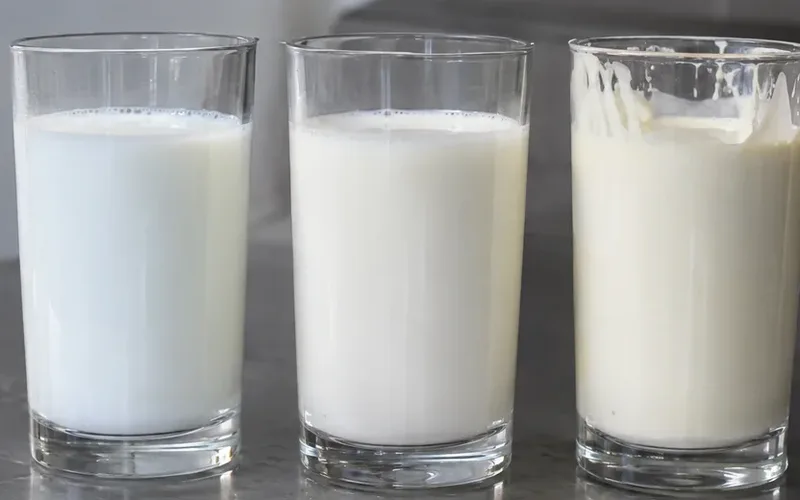
How milk fat, total solids, viscosity and particulates change a heat exchanger: what cream fat percent and mix solids do to plate gap, area and gaskets.
+ Learn More
Sizing & Selection
Flows & Temperatures
Heat exchanger flow and temperature for dairy: lb/h versus gal/h, product inlet and outlet temperatures, and the heat load worked out for a raw milk cooler.
+ Learn More
Sizing & Selection
Utility & Approach
Heat exchanger approach temperature for dairy duty: hot water, steam through a hot-water set, chilled water and propylene glycol, and how close each can run.
+ Learn More