
1-805-484-2992
Quotes - Engineering - SalesOne exchanger before the culture, another after the break
The product changes state halfway through the line
A yogurt line heats its milk base hotter and longer than any bottling pasteurizer: 185–195°F, held 5–10 minutes, so the whey proteins denature and later bind water into the gel. At that stage the base is still a smooth liquid, so a gasketed plate frame with regeneration does the heating and then cools the base to 108–112°F for the incubation tank. The hold itself sits in a tube or a holding vessel between heater and cooler, not in extra plates.
After incubation the picture reverses. The gel is broken, stirred and pumped, and from that moment every bit of shear thins it. Cooling to about 40–45°F has to happen in wide, smooth passages at low velocity. Corrugated tube-in-tube is the usual answer: the corrugation lifts the film coefficient on both sides without the contact points a plate pack depends on. Where fruit or pieces join the stream before cooling, a single-tube bore takes over.
Set yogurt skips the second exchanger altogether. It incubates in the cup and is chilled in a cooling room, so its line needs only the base frame.
See the Corrugated Tube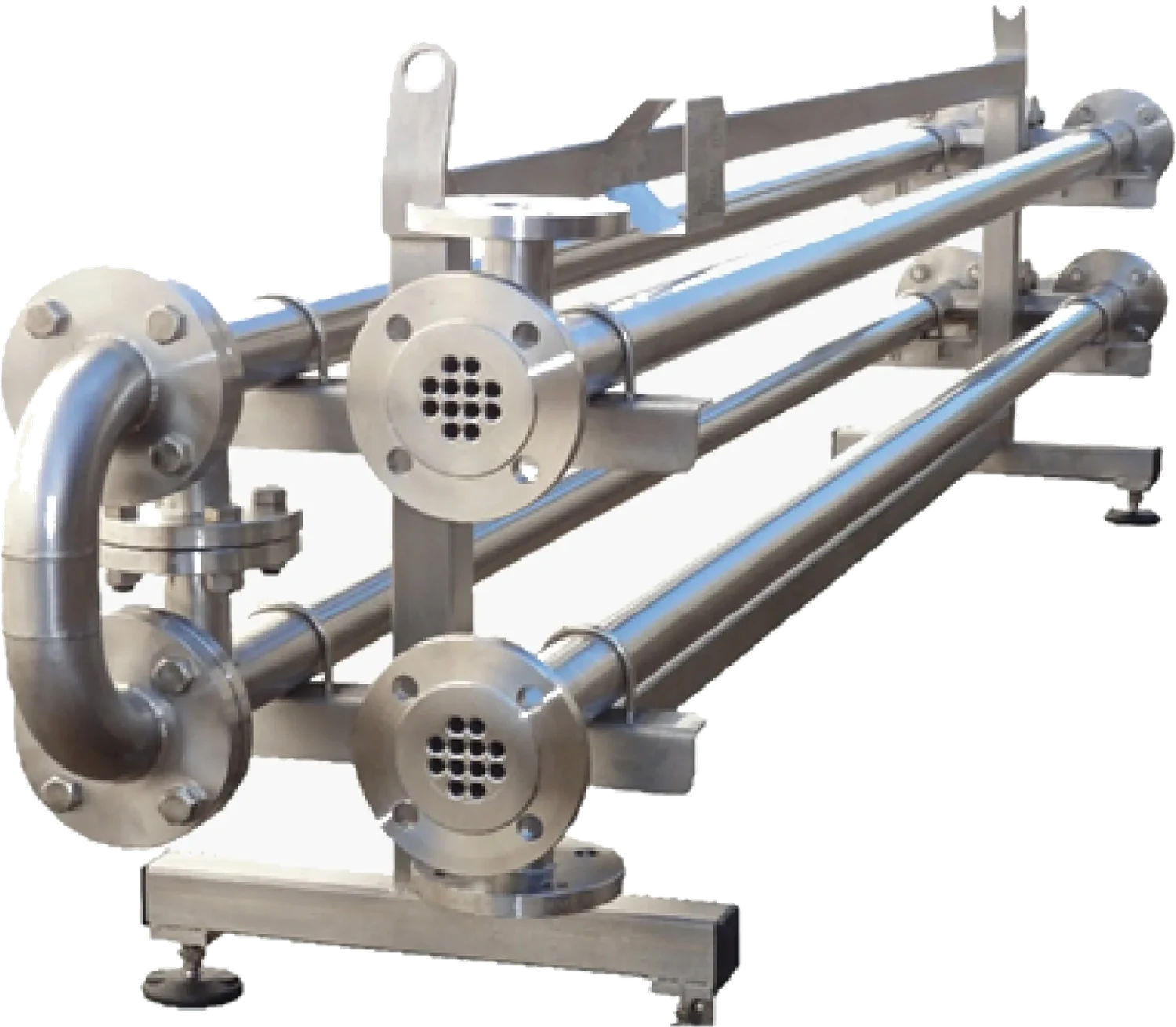
Yogurt line temperatures and hardware
The left column follows the product from base to filler. Culture suppliers and texture targets shift these figures, so treat them as the starting point.
| Condition | Typical value |
| Base heating | 185–195°F |
| Hold | 5–10 minutes in a tube or vessel |
| Base cooled to incubation | 108–112°F |
| Post-break cooling, one stage | about 40–45°F |
| Post-break cooling, two stage | 60–75°F, cold room finishes |
| Base exchanger | gasketed plate with regeneration |
| Post-break exchanger | corrugated or smooth tube-in-tube |
| Pieces in the stream | single-tube bore, up to about 1 in |
| Product-contact finish | 32 Ra, 20 Ra on request |
Keeping the body through the cooler
Why the hold is not in the plate pack
A hold of several minutes at production flow is a volume problem, not a surface problem. At 3,000 gal/h, five minutes is 250 gallons in residence, far more than any plate pack holds. The heater brings the base up to temperature, a holding tube or tank keeps it there, and the plate frame takes it back for regeneration and cooling to incubation temperature.
The full culture and incubation sequence, from base standardization to fill, is laid out on our culture and incubation page; this page stays with the exchangers on either side of it.
Sizing the post-break cooler for shear
Broken yogurt is shear-thinning and recovers only partly after it rests. A viscosity reading on the warm base says nothing useful about the cooler. We size on the apparent viscosity of broken gel at the cooler inlet and again at the outlet, because the product thickens as it cools and the cold end sets the pressure drop.
- Low product velocity, with pressure drop budgeted against a positive-displacement pump
- Long-radius return bends and no reducers inside the unit
- Chilled water or propylene glycol on the annulus, counterflow
- Inlet and outlet viscosity of the broken gel, not of the base
One stage or two
Cooling straight to 40–45°F gives the longest shelf margin and the longest exchanger. Cooling to 60–75°F, filling, and letting the cold room finish costs less steel and is gentler on texture, because the gel spends less time being pushed through tube at its thickest. Plants that change between the two should tell us; a unit sized for the warm outlet will not reach the cold one at the same flow.
Fruit, granola and pieces
Most plants blend fruit preparation after the cooler, at the filler, and keep pieces out of the exchanger. Where fruit goes in before cooling, the bore has to pass the largest piece without bridging, which points to a single-tube unit rather than a multi-tube bundle.
Yogurt line questions
Pilot batches are usually broken and cooled gently by hand. In the plant the gel meets a pump, valves, a cooler and a filler, and each one shears it. The cooler is often the largest contributor if it runs at high velocity or has tight return bends. Lower velocity, a larger bore or a two-stage cooling plan usually recovers most of the body.
For drinkable yogurt that has been homogenized after fermentation, a wide-gap plate can work, because the product no longer carries a gel structure worth protecting. For spoonable stirred yogurt the answer is no; the gasket edges and contact points thin the product and the channels foul with curd. That is the duty tube-in-tube was built for.
Chilled water is enough for a two-stage plan and often for a one-stage cooler with a generous length. Propylene glycol lets the unit reach 40°F in less tube, but glycol well below the product's freezing point can set a frozen film on the wall at low flow. We set the glycol supply temperature and approach together so that cannot happen.
Only if the cooling section was sized for it. A section built to stop at 108–112°F has a fraction of the area needed to reach the 36–40°F a storage tank wants. If the plan includes cold-outlet days, say so at quote time and the frame gets a chilled-water section that sits idle on yogurt days.
It can. Tube-in-tube units for cultured product are built to 3-A 12-08 where the inspector expects it, with self-draining product passages and tri-clamp connections. The symbol matters most where the cooler sits on a Grade A line; many plants specify it on all cultured product for one consistant standard across the room.
Related
Dairy Solutions
Cheese Milk
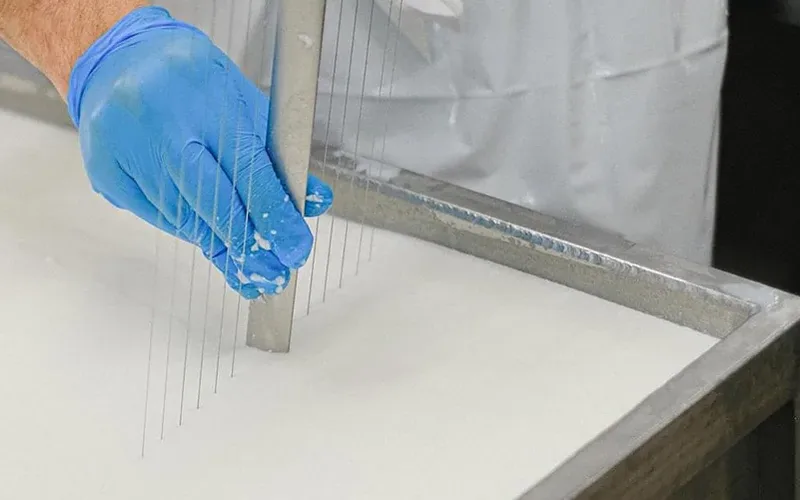
Cheese milk heat exchanger for pasteurizing or thermizing, then trimming the milk to vat set temperature. Plate frame sizing, regeneration and outlet control.
+ Learn More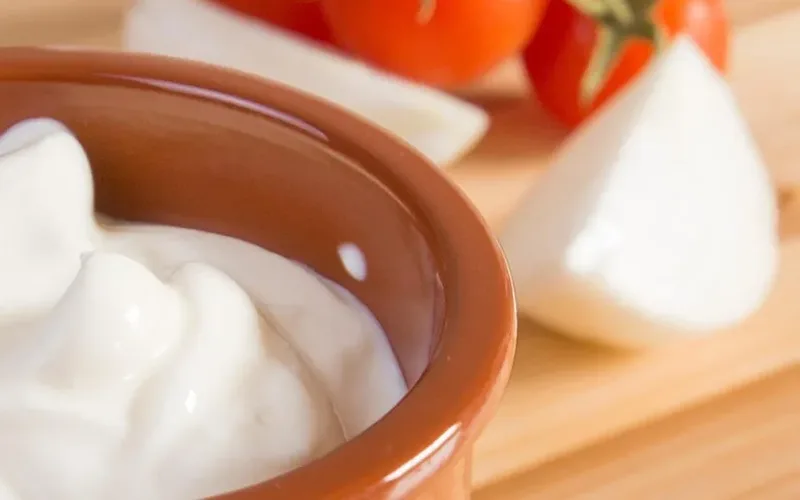
Dairy Solutions
Sour Cream
Sour cream processing heat exchangers: NBR-gasketed plate to pasteurize the cream and reach culture temperature, tubular cooling once it has cultured.
+ Learn More
Dairy Solutions
Cottage Cheese
Cottage cheese heat exchangers for skim milk pasteurizing, curd wash water chilling and cream dressing pasteurized at 166°F, then cooled to 40°F or lower.
+ Learn More