
1-805-484-2992
Quotes - Engineering - SalesOne open bore, nothing for a piece to catch on
A single-tube exchanger is one sanitary product tube running inside a larger utility jacket, laid out as hairpins and joined by long-radius return bends. There is no tube sheet, no divider and no second channel for the product to split into, so a piece that enters the first leg leaves the last one in the same shape. That is why fruit preparation for stirred yogurt, rice and grain dairy desserts, and pulp-bearing cultured drinks go through a single tube rather than a wide-gap plate or a bundle.
We size the bore from the largest piece, not from the flow. A common rule is a bore at least three times the biggest dimension of the piece, so a 1 in fruit cube wants a tube of about 3 in or larger; inner tubes run from 1 to 4 in. Below that ratio pieces can bridge across a bend, and a bridge in a heating leg scorches whatever is caught behind it.
Hot water or glycol runs in the jacket counter to the product, and the jacket carries the ASME Section VIII stamp when the utility side runs above 15 psig.
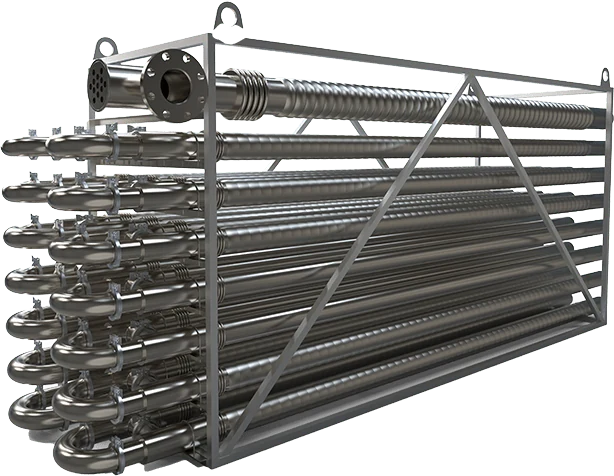
Pieces leave the last bend the same size and shape they entered the first, because nothing in the bore is narrower than the tube itself.
Full bore, long-radius bends, no tube sheet on the product path.
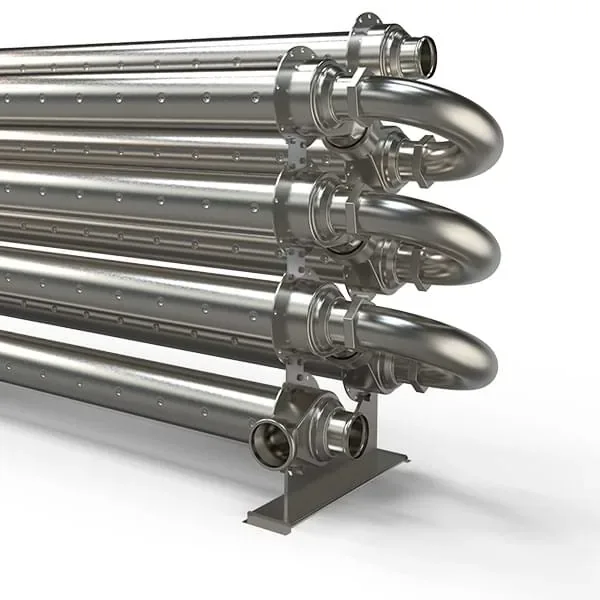
The product tube
- 316L product tube, 32 Ra bore or 20 Ra on request
- Bore about three times the largest piece dimension
- Inner tube 1–4 in to suit flow and piece size
- Tri-clamp ends at every product connection
- Counter-current jacket on hot water, chilled water or glycol
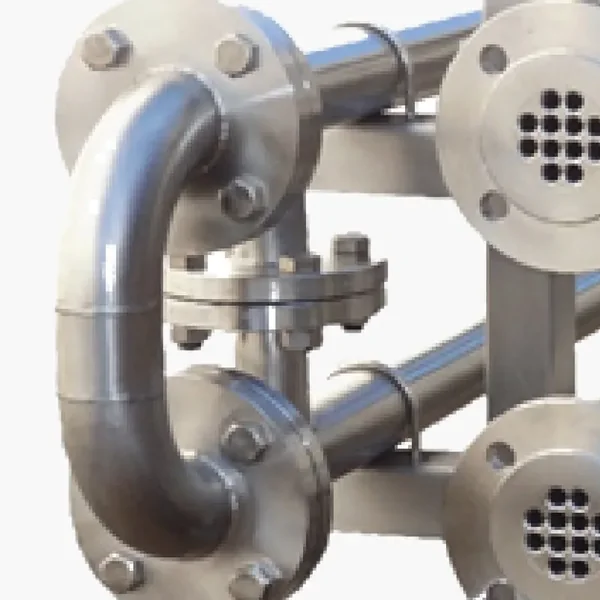
The return bends
- Long-radius 180-degree bends to protect soft fruit
- Clamp-off bends so QA can see down each leg
- Same bore through the bend as through the tube
- Drains when the train is pitched to its low point
- No crevice at the bend-to-tube joint
What you specify




Single tube standard build
These are the starting points we quote from. A fruit with long fibers or a very soft piece can change the bore or the bend radius.
| Feature | Standard build |
| Product tube | 316L stainless, 1–4 in sanitary tube |
| Largest piece passed | Up to about 1 in in the larger bores |
| Product finish | 32 Ra (about 0.8 µm); 20 Ra on request |
| Utility jacket | 304 or 316L on hot water, chilled water or glycol |
| Flow pattern | Counter-current, product in the inner tube |
| Return bends | Long-radius 180-degree, tri-clamp |
| Product connections | Tri-clamp, sized to the tube |
| Sanitary standard | 3-A 12-08 tubular when the inspector expects it |
| Jacket code | ASME Section VIII above 15 psig |
Getting pieces through heat without damage
The center of the piece lags the liquid
The exchanger heats the carrier liquid fast and the piece slowly. A 1 in strawberry cube leaving the last heating leg with the liquid at temperature is still cooler at its center, and it is the center the process authority cares about. We size heating length to the liquid outlet temperature you specify and note on the quote that the piece-center temperature is set by the hold downstream, not by the exchanger alone.
Pump and velocity
A single tube treats pieces only as gently as the pump delivers them. Plants that pair it with a positive-displacement lobe or piston pump keep fruit whole; a centrifugal pump upstream undoes everything the bore protects. Inside the tube we hold velocity high enough to keep pieces suspended, so they do not settle along the bottom of a horizontal leg and overcook, and low enough that soft fruit is not torn at the bends.
How much of the stream is pieces
Piece fraction changes the duty. As pieces take up more of the volume, the liquid film around them thins, the stream starts to behave like a slurry, heat transfer drops and pressure drop rises. After flow, it moves the hairpin count more then any other figure on the request.
- Largest piece size and shape
- Piece fraction by volume or weight
- Carrier liquid viscosity hot and cold
- Whether pieces arrive frozen, fresh or infused
Single-tube questions
It can, but frozen pieces pull the carrier temperature down hard at the inlet and can freeze a film onto the first leg of a cooling section. We size the heating duty from the mixed inlet temperature, including the latent heat of the ice, and keep cold glycol legs away from a stream that already holds frozen pieces. Tell us the state of the fruit when it enters.
A wide-gap plate passes long fibers and fines well, but its channel is still a flat gap of about 6–12 mm with contact points across it. A firm 3/4 in cube does not fit, and soft pieces squeeze through and come out as puree. If the specification calls for visible fruit, the open round bore is the shape that keeps it.
Flow, bore and temperature change set it, and the bore decision swings it most. A larger bore at the same flow runs slower and laminar, so it needs more length to do the same work. The leg length and hairpin count come with the first quote, so you can check the frame against the room before you commit.
Yes, and many plants do, but it was sized for pieces. A smooth milk or mix through a large bore runs slow and laminar and will not reach the approach a multi-tube bundle or plate would. If the smooth product is the bigger volume, size for it and run the pieces at a reduced rate, or plan two units.
We supply new product tubes, new return bends and new clamp gaskets for single-tube units we build, and new equivalent hairpins for an existing train when the nameplate data and bore are known. We do not re-tube or repair a customer-owned section. The new part is built, tested and shipped ready to clamp into the frame.
Related
Heat Exchangers
Multi-Tube
Multi tube heat exchanger for dairy: parallel 316L product tubes in one shell for capacity on milk, cream, whey and fine-particle product.
+ Learn More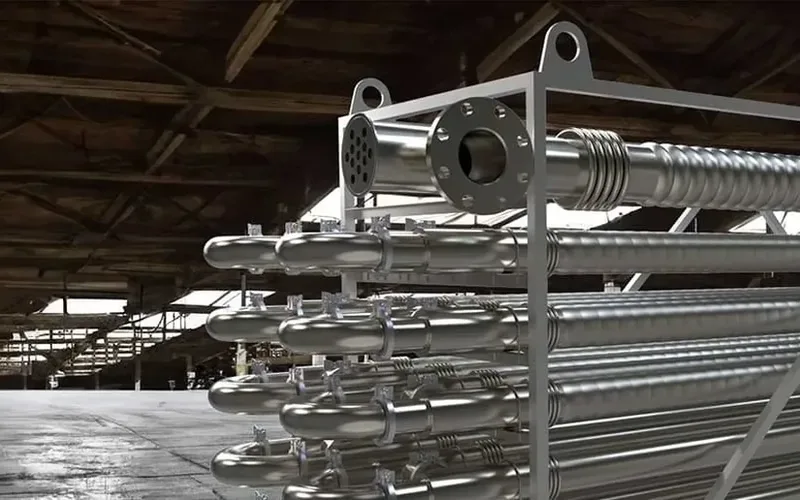
Heat Exchangers
Corrugated Tube
Corrugated tube heat exchanger for viscous and cultured dairy product: low-shear cooling of stirred yogurt, sour cream and kefir after the break.
+ Learn More
Heat Exchangers
Scraped Surface
Scraped surface heat exchanger for thick, sticky dairy product: cream cheese cold pack, process cheese, puddings and spreads that foul or set in a tube.
+ Learn More