
1-805-484-2992
Quotes - Engineering - SalesThree parts of every plate unit
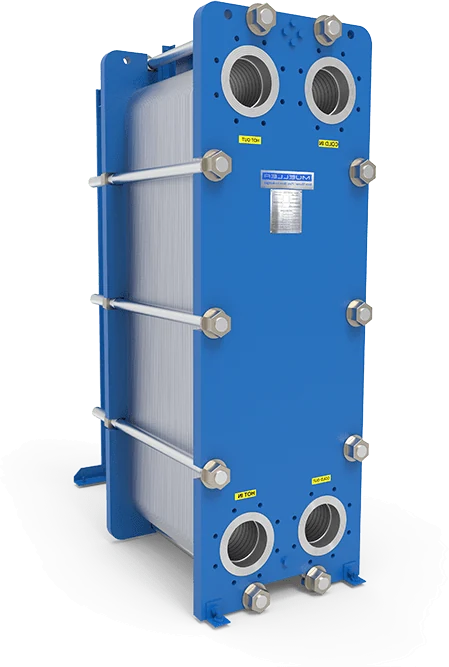
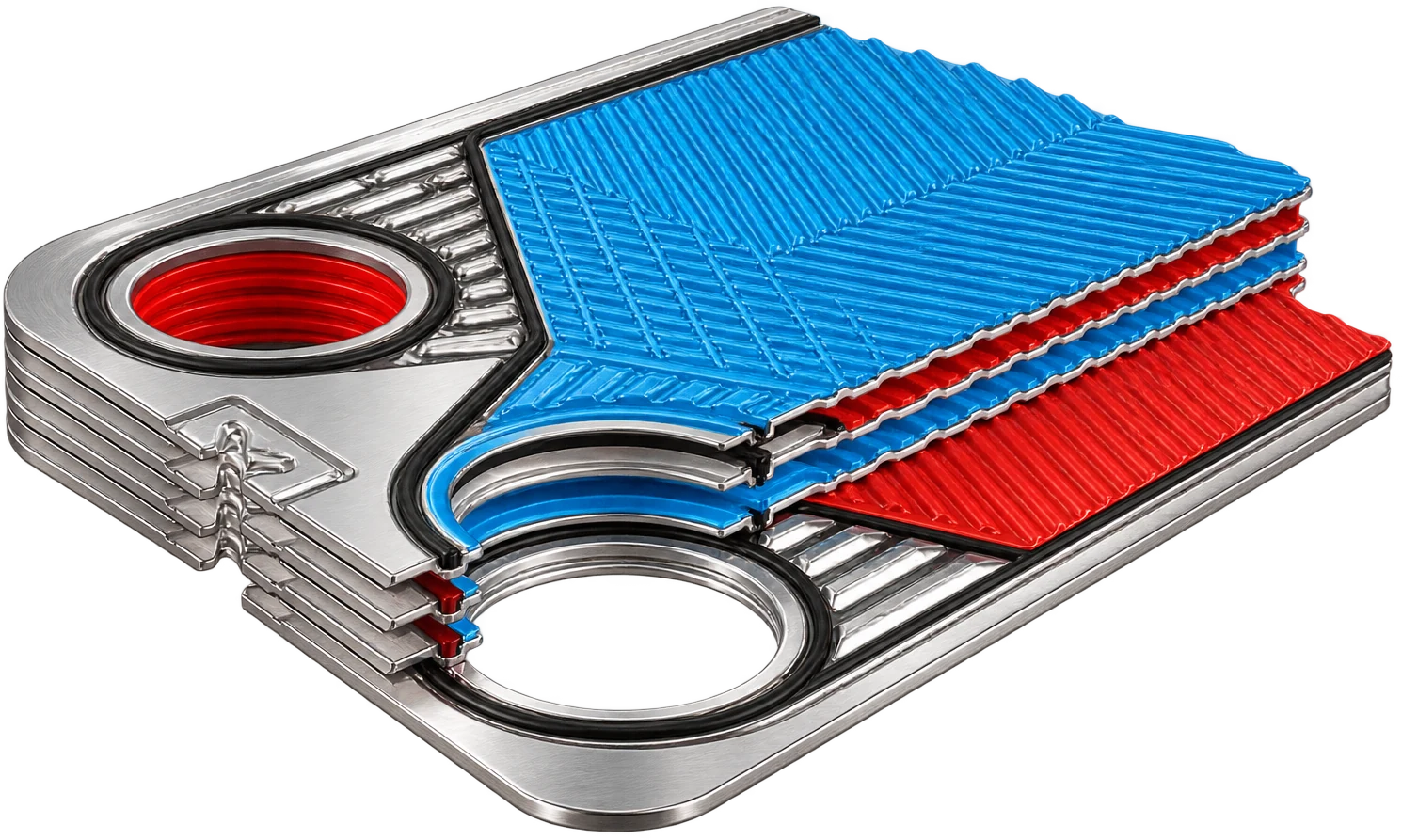
A dairy plate exchanger is three things bolted together: a pack of pressed 316L plates, a gasket on every plate that both seals the channel and steers the flow, and a frame that holds the pack at its tightening dimension. Each part is specified on its own, and each wears on its own schedule.
Plates last for years when the CIP chemistry is right and the pack is closed to its stamped dimension. Gaskets are the consumable: heat, fat and caustic harden or swell them over time, and a hardened gasket is where a Grade A unit begins to weep.
Plates
- 316L pressed in chevron patterns
- High-theta for heat, low-theta for pressure drop
- 3–5 mm channel for milk, 6–12 mm for cream
- 32 Ra product finish, 20 Ra on request
- Hang position marked on every plate
Gaskets
- EPDM for milk, hot water and CIP
- NBR where high fat would swell EPDM
- HNBR for hot CIP and fat together
- Clip-in, glue-free in the product groove
- FDA 21 CFR 177.2600 compounds
Frame
- Stainless or stainless-clad for the wet room
- Bars long enough for plates added later
- Connector plates at every section break
- Tightening dimension stamped on the nameplate
- Tri-clamp ports, drainable product side
Talk to an Application SpecialistOn water-like milk a gasketed plate holds a 2–4°F approach and 90 percent regeneration in less floor space than any tube unit.
Why fluid milk lines start with plates.
Living with a plate pack
Where the pack fouls first
Deposit starts where milk is hottest: the heater section and the last plates of the regenerator on the raw side. Whey protein that has denatured at pasteurizing temperature bakes onto the plate, the film coefficient falls, and the controller answers by driving the hot-water temperature up. A hot-water setpoint that climbs steadily through a run is the earliest sign, long before the plate looks brown.
Sizing the heater with a sensible margin and a 2–5°F hot-water approach keeps the wall temperature down, which slows the deposit and stretches the run between cleans.
Gaskets set the replacement cycle
A gasket that has taken a compression set no longer pushes back against its neighbor, and the first sign is a weep at a port corner after CIP. Replace gaskets section by section as a set rather than one plate at a time; a pack with mixed old and new gaskets closes unevenly. We supply new gasket sets and new plates matched to the frame, with the compound chosen for the section's duty. See plate packs and gaskets for what to send.
Opening the frame without damage
Read and record the tightening dimension before a bolt is touched, back the bolts off evenly in the published sequence, and keep the plates in hang order. When the pack goes back together, close it to the stamped dimension and no tighter. Overtightening crushes gaskets and cracks plates at the contact points, and the crack will not show untill a pressure or dye check finds it.
- Photograph the pack and number the plates before removal
- Inspect each port corner for cracks and gasket set
- Close to the stamped dimension, never below the minimum
When a plate is the wrong answer
Pieces and pulp, cultured product after the break, a pressure beyond the gasket, an ultra-pasteurizing temperature, or a plant rule that every surface be brushed: each one moves the duty off the plate. Those go to tube-in-tube or to a straight tube in a sanitary shell, and the plate stays where it is strongest, on milk, whey and permeate.
On those streams a milk frame routinely regenerates 90 percent of its heat, and no tubular unit matches that in the same floor space.
Gasketed plate questions
On chilled water a plate cooler typically finishes 2–4°F above the water inlet, and on propylene glycol 5–8°F. On the heating side the hot water enters 2–5°F above the pasteurizing temperature. Closer approaches are possible on paper, but each degree costs plates and pressure drop, and the margin disappears once the pack starts to foul.
Deposit is building in the heater plates and cutting the heat transfer rate, so the controller pushes the water hotter to hold the outlet temperature. The hotter wall then fouls faster. If the rise begins early in every run, the heater may be short of area, the hot-water flow may be low, or the CIP is not removing the protein layer completely.
A crack in a single sheet leaks without any outside sign, so it has to be looked for: a pressure-hold test on one side with the other open, a dye-penetrant check of suspect plates, or a conductivity test with salt on one side. Plants that do not want to rely on testing alone fit double-wall plates in the sections where a crossover matters.
A full gasket set for each section, a few spare plates of each pattern in the pack, and the gaskets for the connector plates, which are often a different part from the heat plates. Heater plates are worth stocking first, because they foul and crack more often than any other section. Record the hang order so a spare goes into the right position.
Related
Heat Exchangers
Multi-Section Frames
HTST plate heat exchanger with regenerator, heater and cooler sections in one frame, split by connector plates with sanitary section ports.
+ Learn More
Heat Exchangers
Double-Wall Plate
Double wall plate heat exchanger for dairy: two pressed sheets per wall with a vented gap, so a crack leaks to atmosphere instead of into milk.
+ Learn More
Heat Exchangers
Wide-Gap Plate
Wide gap plate heat exchanger with 6–12 mm product channels for cream above about 30 percent fat, ice cream mix and product that carries fines.
+ Learn More