
1-805-484-2992
Quotes - Engineering - SalesThree reasons a plate pack is ruled out
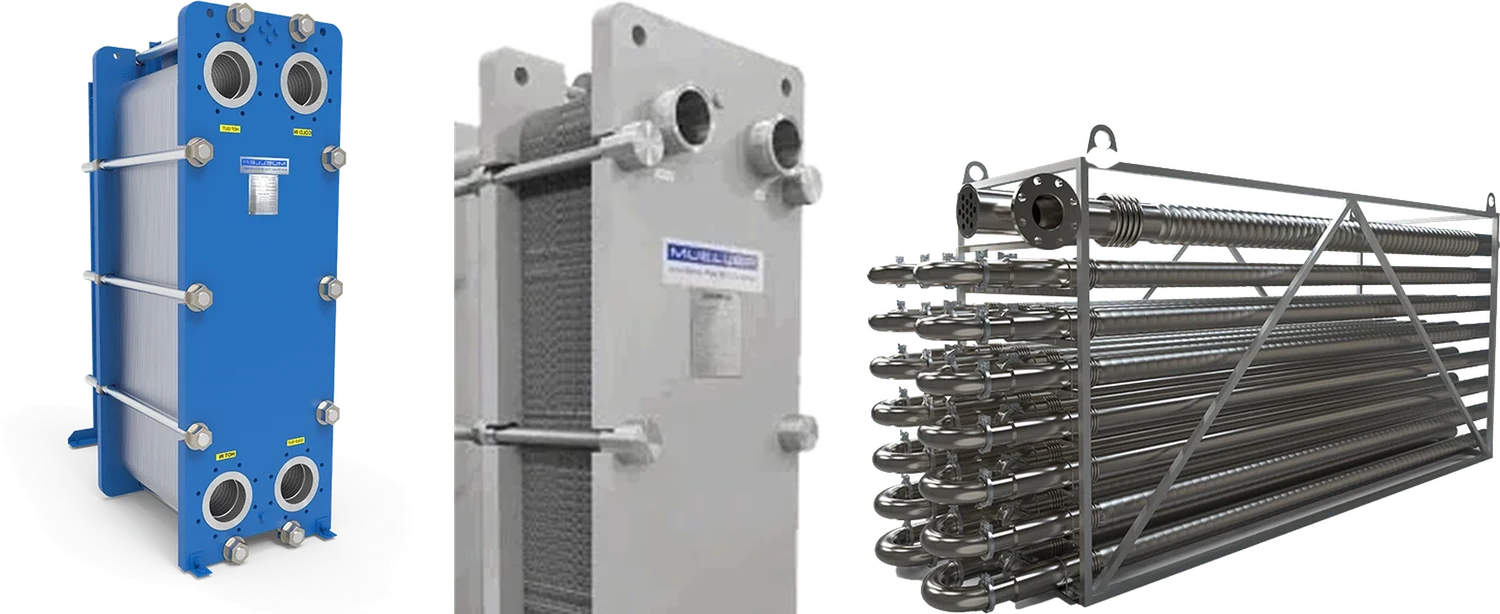
A gasketed plate is the first choice for milk and the wrong one for three duties. At UHT temperatures its gaskets age fast and every plate adds a leak path. Past the pressure rating of the frame, no gasket will hold. And when the sanitation program calls for a brush through every product passage, a plate pack can only be cleaned that way by taking it apart plate by plate.
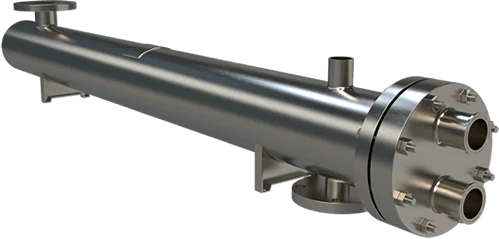
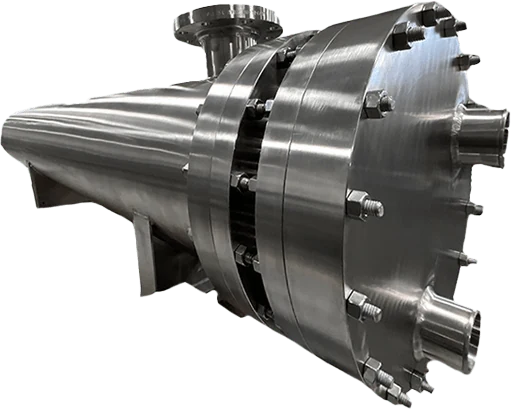
A sanitary shell-and-tube unit answers all three with straight 316L product tubes, welded tube sheets, removable sanitary heads and a utility shell built and stamped as a pressure vessel.
Pressure
- Product side rated well above a plate frame
- Welded tube-to-tube-sheet joints
- Utility shell to ASME Section VIII above 15 psig
- Hydrostatic test of each side before shipment
Temperature
- UHT heating at 275–300°F
- Product held above its vapor pressure
- Bellows or floating tube sheet for expansion
- Fewer gaskets in the hot zone than a plate pack
Cleaning
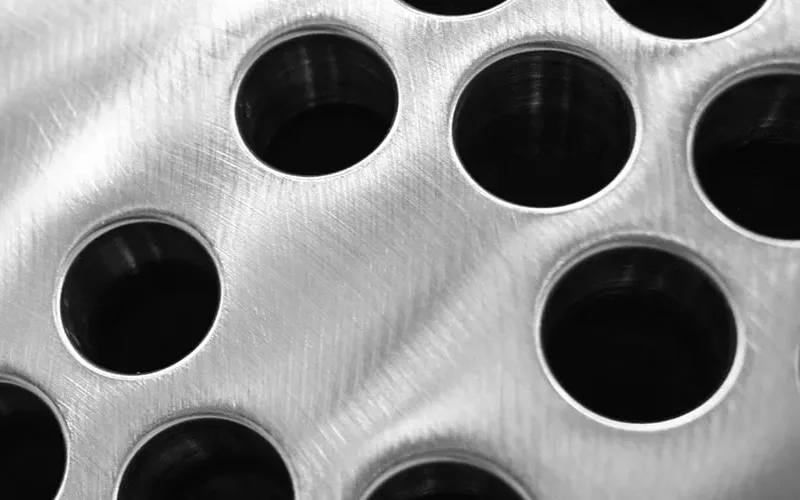
- Straight bores a brush passes end to end
- Removable heads expose every tube
- Product side drains fully
- Each tube visible after CIP
Talk to an Application SpecialistA straight tube costs more surface than a plate, and in return buys pressure, temperature and a bore the plant can see down.
When one of those matters, the plate is out.
Specifying a sanitary straight-tube unit
Product in the tubes, utility in the shell
Product normally runs inside the tubes, where every surface is round, drainable, finished to 32 Ra or 20 Ra and open to a brush or a borescope. The utility runs in the shell around them, baffled to keep its velocity up. That layout keeps the sanitary surface small and inspectable and puts the code pressure on the side that carries an ASME stamp.
Passes and heads
Several tube passes in one shell lengthen the product path without lengthening the unit. The heads that turn the product from one pass to the next are product-contact parts: sanitary, clamped or bolted, gasketed with a compound that meets FDA 21 CFR 177.2600, and removable for inspection. A pass partition that leaks lets product skip a pass unseen, so the head gasket and its seat get as much attention as the tubes.
Two and four passes are the common arrangements. An odd pass count puts the product outlet at the far end from the inlet, which suits some piping runs and complicates others, so we settle it against the plant's layout drawing before the heads are drawn.
Thermal expansion
Tubes at product temperature and a shell at utility temperature grow at different rates. On a UHT cooler the product enters near 280°F while the cooling water in the shell runs below 100°F, and a rigid straight-tube unit would push that difference into the tube sheet welds. A shell bellows or a floating tube sheet takes it out, and we choose between them from the whole temperature cycle, including CIP and sterilization.
When tube-in-tube is the better buy
A shell-and-tube unit is not the answer to pieces or broken cultured product, because its parallel tubes split a particle stream unevenly and its heads add turns. Fruit and pulp go to a single open bore and yogurt after the break to a corrugated tube; both are set out under tube-in-tube units.
Straight tube questions
Hot water from a hot-water set, pressurized hot water on UHT duty, chilled water, or propylene glycol. We do not put plant steam straight onto a product heater, because live steam on the shell gives a wall temperature that bakes milk solids onto the tubes. Steam belongs in the hot-water set that feeds the shell, where its temperature can be trimmed.
No. An industrial unit has crevices at the tube joints, pass partitions that cannot be cleaned, heads that do not drain and a finish nobody specified. The 3-A tubular standard, currently 12-08, sets the joints, drainability, finish and access, and we build to it where the inspector expects the symbol. Polishing the tubes of an industrial design does not get it there.
Tube length follows the duty and the room. Longer tubes cost less per square foot of surface but need clear space at one end equal to their length for brushing or bundle removal, and a longer unit is harder to pitch for drainage. We usually trade length against passes and show two layouts with the quote, so the plant can pick the one that fits.
It can, with one product in the tubes and the other in a sanitary shell, but product in the shell is unusual in dairy because a shell is harder to inspect than a tube. Most tubular regeneration runs through a closed water loop instead. If the reason for leaving the plate is gasket trouble between raw and pasteurized milk, also look at a double-wall plate.
Only where the plant or its inspector expects it. A Grade A fluid line under PMO inspection usually wants the 3-A tubular symbol on the product side; a manufacturing-grade plant may accept a sanitary build without the symbol and save the authorization paperwork. Tell us which applies, because the documents differ even when the steel is the same.
Related
Heat Exchangers
Straight Tube
Sanitary straight tube heat exchanger the plant can brush: removable heads and end caps, straight 316L bores and drainable passes to 3-A 12-08.
+ Learn More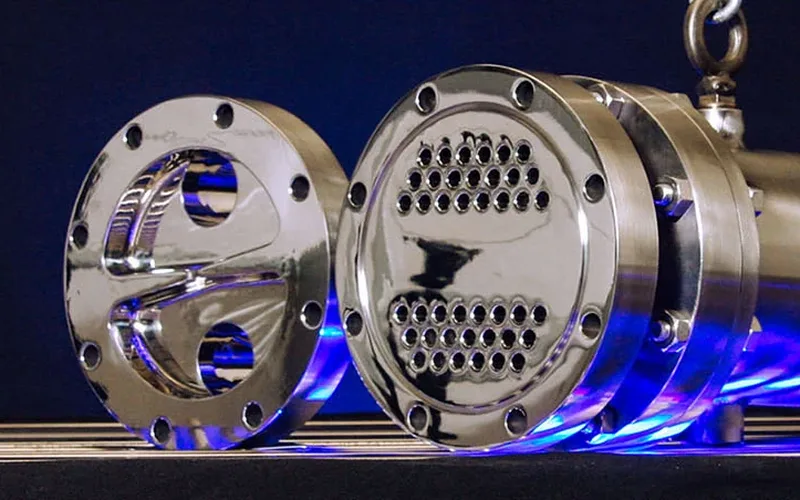
Heat Exchangers
UHT & High-Pressure Shell
High pressure sanitary heat exchanger for UHT and ESL dairy duty: 316L product tubes and an ASME Section VIII shell above 15 psig.
+ Learn More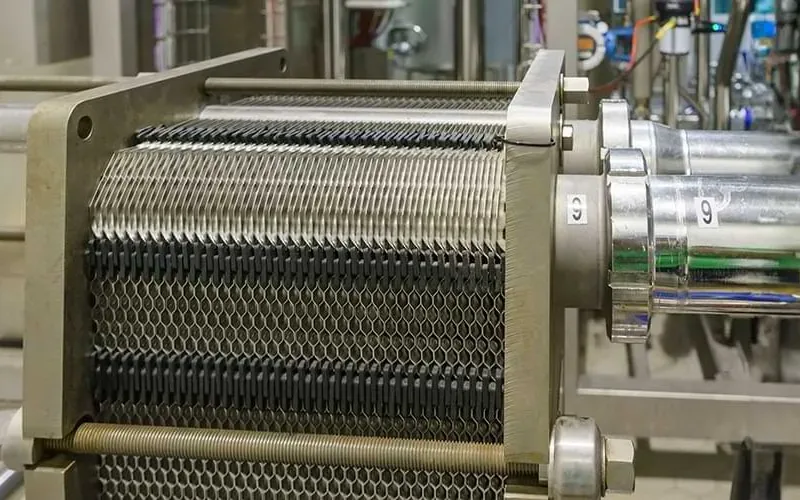
Heat Exchangers
Gasketed Plate
Plate and frame heat exchanger for dairy: gasketed 316L plates for fluid milk, whey and cream, with frames laid out for HTST sections and CIP.
+ Learn More