
1-805-484-2992
Quotes - Engineering - SalesThree cream duties, three different problems
Table cream, whipping cream and heavy cream all pasteurize at 166°F for 15 seconds or more, because each carries 10 percent milkfat or above. Below about 30 percent fat, a standard 3–5 mm plate channel handles the duty with ordinary pressure drop and ordinary pump head.
Above that line, and especially across the 36–40 percent range of heavy cream, the cold half of the regenerator and the final cooler are where a standard pack runs out of headroom. The cream heating page covers channel gap, heater approach and the low-shear flow that keeps the cream able to whip.
Mix reaches the pasteurizer with sugar, stabilizer and roughly 36–42 percent total solids, and the legal hold rises to 175°F for 25 seconds. The homogenizer usually sits in the hot zone of the line.
Cooling back down to aging-tank temperature is the harder half of the job, which is why a mix frame often carries more plates in its coolers than in its heater.
Cream bound for the churn is heated well past the legal minimum to kill lipase-forming organisms and strip feed flavors, then cooled on a schedule that decides how its butterfat crystallizes.
That ripening program, and the nitrile gaskets that high-fat cream calls for, are set out on the butter cream page, which sits off the menu.
Cream and mix share one trait that milk does not: viscosity that climbs hard as the product cools. A pack that passes skim at 40 gal/min can stall on heavy cream at the same rate, and the trouble shows up first at the cold end. The pages below split this family by what the product does inside the exchanger, not by whether a section heats or cools.

What changes once cream passes 30 percent fat
- Cold-end viscosity sets the channel gap, not the heater
- Butterfat swells EPDM, so nitrile moves onto the product side
- Gentle velocity keeps the fat globule membrane whole
Matching a cream or mix stream to its construction
Place your stream by fat and solids first, then by how cold it has to leave. Each row links to the unit we would usually quote for it.
| CREAM OR MIX STREAM | CONSTRUCTION | WHY |
| Light and table cream, 18–30% fat | Gasketed plate | Flows close to whole milk at pasteurizing temperature, so a standard channel stays within pump head. |
| Heavy and whipping cream, 36–40% fat | Wide-gap plate | Cold viscosity rises steeply; a 6–12 mm gap holds pressure drop and fat damage down. |
| Standard ice cream mix | Wide-gap plate | Stabilizer builds body as mix cools, and wider channels keep the cooling section flowing evenly. |
| High-solids or premium mix at the cold end | Multi-tube tubular | Very thick mix near aging temperature needs the pressure rating and open flow path of tubes. |
| Butter cream with regeneration | Multi-section plate frame | Regenerator, high-heat section and ripening cooler share one frame fitted with wide-gap plates. |
| Ultra-pasteurized whipping cream | High-pressure shell-and-tube | At 280°F and above, temperature and pressure pass what a gasketed pack is built to hold. |
Four things to settle before we size it
Cream and mix quotes tend to stall on the same few unknowns. Send these four along with your flows and temperatures, and the first proposal can name a channel gap, a gasket compound and a section layout instead of coming back to you with a list of questions.
Fat and total solids
Give fat as percent by weight, and total solids for mix. Cream that runs 35 percent for one customer and 42 percent for another is sized at the top of its range, because the cold end is where an undersized pack shows it first.
Body at the cold end
- Measured viscosity at outlet temperature, if your lab has it
- Otherwise the stabilizer system and its dose
- Any rework or blend-back that raises solids
Utility on each section
Hot water for the heater, chilled water or propylene glycol for the cooler. On glycol a 5–8°F approach is typical; asking a viscous product for a 2°F approach off glycol adds plates quickly and leaves a pack that is harder to clean.
Shear limits
- Whether the cream must whip or hold overrun later
- Pump type feeding the exchanger
- Maximum product-side pressure drop you can allow
Cream line questions
Light cream often runs fine if the pack has pressure headroom and the holding tube gives 15 seconds at 166°F at the cream flow rate. Heavy cream is where a milk frame struggles: pressure drop climbs in the cooler, the timing pump may not hold rate, and fat smears across narrow channels. We check your existing frame against the cream duty before suggesting a separate wide-gap unit.
A little, for the same frame length, because wider channels run slower and move less heat per plate. Most cream units still regenerate above 80 percent. Reaching the 90 percent a milk unit achieves means a longer pack, so we show plate count and pressure drop for both targets and let you weigh energy against floor space and cleaning time.
It works when they run on different shifts and both suit wide-gap plates, but the holds differ: 166°F for 15 seconds on cream, 175°F for 25 seconds on mix. A shared frame is sized for the mix hold and its heavier cooling load, and changeover adds rinse time. Many plants find two smaller frames easier to schedule than one large one.
Nitrile on the product side once fat runs high, because butterfat migrates into EPDM and swells it until it creeps out of the groove. EPDM stays on the hot-water and chilled-water sides, where it resists heat and cleaning chemistry. HNBR covers both duties at a higher price. Every product-contact compound we supply is FDA 21 CFR 177.2600 compliant.
If it serves Grade A cream, your inspector will usually expect it, and the plate frame is then built to 3-A 11-10. Ice cream plants operate under frozen-dessert rules rather than the Grade A program, and food-grade sanitary construction may be accepted there. Ask your inspector before ordering; adding the symbol later is far harder than specifying it at the start.
Related
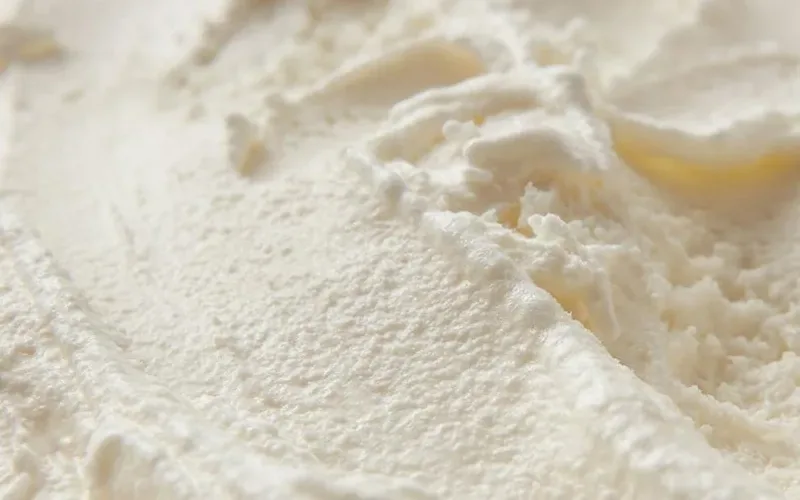
Dairy Solutions
Cream Heating
A cream heat exchanger sized for heavy cream: wide-gap plates above about 30 percent fat, 166°F pasteurizing and cooling that protects the fat.
+ Learn More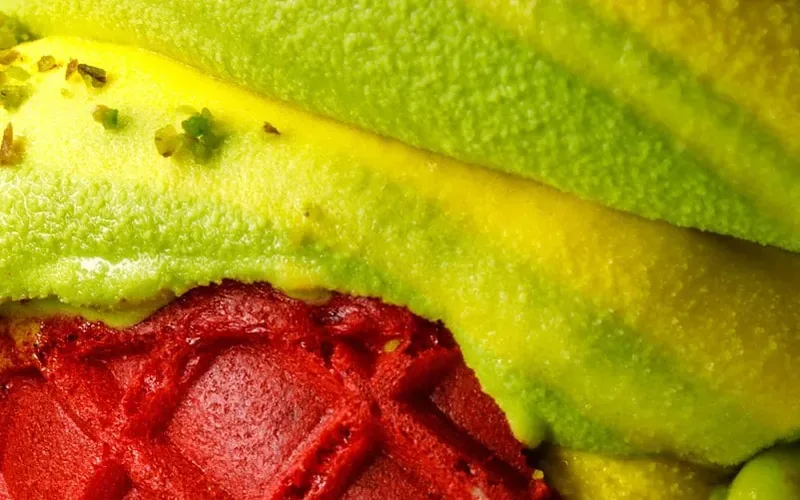
Dairy Solutions
Ice Cream Mix
An ice cream mix pasteurizer heats mix to 175°F for 25 seconds, then cools it for the aging tank. How sugar, stabilizer and solids shape the exchanger.
+ Learn More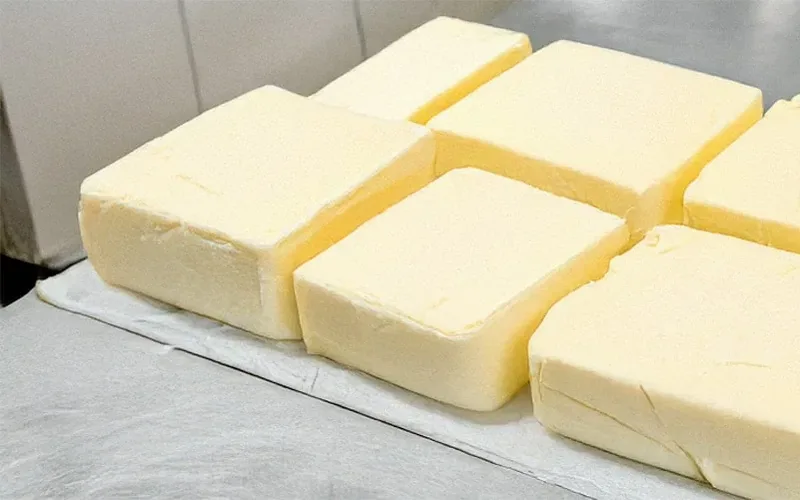
Dairy Solutions
Butter Cream
Butter cream ripening starts in the heat exchanger: pasteurize hot, then cool to the temperature that sets butterfat crystals before the churn.
+ Learn More