
1-805-484-2992
Quotes - Engineering - SalesOne frame for every HTST section
A Grade A HTST line asks a single plate frame to do three jobs. Cold raw milk enters the regenerator and is warmed by pasteurized milk coming back from the holding tube. It moves on to the heater, where hot water lifts it the last few degrees to 161°F or higher. After the hold and the flow-diversion valve, the same milk returns through the regenerator on the other side of the plates, gives up most of its heat, and finishes in one or two cooling sections on chilled water or propylene glycol.
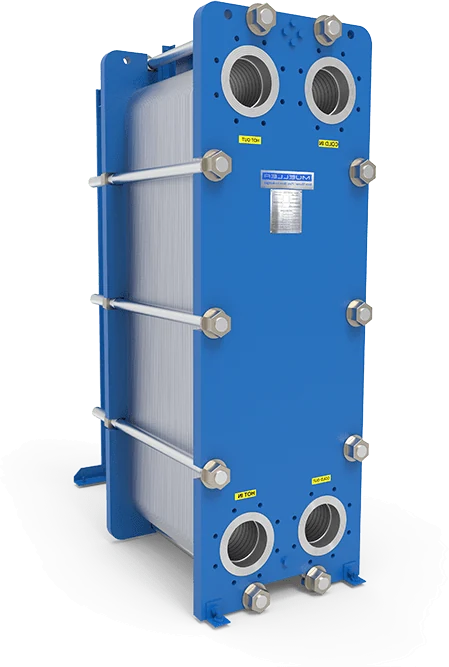
We build that whole sequence as one pack on one carrying bar. Connector plates split the pack into sections and take the product out to the homogenizer, the timing pump or the holding tube, then bring it back in. Every section gets its own plate count and pass arrangement, so the regenerator can be long and the heater short.
The result is a frame that holds 85–94 percent regeneration, delivers milk to the cooler outlet at 36–40°F, and opens along one guide bar when the inspector asks to see a plate.
At 90 percent regeneration the heater and cooler sections handle only a tenth of the temperature swing the milk makes through the frame.
Every point of regeneration is heating and cooling the plant stops paying for.
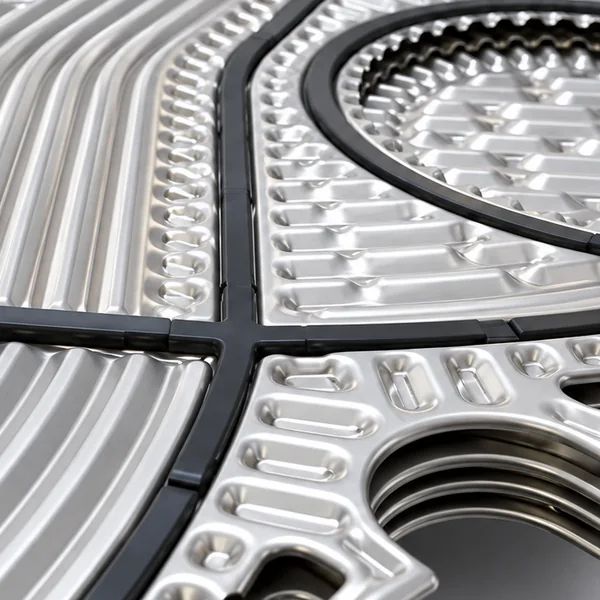
Connector plates and section ports
- Corner ports sized to the line, tri-clamp on every product branch
- Port positions set so each section drains at its low outlet
- Tappings for thermowells and gauges where the chart needs them
- Terminal plates blank off each section cleanly
- Connector plates hung on the same bars as the heat plates
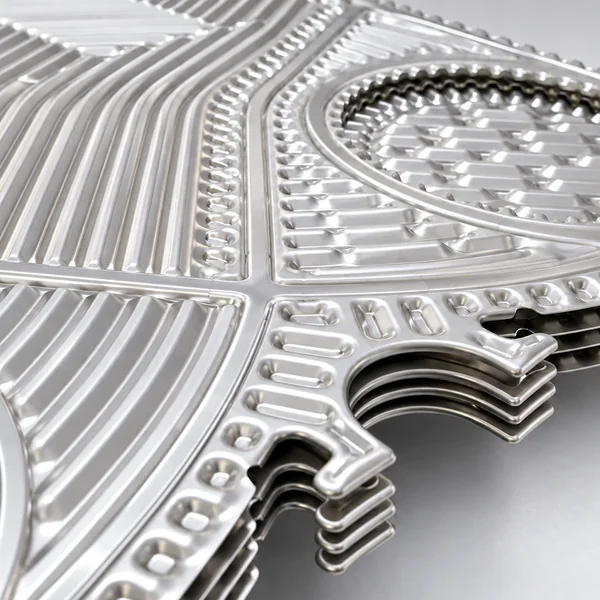
Plates, passes and the pack
- 316L chevron plates, pattern chosen section by section
- Passes and channels per pass set separately for each section
- EPDM or NBR clip-in gaskets in FDA-compliant compounds
- Room left on the bars for added plates when capacity grows
- Tightening dimension stamped on the frame nameplate
Specify per section




Multi-section frame, standard build
What a Grade A HTST frame ships with unless the duty calls for something different.
| Feature | Standard build |
| Sections | Regenerator, heater, one or two coolers |
| Plate material | 316L, 32 Ra product side |
| Channel gap | 3–5 mm |
| Gaskets | EPDM standard; NBR or HNBR on request |
| Product connections | Tri-clamp at every section port |
| Regeneration | 85–94%, sized to the duty |
| Frame | Stainless or stainless-clad, carrying and guide bars |
| Regenerator pressures | Pasteurized side at least 1 psi above raw |
| Standard | Built to 3-A 11-10 where the symbol is expected |
Laying out the sections
Count the trips out of the frame
Before plates are counted, count the places where milk has to leave the pack and come back. Each one needs a connector plate with ports on the right corners, and the order of those exits fixes the order of the sections on the bar. A frame laid out for a homogenizer after the regenerator can not simply take one later between the heater and the hold.
- Raw outlet of the regenerator to the homogenizer or timing pump
- Heater outlet to the holding tube
- Return from the flow-diversion valve to the pasteurized side
- Pasteurized regenerator outlet to the first cooler
Keeping pasteurized above raw
The PMO requires the pasteurized milk in a milk-to-milk regenerator to sit at least 1 psi above the raw milk at all times, so any leak runs from pasteurized to raw. The layout has to make that easy: raw milk drawn through the regenerator under suction from the timing pump, or held below the pasteurized side by pressure control and recording where a booster pump is fitted. The pressure differential page covers the controls; the frame's job is to keep the port and pass layout from fighting them.
Cooling sections that match the utility
Chilled water holds a 2–4°F approach and does most of the cooling cheaply. Where the plant wants milk at 36–40°F and the chilled water cannot reach that, a short glycol section follows it, sized for a 5–8°F approach. Splitting the cooler this way keeps the glycol load small, which matters because glycol is usually the most expensive cooling in the building.
Leaving room to grow
Capacity usually grows by adding plates to the regenerator and heater. That only works if the carrying and guide bars have length to spare and the tightening bolts have thread for a longer pack. We size bars with that margin when the plant asks, and we record the plate count and hang order so the added plates go in the right places.
Before you add sections
Yes, and on most milk lines it does. Raw milk leaves the regenerator warm, typically somewhere around 130–160°F, which suits homogenizing, then returns through a connector plate to the heater. The connector plate needs ports sized for the homogenizer flow, and the layout has to keep the regenerator's pasteurized side at the higher pressure while the homogenizer is running and while it is stopped.
Four or five is common: a regenerator, sometimes split around the homogenizer, a heater, a chilled-water cooler and a glycol cooler. The limit is bar length, the load on the connector ports and how far operators can reach when the pack is open. Past that point a second frame for the cooling sections is usually simpler to clean, inspect and expand.
It adds plates to the regenerator, lengthens the pack and raises the pressure drop on both milk sides, which the pumps have to supply. In return the heater and cooler shrink and the hot-water and chilled-water loads fall. Whether the extra plates pay back depends on running hours and utility cost, so we size both and show the difference.
The temperature lift left after regeneration, the hot-water approach, usually 2–5°F above the pasteurizing temperature at the outlet, and a fouling margin. The heater is the shortest section on a high-regeneration frame, but it fouls fastest, so we do not cut it to the minimum. A heater sized with no margin forces the water hotter and shortens every run.
Related
Heat Exchangers
Double-Wall Plate
Double wall plate heat exchanger for dairy: two pressed sheets per wall with a vented gap, so a crack leaks to atmosphere instead of into milk.
+ Learn More
Heat Exchangers
Wide-Gap Plate
Wide gap plate heat exchanger with 6–12 mm product channels for cream above about 30 percent fat, ice cream mix and product that carries fines.
+ Learn More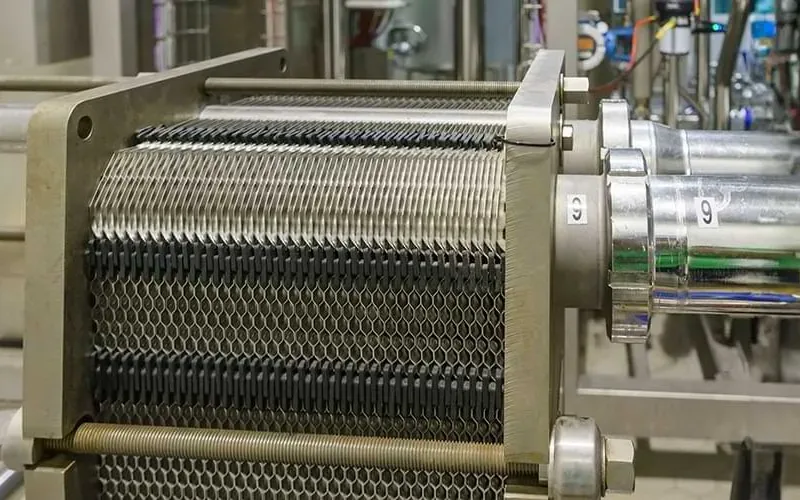
Heat Exchangers
Gasketed Plate
Plate and frame heat exchanger for dairy: gasketed 316L plates for fluid milk, whey and cream, with frames laid out for HTST sections and CIP.
+ Learn More