
1-805-484-2992
Quotes - Engineering - SalesWhat the number measures, and what it misses
Ra is the arithmetic average of a surface profile's deviations from its mean line, read by a stylus profilometer drawn across the steel. A 32 Ra finish averages about 32 microinches, or 0.8 µm, and it is the usual product-contact finish on sanitary dairy equipment. A 20 Ra finish, about 0.5 µm, is smoother, and it is what we supply when a customer's audit or a corporate standard names it.
A lower Ra gives soil and bacteria less to hold and makes a surface quicker to rinse, but the step from 32 to 20 is modest next to the effect of one scratch, pit or unground weld. An average can hide a single deep defect. That is why a careful inspection reads the number and then looks at the surface under a good light.
On plates, the finish comes mostly from the sheet they are pressed from, and cold-rolled stainless usually lands well under 32 Ra before any polishing. On tubular units the finish has to be earned: tube bores, return bends, ferrules and every product-side weld are polished to the number, and that is where a 20 Ra request adds labor.
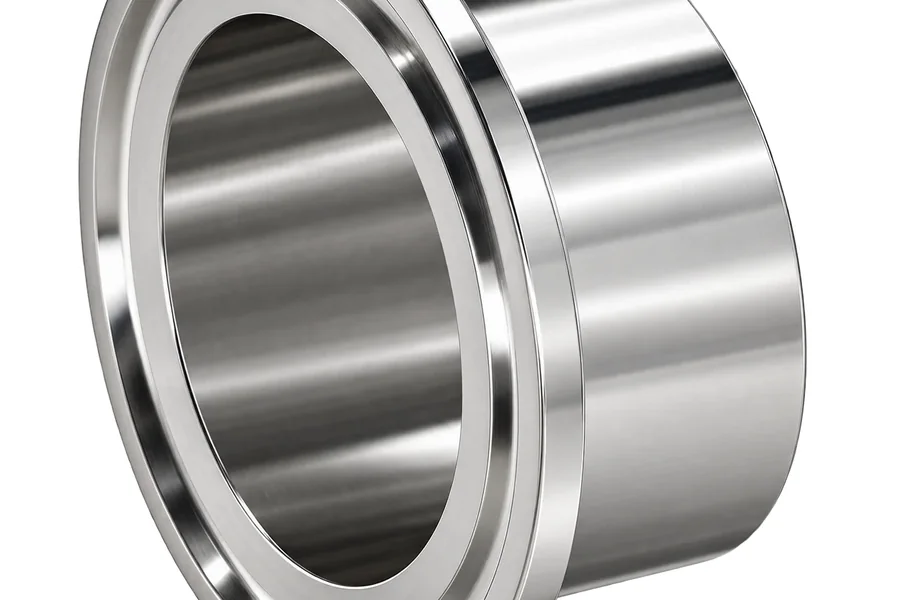
Where finish is won or lost on a dairy unit
- Product-side welds polished to the same number
- Tube bores bought at the finish the audit names
- Port and ferrule faces left free of tool marks
The two finishes side by side
Both finishes use the same 316L and the same construction. What changes is how much polishing is done after fabrication, how many readings are taken, and what goes into the record that ships with the unit.
32 Ra standard
- Average roughness: About 0.8 µm
- Where used: Product contact on most dairy units
- Plates: Usually met by the sheet as pressed
- Tubular: Bores and welds polished to 32 Ra
- Records: Readings supplied on request
20 Ra on request
- Average roughness: About 0.5 µm
- Where used: When an audit or corporate spec names it
- Plates: Confirmed by reading, polished if short
- Tubular: Extra polishing at bores, bends and welds
- Records: Readings shipped with the unit
Specifying finish without paying for the wrong thing
Read the audit wording first
Audit language varies, and the details change the price. Before you write 20 Ra on a request, check what the document actually asks for, so that the quotation is built to that and not to an assumption.
- Product-contact surfaces only, or every wetted surface
- A maximum reading, or an average across a part
- Bore finish only, or outside surfaces as well
- Readings recorded per part, or a statement of conformance
Electropolish answers a different question
Electropolishing removes a thin layer of metal electrochemically, levels the peaks of the profile and leaves a chromium-rich passive surface. It lowers Ra and improves cleanability, and it is common in pharmaceutical work. In dairy it is seldom required, and a mechanically polished 32 Ra or 20 Ra surface serves well. The longer treatment of finishes and electropolish across sanitary industries is on our surface finish and electropolish page.
Welds decide the reading on a tubular unit
Sanitary tubing is bought with its bore finish specified, so a straight run of tube arrives at the number. The joints do not. Each orbital weld leaves a bead and a heat tint on the inside that has to be blended back to the surrounding finish, and every return bend, ferrule and header adds more of them. On a long tube-in-tube stack the welds, not the tube, are where a 20 Ra request turns into hours of work, and where a careless reading after polishing can miss a rough spot.
Keeping the finish after startup
A finish is easier to lose than to make. Abrasive pads used to clear a stubborn deposit, a steel brush on a bore, or hard-water scale left to build up will all roughen a surface that left the shop well inside its number. Units that are cleaned mechanically by design should be brushed with the brushes made for them; the brush-clean straight tube page covers that construction.
Finish questions
Usually not. The cleanability gained from 32 Ra to 20 Ra is small next to weld quality, dead legs and a good CIP program. On plate units the sheet often reads under 20 Ra anyway. On tubular units the extra polishing adds cost and time. Spend the money where the audit or a known fouling problem points.
Readings are taken on flat areas of the plate and on the ports, where a stylus can travel a straight line. The pressed corrugations come from the same sheet, so their finish follows it. Where a plate has been welded, for example on a double-wall or connector plate, the weld area is read separately because that is where the finish can differ.
You can, but on dairy duty there is little reason to. The utility side carries water, glycol or steam-heated water, and its condition is governed by water treatment. On a plate unit the utility channels are the same pressed sheet as the product side; on a tubular unit the outer tube or shell is supplied with a mill finish unless asked otherwise.
Some spread is normal, because Ra is an average along one short trace and the surface is not uniform everywhere. What matters is that readings fall within the specified value where the specification applies, and that no isolated defect hides between them. If the spread is wide, ask for more readings and a visual check of the area.
They come at our standard 32 Ra or better on the product faces, or at 20 Ra when you ask for it. If the frame's original paperwork records a particular finish, send it with the request and we match or improve on it. Either way the new pack's readings or conformance statement go into your file with its material records.
Related
Materials & Certifications
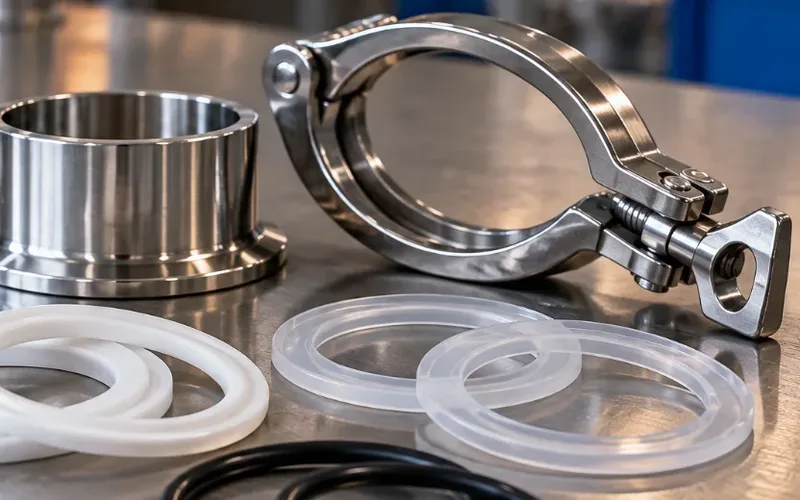
316L & Elastomers
Why a 316L dairy heat exchanger, and how EPDM, NBR and HNBR gaskets are matched to product fat, wash chemistry and heat. FDA-compliant compounds only.
+ Learn More
Materials & Certifications
Tri-Clamp & Drainability
A tri clamp heat exchanger for dairy must connect, drain and clean in place on its own. Ferrules, clamp gaskets, drain fall and CIP velocity explained.
+ Learn More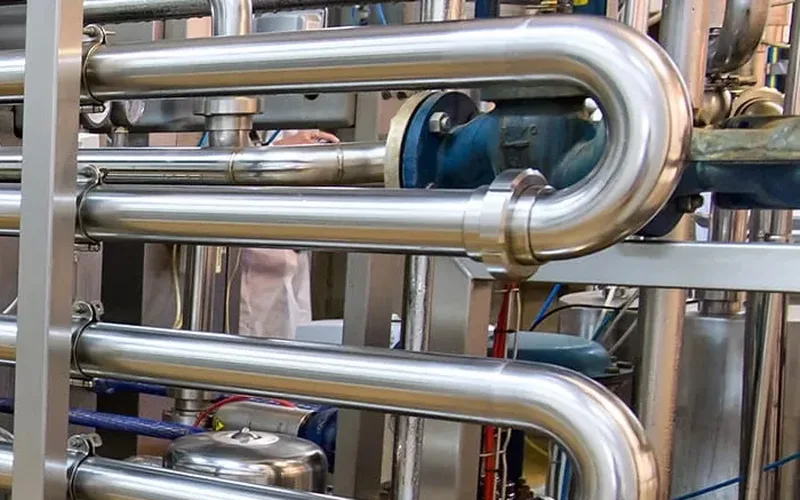
Materials & Certifications
Sanitary Design
Sanitary heat exchanger design for dairy: 316L product contact, matched elastomers, a 32 Ra finish, tri-clamp ends and a product side that drains.
+ Learn More