
1-805-484-2992
Quotes - Engineering - SalesThree sections, one frame, one milk stream
Why heating and cooling are not separate purchases
An HTST pasteurizer heats and cools the same milk, and the plate frame does both at once. Cold raw milk enters the regenerator and picks up heat from hot pasteurized milk flowing the other way. It leaves the regenerator most of the way to pasteurizing temperature, the heater section closes the last few degrees with hot water, and after the holding tube the pasteurized milk comes back through the regenerator to hand that heat over. The cooler section then finishes it on chilled water or glycol.
Because the same plates warm the raw milk and cool the pasteurized milk, a buyer who sends out separate requests for a heater and a cooler is usually pricing the wrong thing. The decisions that matter are the regeneration percent, which sets how many plates the regenerator carries; the approach in the heater, which sets the hot-water temperature; and the pressure arrangement that keeps pasteurized milk on the high side of every regenerator plate. Connector plates divide the sections inside one frame and one set of tie bars.
See the Multi-Section Frames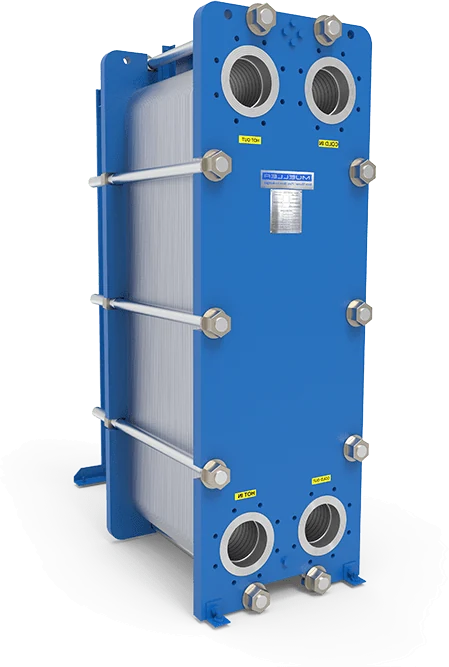
Typical HTST milk frame conditions
Design values for plain fluid milk. Higher-fat or sweetened products and longer runs move them.
| Condition | Typical value |
| Raw milk to regenerator | 36–40°F |
| Regeneration | 85–94%, 90% common |
| Raw milk leaving regenerator | about 150°F at 90% |
| Pasteurizing, milk | 161°F for 15 seconds minimum |
| Pasteurizing, 10% fat or sweetened | 166°F for 15 seconds |
| Hot-water approach at heater outlet | 2–5°F |
| Pasteurized milk leaving regenerator | about 50°F at 90% |
| Pasteurized milk to filler | 45°F or below, 36–40°F typical |
| Regenerator pressure | pasteurized at least 1 psi above raw |
Laying out the HTST frame
What each point of regeneration costs
Regeneration is the share of the heating duty recovered from the outgoing milk. Moving from 85 to 90 percent cuts the heater and cooler loads by a third, since both fall from 15 to 10 percent of the full temperature rise. The price is plate area. The regenerator works across an ever-smaller temperature difference, so the last few points take a disproportionate number of plates, a longer frame and more pump head. Most fluid milk frames settle near 90 percent; 94 makes sense where steam and refrigeration are costly and runs are long.
Keeping pasteurized milk on the high side
The PMO requires that pasteurized milk in a milk-to-milk regenerator be held at least 1 psi above the raw milk at all times, so that a pinhole or gasket failure leaks pasteurized into raw and never the reverse. Plants meet it with a positive timing pump, a raw-side booster pump that can run only under safe conditions, and back pressure on the pasteurized regenerator outlet. The frame has to be ported so the differential can be measured and recorded.
- Booster pump interlocked to the timing pump and to forward flow at the flow-diversion valve
- Differential pressure recorder across the regenerator, checked by the regulatory inspector
- Double-wall regenerator plates where a processor wants a leak to show at the plate edge
Where the homogenizer and holding tube connect
A homogenizer usually draws warm milk from the raw regenerator outlet and returns it to the heater section, and on many lines it is also the timing pump. The holding tube and flow-diversion valve sit between the heater outlet and the pasteurized regenerator inlet. We size the frame around them rather than supply them, but their connections decide where the connector plates go and which way each port faces. The full HTST section layout, with flow diagrams, is set out on our sanitary process page for HTST regeneration.
The cooler section on the same frame
The cooler takes pasteurized milk from about 50°F leaving the regenerator down to 36–40°F. On chilled water the approach can be 2–4°F; on glycol it opens to 5–8°F and needs a freeze interlock. Some plants split the cooler into a chilled-water section and a glycol trim section to reach 34°F without risking ice on the last plates.
Pasteurizer questions we hear
Often, if the carrying bar has length left and the connector plates can stay where they are. Extra regenerator plates raise the raw milk temperature into the heater and cut the cooler load, but they add pressure drop on both sides, so the booster and timing pump must still hold the 1 psi differential. We check frame length and pump curves before quoting new plates.
The heater has the hottest wall in the frame. Whey proteins begin to denature above about 158°F and calcium phosphate drops out on hot steel, so deposit builds first on the last heater plates, where hot water meets milk at full pasteurizing temperature. A closer hot-water approach keeps that wall cooler and stretches the run, at the cost of a few more heater plates.
Products with 10% or more fat or with added sweeteners must reach 166°F for 15 seconds, so the heater needs a hotter supply or more area. Chocolate milk is also thicker and fouls faster than white milk. If flavored products are a small share of production, size the heater for them and accept some excess area on white milk days.
Not by the PMO, which accepts single-wall plates when the pressure differential is maintained and recorded. Some processors and export customers specify double-wall regenerator plates anyway, because a leak shows at the plate edge as soon as it opens. Double wall costs some heat transfer, so the regenerator needs more area to reach the same percent.
Related
Dairy Solutions
Raw Milk Cooling
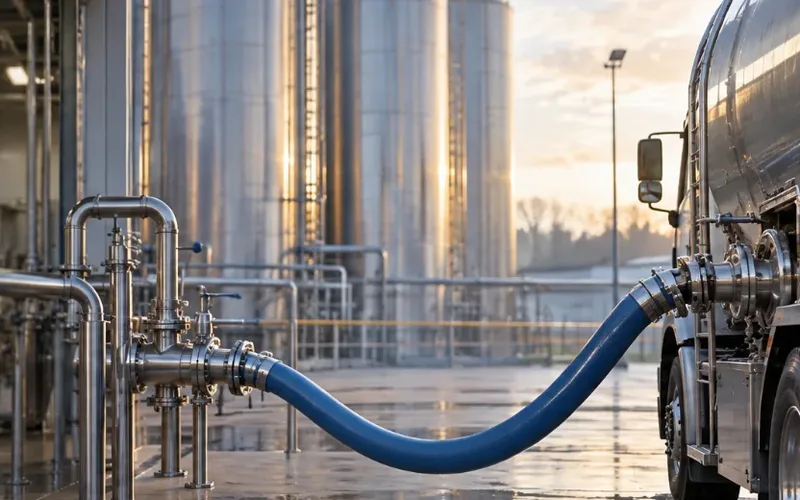
A raw milk cooler on the plant receiving line takes tanker milk to 36–40°F before the silo. Plate sizing, chilled water or glycol, and 3-A build.
+ Learn More
Dairy Solutions
White Milk
White milk processing runs skim, 1%, 2% and whole milk through one HTST frame. Where standardization and the homogenizer sit, and how the pack is sized.
+ Learn More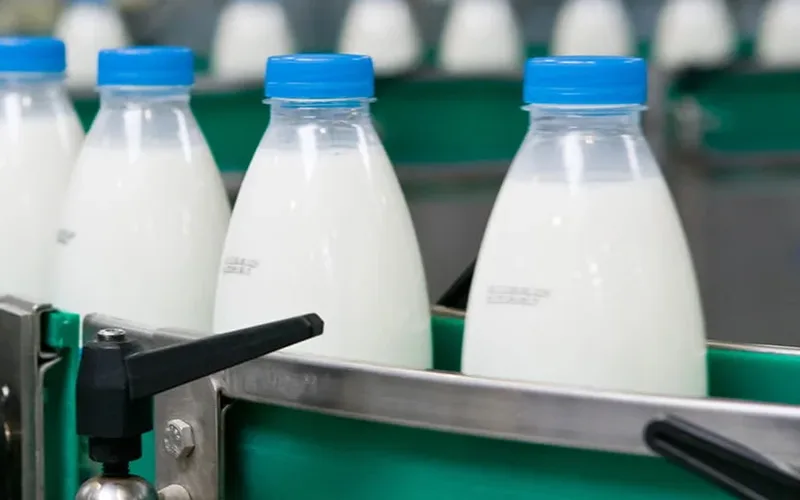
Dairy Solutions
Lactose-Free Milk
Lactose-free milk processing adds lactase hydrolysis, a sweeter product and faster browning at heat. How that changes the heater, construction and run time.
+ Learn More