
1-805-484-2992
Quotes - Engineering - SalesWhen the plant must see and brush every bore
Some sanitation programs will not sign off a product passage that has only been cleaned in place. A product that bakes on in a heating section, a line that changes over between allergens, a QA team that wants to see bare steel before the next run: each calls for a passage a brush can reach end to end and a light can follow. A plate pack has to be opened plate by plate for that. A brush-clean straight-tube unit opens at its ends.
Every product tube runs straight from one head to the other, with no bend, insert or step in the bore. The heads come off at clamps or hand-knobs, and on a tube-in-tube train each return bend unclamps so every leg becomes a straight run. A soft brush on a rod passes through each tube from one end, and with the heads off the bore is in plain sight.
We size the unit as a normal heater or cooler, then set its layout around cleaning: a tube length the crew can reach, a head the crew can lift, and clear space at the end. A unit the crew cannot service in one shift will not get brushed as often as the schedule says.
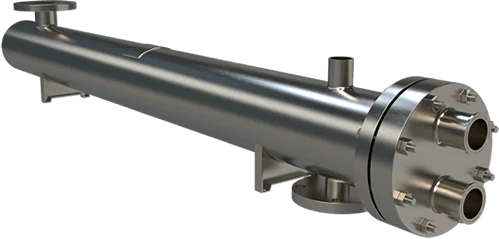
Take the heads off and every product tube is open from end to end, ready for a brush and a light.
For products that bake on and plants that must see bare steel.
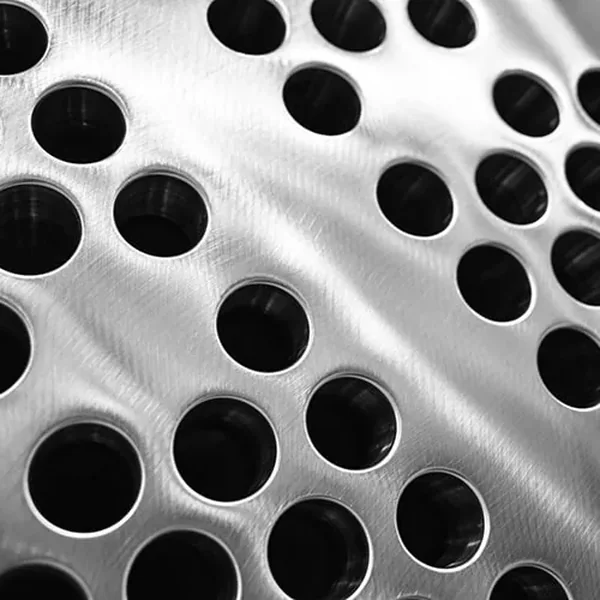
Removable heads
- Clamp or hand-knob closure on the heads
- Head gaskets compliant with FDA 21 CFR 177.2600
- Pass partitions with a positive seat in the head
- Lifting point or davit on heavier heads
- Tube sheet face at 32 Ra, 20 Ra on request
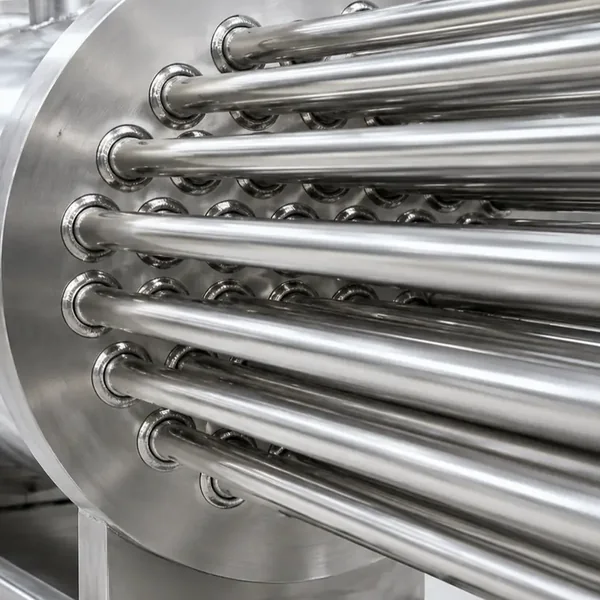
Straight bores
- No inserts, steps or bends inside a tube
- Tubes welded flush at the tube sheet
- Bore sized to a standard sanitary brush
- Tube length set to what the crew can reach
- Drains when the heads are pitched to a low point
Specify for cleaning




Brush-clean standard build
We start from these and adjust tube length and pass count to the room and the cleaning crew.
| Feature | Standard build |
| Product tubes | 316L straight tube, no inserts |
| Product finish | 32 Ra (about 0.8 µm), 20 Ra on request |
| Heads | Sanitary, clamped or hand-knob, removable |
| Head gaskets | EPDM, NBR or HNBR to suit fat and CIP |
| Passes | Set in the heads, one to several |
| Utility shell | 304 or 316L, baffled |
| Product connections | Tri-clamp on the heads |
| Sanitary standard | 3-A 12-08 tubular, symbol on request |
| Shell code | ASME Section VIII when above 15 psig |
Designing for the cleaning crew
Clear space at the end
A brush on a rod needs straight clear space at one end at least as long as the tube, plus room to stand. An 8 ft tube with a wall 6 ft from the head cannot be brushed. We ask for the room layout with the first inquiry and draw the unit with its cleaning envelope, so that space is reserved before other equipment fills it.
Choosing the gasket compound
The head gaskets see product, CIP chemistry and every removal. EPDM handles hot water and caustic; nitrile handles fat but less heat; HNBR covers both at a cost. On cream the fat swells EPDM, and a swollen head gasket stops sealing the pass partition before it ever leaks outside, so the bypass goes unseen. We match the compound to the product and the cleaning program, not to a catalog default.
Brushing and CIP together
Most plants that buy a brushable unit still clean it in place every day and brush it on a schedule: weekly, after a burn-on product, or after an allergen changeover. The unit is built for both, with CIP velocity through the tubes, drainable heads, and heads that come off when the schedule calls for the brush.
- Daily CIP at full tube velocity
- Scheduled brushing after burn-on runs
- Visual check of each bore before reassembly
- Swab of the tube sheet face for the QA record
Seeing the bore after cleaning
Brushing only pays if someone checks the result. With the heads off, a flashlight held at the far end shows a clean tube as a bright, even ring; a dull band or a shadow marks deposit that the brush missed. A borescope on long tubes records the condition for QA, and the tube sheet face, where deposits often start, is swabbed and logged before the heads go back on.
Brushing and cleaning questions
A nylon or other non-metallic sanitary brush sized to the tube's inside diameter, on a stainless or fiberglass rod as long as the tube. The inside diameter and length of every tube are on our drawing, so sanitation can buy the right brushes before start-up. Metal bristles scratch a 32 Ra or 20 Ra finish and do not belong anywhere near the bores.
A soft brush does not cut 316L, so the finish holds if the right brush is used and the tube is rinsed first to clear grit. Scratches come from wire brushes, scouring pads or a rod dragged dry along the bore. If the audit asks for 20 Ra, ask for a brushing procedure in the manual too, so the crew keeps the finish you paid for.
Only if the pieces are small and spread evenly across the parallel tubes, which fruit and pulp seldom do. The brushable layout suits smooth product that fouls. Pieces belong in a single-tube unit, who's return bends also unclamp for brushing, so a plant with both duties can keep the same cleaning practice on each.
On most sizes the heads close with sanitary clamps or hand-knobs, so a crew of two removes them without tools. Larger heads get a lifting point or a davit arm, because a head that is hard to lift is a head that does not come off on schedule. Tell us the crew size and the lifting equipment on the floor.
Related
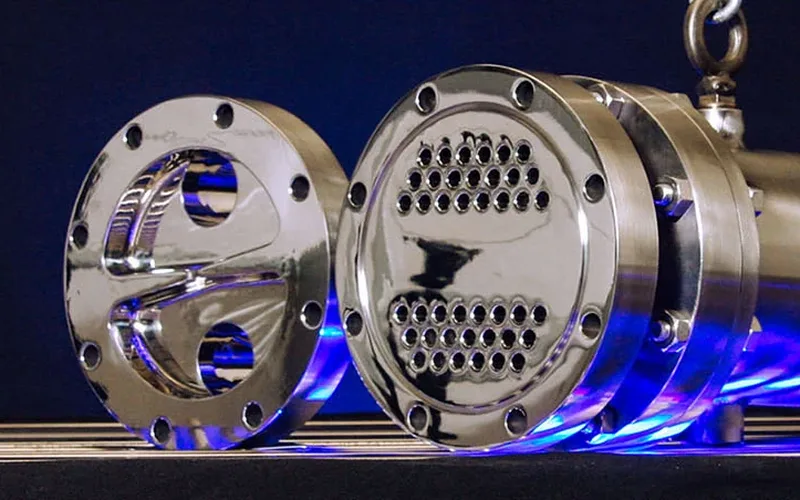
Heat Exchangers
UHT & High-Pressure Shell
High pressure sanitary heat exchanger for UHT and ESL dairy duty: 316L product tubes and an ASME Section VIII shell above 15 psig.
+ Learn More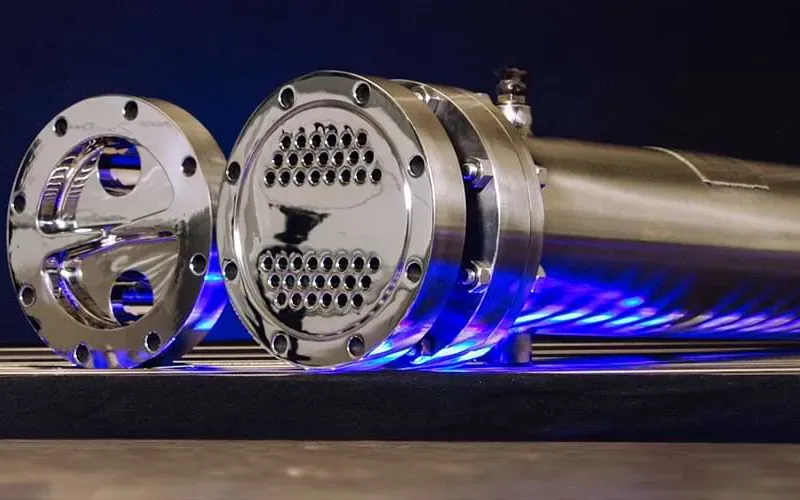
Heat Exchangers
Shell & Tube
Sanitary shell and tube heat exchanger for dairy duty where pressure, UHT temperature or brush cleaning rules out a gasketed plate pack.
+ Learn More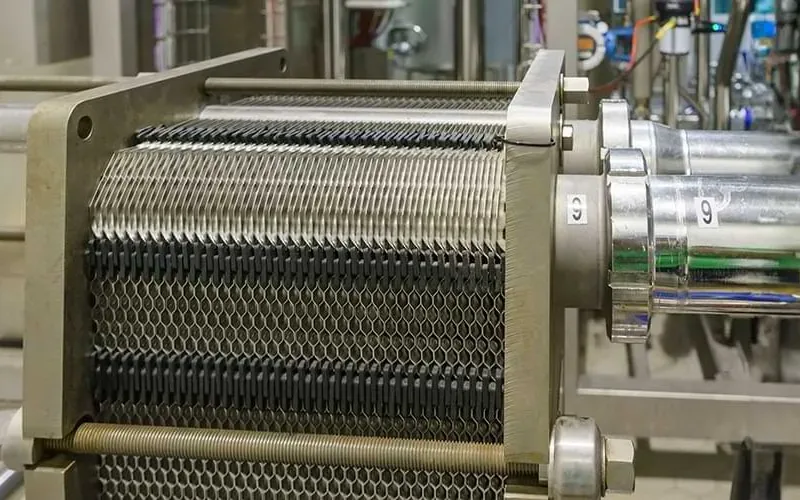
Heat Exchangers
Gasketed Plate
Plate and frame heat exchanger for dairy: gasketed 316L plates for fluid milk, whey and cream, with frames laid out for HTST sections and CIP.
+ Learn More