
1-805-484-2992
Quotes - Engineering - SalesShelf life is won after the hold
280°F for 2 seconds, then a cold path with nowhere to hide
Extended shelf life milk is ultra-pasteurized: 280°F or above for at least 2 seconds, then cooled and packaged so that nothing re-enters the product. It is not shelf-stable. It still travels and sits in the case refrigerated, and the gain over HTST milk is weeks of code date rather than months on an ambient shelf.
The heating step is the easy part to specify. A tubular heater on pressurized hot water reaches ultra-pasteurizing temperature at the pressure the product side needs, and regeneration recovers most of that heat. What decides whether the plant hits its code date is everything downstream of the hold: the coolers, the valves between them and the line to the filler. A pinhole, a pocket that will not drain or a gasket weeping utility water into the product undoes the heat treatment.
So the cooling side of an ESL unit is built like the heater: welded tubes, self-draining passages, tri-clamp product connections, and a pressure relationship that keeps any leak running from product to utility.
See the Multi-Tube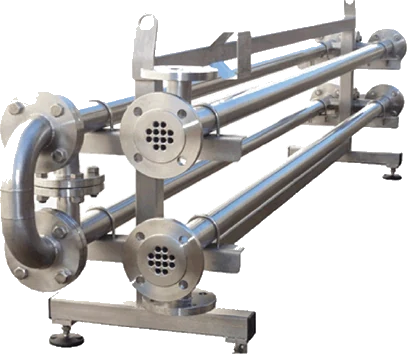
ESL milk exchanger, typical conditions
These values apply to white and flavored ESL milk. Cream and high-solids products shift the heater approach and the cooler length.
| Condition | Typical value |
| Ultra-pasteurizing | 280°F or above, 2 seconds minimum |
| Cooled product | 36–40°F, never above 45°F |
| Heater | tubular, on pressurized hot water |
| Cooling stages | regeneration, then chilled water or glycol |
| Product-side finish | 32 Ra standard, 20 Ra on request |
| Product-side material | 316L, welded tubes |
| Sanitary standard | 3-A 12-08, tubular |
| Drainage | self-draining product passages, no dead legs |
Protecting the product after the hold
The cooler is part of the shelf life
Once milk leaves the hold it is as clean as it will ever be, and every surface it meets afterward can only make it worse. The coolers should carry product at a higher pressure than the chilled water or glycol beside it, so a failed joint leaks milk outward and shows up as loss rather than as a short code date. A pressure check across each cooling section belongs in the start-up and the routine test plan.
The layout of the cooling train for ESL, from hold exit to the filler valve, is worked through on our ESL cooling page.
Reaching 280°F without a cooked note
The legal minimum is a temperature and a time, but flavor follows the whole heat load: the climb to temperature and the fall away from it. A tight hot-water approach keeps the wall from scorching, and high velocity with little hold-up volume keeps the climb short. A high regeneration share lengthens both ramps, so it is a flavor choice as well as an energy one; slow cooling in an undersized section adds cooked flavor that no hold adjustment can take back.
Drainability from hold to filler
Any product left standing between runs is a growth site. Tubular coolers for ESL are mounted so each pass drains toward a low point, connections are tri-clamp so they can be opened and seen, and the unit carries no instrument tee or blind branch that cleaning flow cannot reach.
- Every product pass slopes to a drain
- No dead-leg branches between hold exit and filler
- Clamp gaskets in a compound that suits the CIP chemistry
- Finish to 20 Ra where the audit writes it in
Plate or tube for ESL
Some ESL lines do run plate heaters, and plate cooling sections are common. At 280°F and above, though, the product pressure and the long runs that make ESL pay usually move the heater to tube. Where a plant weighs the two, the trade-offs are set out on the UHT and high-pressure shell page.
ESL questions
Not by temperature alone. The HTST plates, gaskets and holding tube are rated for pasteurizing duty, and the cooling and filling side of an HTST line is not built to keep product clean to an ESL standard. Most plants add a dedicated tubular heater and hold for ultra-pasteurizing and review every exchanger downstream before claiming the longer code date.
Not as a rule. Double wall guards a raw-to-pasteurized leak path, and a cooler on chilled water or glycol has no raw product on either side. What it does need is product held above utility pressure, a tested joint at every tube end and a utility loop kept clean, because a leak from that side lands in finished milk.
A smoother surface holds less cells after cleaning and releases deposit more easily, and on a product sold on its code date the auditor tends to ask for every margin available. 32 Ra is the usual sanitary standard and is acceptable on most lines. 20 Ra costs more polishing and is worth it where the QA program or the customer writes it in.
Most ESL lines homogenize upstream of the final heater, on product that is warm but not yet ultra-pasteurized, so the homogenizer never becomes part of the clean side. Placing it after the hold puts its valves and seals on the post-heat path, and they then have to be cleaned, checked and trusted to the same standard as the coolers.
Most plants aim for 36–40°F at the filler, the same target as HTST milk, and never above 45°F. Because ESL is sold on a long code date, the warm end of that range is less forgiving. Glycol on the last section reaches the cold end in less tube than chilled water, at the cost of a colder utility loop to run.
Related
Dairy Solutions
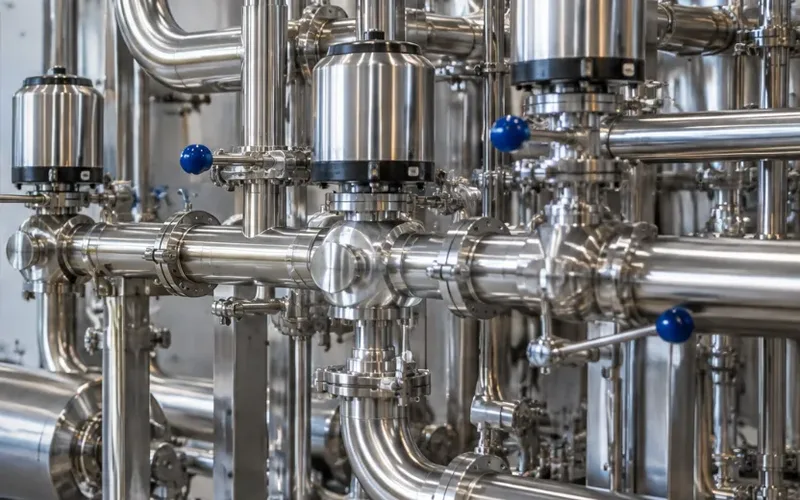
Indirect UHT Heating
Indirect UHT heat exchanger for milk: tubular heating on pressurized hot water, tubular regeneration, and a heater sized for long runs between cleanings.
+ Learn More
Dairy Solutions
UHT
UHT heat exchanger selection for milk: indirect tubular and shell-and-tube heating where pressure, run time and fouling rule out a plate pack.
+ Learn More
Dairy Solutions
Milk
Milk heat exchanger choices for raw milk cooling, HTST pasteurizing with regeneration, vat cooling, and white, lactose-free, recombined and condensed milk.
+ Learn More