
1-805-484-2992
Quotes - Engineering - SalesHeld above boiling, built as a pressure vessel
UHT milk is heated to 275–300°F for 2–6 seconds, and ultra-pasteurized product to 280°F or above for at least 2 seconds. Water boils at about 35 psig at 280°F and about 52 psig at 300°F, so the product side runs well above that to keep the product liquid, with margin for the holding tube, the back-pressure valve and the pressure drop of the cooling sections behind it.
The utility side runs hot too. Pressurized hot water at UHT temperature sits far above 15 psig, which brings the shell under ASME Section VIII, and the cooling sections downstream carry the full product pressure inside their tubes. We build the unit as a code vessel from the start: welded 316L tubes, sanitary product heads, a stamped shell and a data report.
This is the construction for indirect UHT and ESL heating, final heaters after a regenerator, and any dairy duty where pressure on either side runs past what a gasketed frame is rated for.
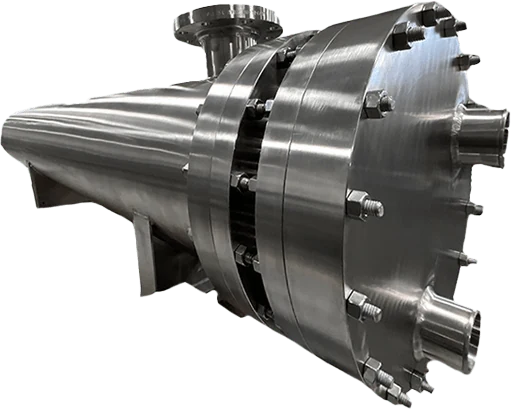
Product tubes welded and rated for UHT pressure inside an ASME-stamped utility shell, with the expansion joint sized for the full temperature swing.
Indirect UHT, ESL and high-pressure dairy heating and cooling.
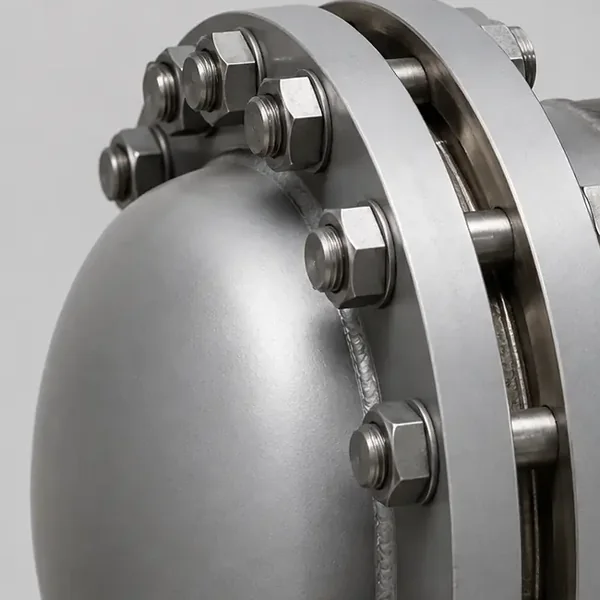
Shell and expansion joint
- ASME Section VIII shell, stamped, with data report
- Bellows sized for heating, cooling and CIP cycles
- Pressurized hot water or cooling water side
- Vent and drain at the high and low points
- Hydrostatic test to code on the shell
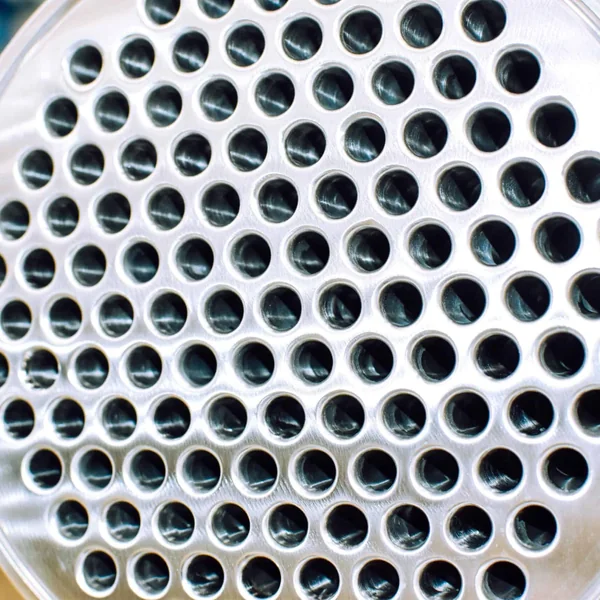
Product end
- 316L product tubes welded at the tube sheets
- Double tube sheet with a vented gap on request
- Sanitary product heads, drainable
- Product side rated above saturation pressure
- 32 Ra standard, 20 Ra on request
Code and test




UHT shell standard build
Pressure ratings are set from your system pressures at start-up, in production and during sterilization, not from the steady duty alone.
| Feature | Standard build |
| Product temperature | Up to 275–300°F (UHT) |
| Product side | 316L tubes, welded, rated above saturation |
| Utility side | Pressurized hot water or cooling water |
| Shell code | ASME Section VIII, stamped, above 15 psig |
| Expansion | Shell bellows or floating tube sheet |
| Tube sheet | Single, or double with vented gap |
| Product finish | 32 Ra, 20 Ra on request |
| Testing | Hydrostatic test, product and utility sides |
| Sanitary standard | 3-A 12-08 where the inspector asks for it |
Engineering a UHT shell for its whole cycle
Sterilization is the hardest hour
Before production an aseptic UHT line is sterilized with pressurized water held near UHT temperature, often for around half an hour, and the cooling sections run hot along with everything else. That cycle sets the expansion design and the shell rating more often than the production duty does. Send the sterilization temperature and time with the process data, and the CIP temperatures too.
Fouling at UHT temperature
Milk proteins and minerals deposit fastest on the hottest walls, so the final heater fouls first and sets the run length between intermediate cleans. A small utility-to-product temperature diffrence at the hot end slows that, so we size the final heater for a tight approach, putting more surface there and less elsewhere. A rising product-side pressure drop is the usual signal that the heater needs a clean.
Double tube sheet
Where a tube-joint leak would let utility water reach sterile product, a double tube sheet puts a vented gap between the product sheet and the utility sheet. A leak at either joint then runs to atmosphere where it can be seen instead of across into the product. It costs length and a second set of welds, and many plants running aseptic fill take it.
The utility loop
The shell is heated by a closed loop of pressurized hot water, itself heated by plant steam, and cooled by tower or chilled water on the cooling sections. We match the shell design pressure to the loop's relief setting and give the loop builder the flow and temperatures each section needs. Pressure drop for each section is on the datasheet, so the loop pump and the product pump are sized from the same numbers.
What UHT buyers ask
Plate UHT exists, but gaskets at 275–300°F age quickly, and run length on milk is set by how fast deposits close a narrow channel. Round tubes tolerate more deposit before pressure drop forces a clean, carry higher pressure with no gaskets along the path, and suit low-acid aseptic product that runs long. The trade is surface and a wider approach.
ASME Section VIII governs the vessel's pressure parts, and on a stamped unit the tubes are part of that boundary. The 3-A tubular standard then governs the product side's sanitary design: joints, finish, drainability and access. The two do not conflict, but each needs its own documents, so tell us whether the inspector expects the 3-A symbol as well as the stamp.
The maximum product-side pressure at the heater, usually set by the back-pressure valve and the homogenizer position; the utility loop's design pressure; and both during sterilization. Give the relief valve settings if you know them, because the design pressure must be at or above them. A unit rated for the steady duty alone is the common mistake, and it surfaces at inspection rather than in production.
Where the shell's drawings and data report are available and the shell is sound, we build a new bundle to fit it. Where they are missing, or the shell is near the end of its life, a complete new stamped unit is usually the quicker route through inspection. We do not repair or re-tube the existing bundle.
Yes. Extended shelf life milk is usually ultra-pasteurized at 280°F or above for at least 2 seconds, inside the temperature range this construction is built for, and then filled under clean rather than aseptic conditions. The unit is the same; the difference is in the fill, the cooling outlet temperature and the documents the inspector wants to see.
Related
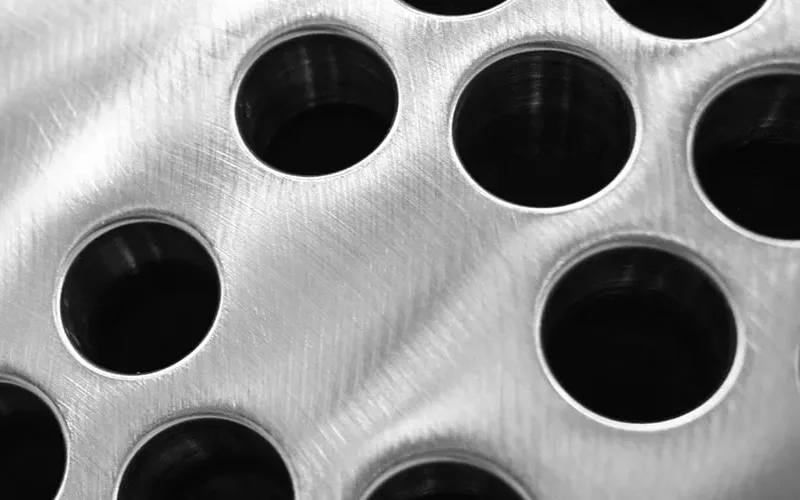
Heat Exchangers
Straight Tube
Sanitary straight tube heat exchanger the plant can brush: removable heads and end caps, straight 316L bores and drainable passes to 3-A 12-08.
+ Learn More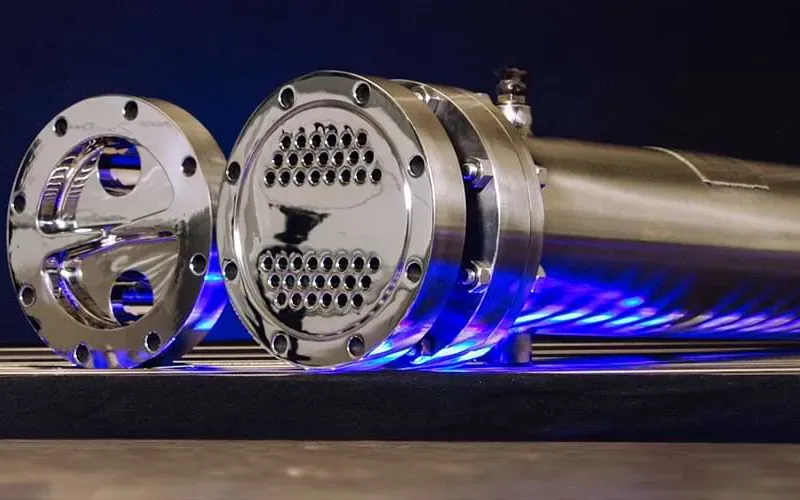
Heat Exchangers
Shell & Tube
Sanitary shell and tube heat exchanger for dairy duty where pressure, UHT temperature or brush cleaning rules out a gasketed plate pack.
+ Learn More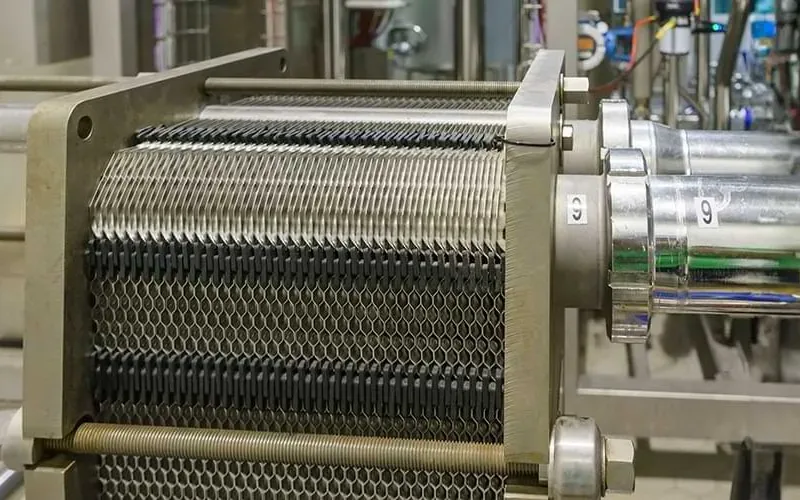
Heat Exchangers
Gasketed Plate
Plate and frame heat exchanger for dairy: gasketed 316L plates for fluid milk, whey and cream, with frames laid out for HTST sections and CIP.
+ Learn More