
1-805-484-2992
Quotes - Engineering - SalesFour utilities, four approaches
Approach is the temperature gap between product and utility at the tight end of the exchanger: on a cooler, product outlet minus coolant inlet; on a heater, hot-water inlet minus product outlet. It is the most expensive single number on a quote. Halving it can nearly double the surface near that end, so the figure should come from what the process needs, not from habit or a previous specification.
Typical approaches
Dairy plants use four utilities. Hot water heats milk and cream in plate and tubular sections. Plant steam does the heating indirectly, through a hot-water set, because steam straight onto a milk plate bakes product onto the wall. Chilled water, usually supplied at 33–35°F from an ice builder or chiller, cools milk to the 36–40°F most plants aim for. Propylene glycol cools below that, or wherever the chilled-water loop is not cold enough.
Each has its own practical approach, and the list below gives the ranges we size to.
What we size to
- Hot-water heater: 2–5°F above the pasteurizing temperature at the outlet
- Plate cooler on chilled water: 2–4°F
- Plate cooler on propylene glycol: 5–8°F
- Tubular units: wider than plate on the same utility
- Regenerator: set by the regeneration percentage, not by a utility
Chilled-water plate cooler approachA plate cooler on chilled water can bring milk within 2–4°F of the water entering it, while glycol sections usually run 5–8°F.
Steam through a hot-water set
Most plants have steam, and the hot-water set is how it reaches the milk safely. A small steam-to-water heater, a circulating pump and a control valve hold a closed hot-water loop a few degrees above the product target. What the set needs from the exchanger sizing:
- Hot-water flow and supply temperature the product heater needs
- Return temperature, so the steam heater can be sized
- Control range from startup to full product flow
- Steam pressure available at the set
- Whether the set is to be quoted with the exchanger
Call and talk it through with an engineer: 1-805-484-2992
Choosing the utility temperature
On the cooling side the utility temperature sets the floor. Chilled water at 34°F cannot bring milk much below 36°F in a plate, and a tubular cooler on the same water stops a few degrees higher. If the specification calls for 34°F milk, the answer is glycol, not more plates.
Glycol brings its own trade-offs. A propylene glycol loop at 26–28°F reaches lower outlets, but the solution carries less heat per pound than water and thickens when cold, so the circulating flow rises. Milk freezes near 31°F, and a glycol section running too cold at low product flow can freeze product on the plates; the controls should throttle the glycol as product flow drops.
On the heating side, the gap between hot water and the pasteurizing temperature is a balance between surface and burn-on. A close approach, hot water 2–3°F above the holding temperature, keeps the wall cool and fouling slow but needs more heater plates. A wide one saves plates and shortens the run between cleans. For cream and mix we lean toward the close end.
The hot-water set is part of the selection too. Where the plant wants a U-tube steam-to-water heater for the set, it is quoted through our U-tube line, and the sizing background for those heaters is on our U-tube steam-to-water heating page. The product-side dairy exchanger is sized and quoted here, and the two quotes are built on the same hot-water flow and temperatures.
Write the utility into the request exactly as the plant runs it: the medium, its supply temperature at the exchanger, the return temperature or the flow it can spare, and its pressure. Those four values fix the utility side as firmly as the product data fixes the other.
Set the approach from what the process needs, then let the surface follow.
Send the utility, its supply and return temperatures, and the product outlet you must guarentee.
Request a QuoteUtility and approach questions
Not on a dairy product section. Steam condenses at a fixed temperature well above what the milk needs, so the wall runs hot, protein bakes on within minutes, and holding-temperature control suffers. A hot-water loop keeps the wall only a few degrees above the product and gives the controller a medium it can trim smoothly.
Whatever the plant reliably delivers at the exchanger in summer, not the chiller setpoint. Ice-builder water often leaves at 33–34°F but reaches a distant cooler a degree or two warmer. Tell us the temperature at the cooler inlet under load; a one-degree error there moves the plate count more than most other inputs.
None; we ask. A stronger propylene glycol solution protects against freezing at lower temperatures but carries less heat per pound and grows thicker cold, so the same duty needs more circulation. Send the percentage the loop actually runs, and its supply temperature at the exchanger, and we size the glycol side on those.
Thermally, yes, with enough plates. In practice it is rarely worth it: the last degree costs a large share of the surface, and normal swings in utility temperature or product flow wipe it out. If a close outlet matters, a colder utility usually achieves it for less than chasing a 1°F approach with plates.
On tubular and shell-and-tube units whose utility shell runs above 15 psig, the shell is built and stamped to ASME Section VIII. That usually comes up on hot-water and steam-heated tubular sections and on UHT duty. Tell us the utility pressure, including the relief valve setting, so the shell is designed to the right figure.
Related
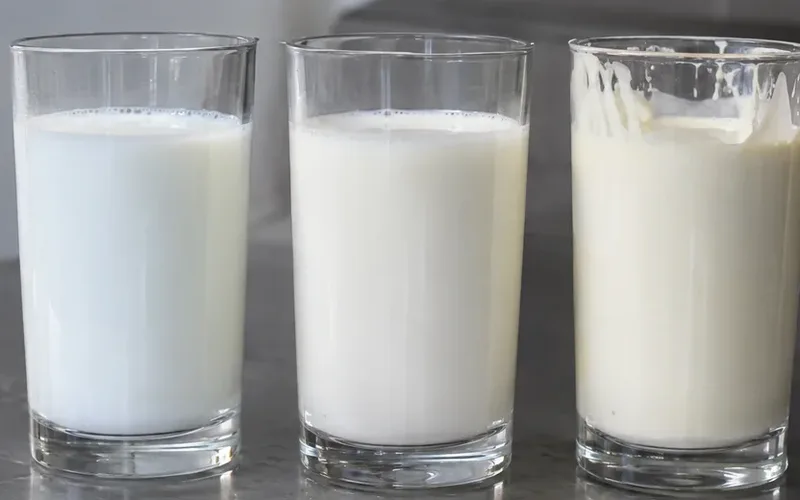
Sizing & Selection
Product, Fat & Solids
How milk fat, total solids, viscosity and particulates change a heat exchanger: what cream fat percent and mix solids do to plate gap, area and gaskets.
+ Learn More
Sizing & Selection
Flows & Temperatures
Heat exchanger flow and temperature for dairy: lb/h versus gal/h, product inlet and outlet temperatures, and the heat load worked out for a raw milk cooler.
+ Learn More
Sizing & Selection
Size the Duty
Heat exchanger sizing for milk and dairy product: the product data, flows, temperatures and utility details we need to size the surface and pressure drop.
+ Learn More