
1-805-484-2992
Quotes - Engineering - SalesThe product picks the construction
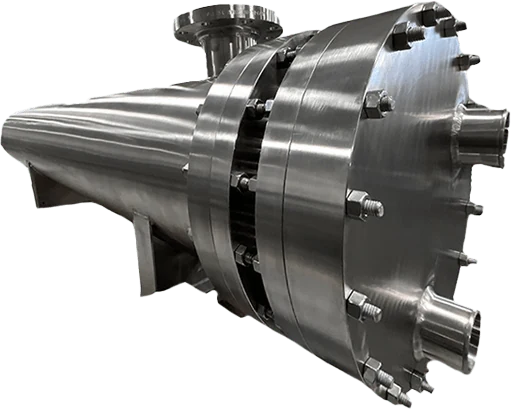
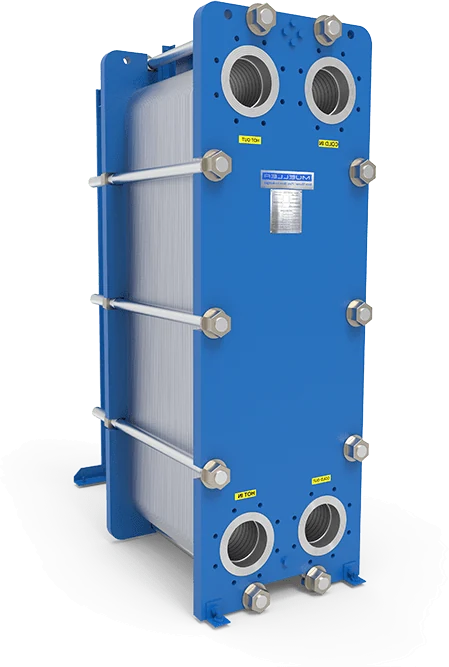
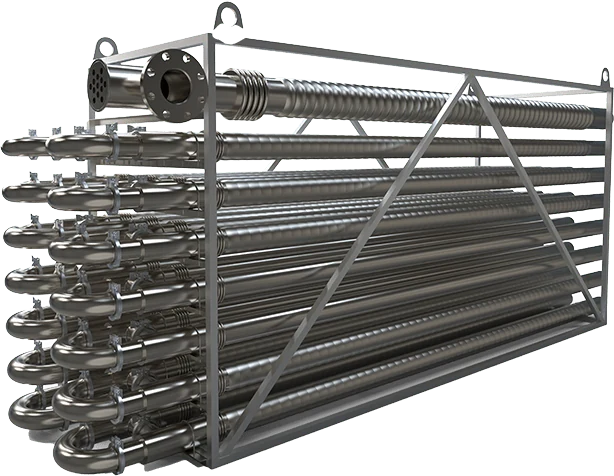
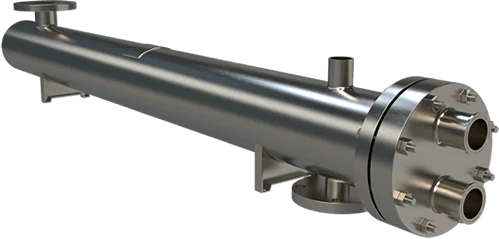
Every dairy exchanger we build belongs to one of three families: the gasketed plate, the tube-in-tube, and the straight tube in a sanitary shell. They are not catalog options to pick by price. Each family exists because a dairy product behaves a particular way inside a channel, and choosing the wrong one shows up within weeks as short runs, burn-on, broken texture, or a CIP cycle that never quite gets the unit clean.
Water-like streams such as skim, whole milk, whey and permeate belong on a gasketed plate, where a 3–5 mm channel gives the most heat transfer per square foot and the closest approach. Raise the fat above about 30 percent, or switch to ice cream mix, and the cold-end viscosity calls for a wider channel. Once a cultured product has been broken, or once fruit pieces are in the stream, the plate's contact points become the problem and a tube becomes the answer.
Two conditions overrule the product. A plant that must open and brush every tube needs straight bores it can sight down. A duty beyond what a gasketed pack will hold, or an ultra-pasteurizing temperature of 280°F and up, moves to a welded tubular shell. Regeneration and the double-wall question are then settled inside whichever family the product chose.
The clear distance between two neighboring heat transfer surfaces on the product side, set by the plate pressing depth or by the annulus between two tubes. In dairy work it runs from about 3 mm on a milk plate to 6–12 mm on a wide-gap plate, and it decides what a unit can pass without plugging.
Where each family runs out
A gasketed plate is limited by its elastomer and by its contact points. The gasket sets the ceiling on temperature and pressure, and the points where neighboring plates touch are where a fiber, a seed or a curd particle lodges and starts a deposit. Inside those limits nothing beats it on area, approach or floor space.
Tubular units trade that compactness for an open path. They need more surface for the same duty, run a wider approach, hold more product in the pipework at changeover, and take a longer footprint. The straight tube in a shell adds the ability to brush every bore and to carry a pressure or temperature no gasket would accept, at the highest cost per square foot of the three.
What lets us recommend one
The construction follows from a short list of facts about the stream. Name the product and its fat and solids, say whether it carries fines, pulp or pieces, and give the flow with inlet and outlet temperatures on the product side. Add the utility you have, whether the line regenerates, whether it runs under the PMO, and whether you need a complete unit or a new pack or bundle.
With that, our application engineers can name the family, the gap and the section layout before any price is drawn up. If the product sits on a boundary, the plate, wide-gap or tube comparison walks through the deciding points, and a quote request carries the same fields straight to sales.
- Product, fat and solids
- Fines, pulp or pieces
- Flow and temperatures, both sides
- Regeneration, PMO, unit or pack
Choosing a construction
It can run light cream and half-and-half without trouble. Heavy cream at 36–40 percent fat thickens at the cooler outlet, so the 3–5 mm milk channel starts to load up, and its fat swells the EPDM gaskets most milk packs use. Plants that run both usually keep a separate wide-gap pack with NBR gaskets for the cream, or specify HNBR where one frame must do both.
Not on a water-like product. A tube unit for fluid milk needs far more surface, a longer footprint and a wider approach than a plate, and it can not reach the regeneration a plate frame holds in the same space. Choose tubular because the product needs an open path, not as insurance. When the product sits on a boundary, size for the harder of the two streams.
Yes, where your inspector expects the symbol. Plate units are built to the 3-A plate standard, 11-10, and tube-in-tube and straight-tube units to the 3-A tubular standard, 12-08. Plants that do not need the symbol can take a food-grade build in the same 316L with the same finish, which shortens the paperwork but not the sanitary detail.
Yes. We supply new replacement plates, new gasket sets and new tube bundles matched to the frame or shell you already run, as well as complete units. Send the nameplate data, the plate count and the pass arrangement, and say whether the duty has changed since the unit was bought, because a changed duty is the most common reason to quote a new unit instead.
Related
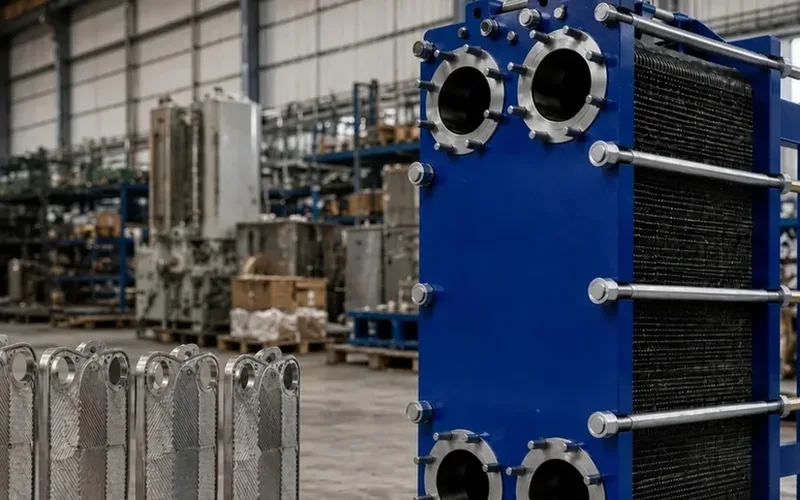
Heat Exchangers
Multi-Section Frames
HTST plate heat exchanger with regenerator, heater and cooler sections in one frame, split by connector plates with sanitary section ports.
+ Learn More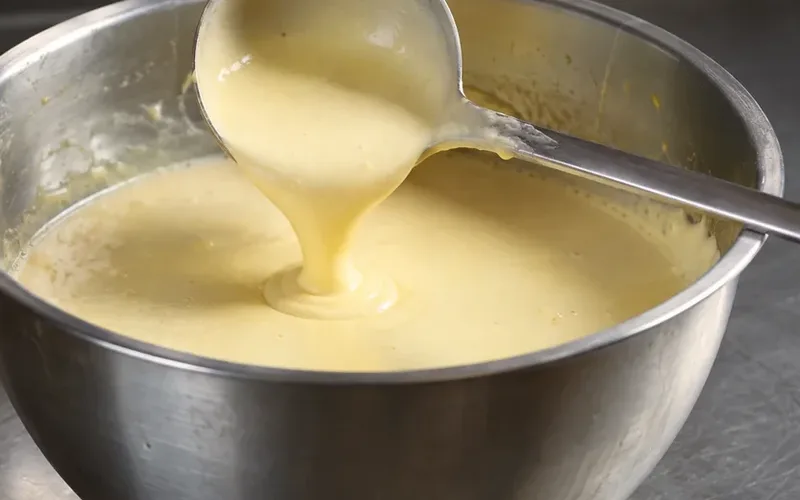
Heat Exchangers
Wide-Gap Plate
Wide gap plate heat exchanger with 6–12 mm product channels for cream above about 30 percent fat, ice cream mix and product that carries fines.
+ Learn More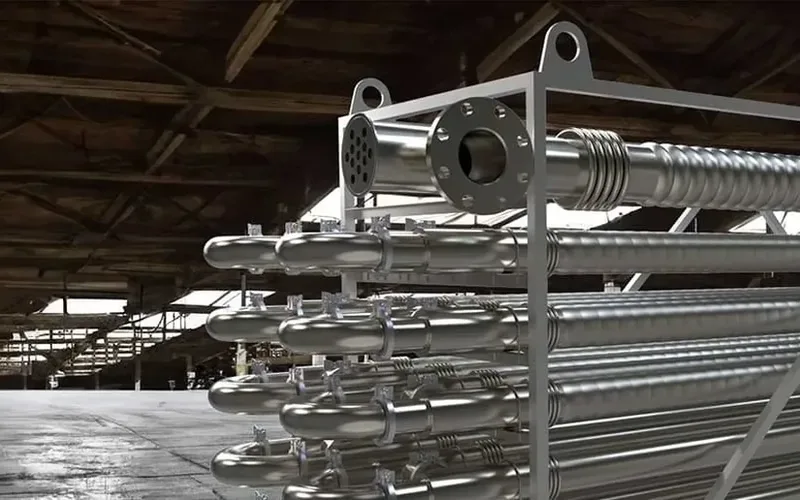
Heat Exchangers
Corrugated Tube
Corrugated tube heat exchanger for viscous and cultured dairy product: low-shear cooling of stirred yogurt, sour cream and kefir after the break.
+ Learn More