
1-805-484-2992
Quotes - Engineering - SalesA tube that cleans its own wall
A scraped-surface heat exchanger is a jacketed cylinder with a rotating shaft down its center. Blades on the shaft sweep the inside wall of the cylinder as it turns, so product is lifted off the heat transfer surface every few seconds and mixed back into the stream. Product flows through the space between shaft and wall, and hot water, steam, chilled water or glycol runs in the jacket around it.
That scraping is the whole point. In a plain tube or a plate, a thick product moves slowly at the wall, the film there heats or cools far past the bulk, and it either burns on, sets or freezes. The blades keep renewing that film, so heat keeps moving into or out of products a tube cannot handle: cream cheese cooled for cold pack, process cheese and cheese sauce, puddings and custards, dairy spreads and heavy fruit preparations.
It costs more than a tube, uses a drive and a shaft seal, and only earns its place when the product leaves no other choice. Where a corrugated tube will do the job, we will quote that instead.
When product sticks, sets or scorches at the wall, the blades clear it every few seconds so heat keeps moving through the stream.
Scraping renews the wall film that a tube or plate lets build up.

The cylinder and jacket
- 316L product cylinder, 32 Ra or 20 Ra on request
- Jacket on hot water, steam, chilled water or glycol
- Tri-clamp product inlet and outlet
- Vertical or horizontal mounting to suit the room
- ASME Section VIII jacket above 15 psig

The shaft, blades and seal
- Blades in food-grade plastic or stainless steel
- Shaft size chosen for the product's thickness
- Variable speed drive to set shear and scraping rate
- Mechanical shaft seal, flushed for hot or sticky product
- Shaft withdraws for blade change and inspection
What sets the size




Scraped surface standard build
These are the starting points we quote from. Product viscosity, how it changes with temperature and whether it carries pieces decide the shaft, the blade count and the length.
| Feature | Standard build |
| Product cylinder | 316L stainless, polished |
| Product finish | 32 Ra (about 0.8 µm); 20 Ra on request |
| Utility jacket | hot water, steam, chilled water or glycol |
| Blades | food-grade plastic or stainless steel |
| Drive | variable speed electric motor |
| Shaft seal | mechanical, flushed where product sets or burns |
| Product connections | tri-clamp |
| Mounting | vertical or horizontal |
| Jacket code | ASME Section VIII above 15 psig |
When the job moves past a tube
Signs a tube will not do
We look at the product before we look at the exchanger. A product that stays pumpable but thick is usually a corrugated or multi-tube job. A product that thickens sharply or sets as it cools, that bakes onto a wall at modest temperatures, or that has to be worked while it changes state is where a scraped surface becomes the right answer. Cream cheese for cold pack, process cheese and cheese sauce, puddings and custards, and dairy spreads all fall on that side of the line.
Shear, speed and air
Shaft speed is the setting a plant tunes. Faster scraping lifts heat transfer, but it also works the product harder, can whip in air and can thin a body the recipe depends on. Slower scraping is gentler and lets a film build. We size for a speed range rather than one figure, so the line can find the point where the product leaves at temperature with the body it needs.
- Viscosity at inlet and outlet temperature
- Whether the product sets, crystallizes or fouls
- Largest piece size and piece fraction, if any
- Flow, inlet and outlet temperatures, and the utility
- How much shear and air the product can take
Seals and cleaning
The shaft seal is the part a maintenance crew will know best. A flushed mechanical seal keeps product from setting or burning on the seal faces. Units clean in place with the shaft turning and the cleaning solution scraped across the wall the same way the product was. The blades are wear parts; we supply new blades and new seals for the units we build.
Pairing with tubes and plates
A scraped-surface unit rarely runs alone. A plate or tube often takes a thinner stream partway, and the scraped surface finishes the duty where the product turns thick, which keeps the most expensive surface as small as possible. On a cream cheese line, for example, the curd is heated in tubes and only the cold-pack cooling goes through the scraped surface, as set out on our cream cheese page.
Scraped surface questions
It works on the same principle, a scraped cylinder with refrigerant in the jacket, but a freezer also whips air into the mix and is built and sold as its own machine. The units on this page heat and cool thick dairy product without freezing it. The ice cream mix itself, before the freezer, runs on a plate or wide-gap frame.
More per square foot of surface, because it carries a drive, a shaft, blades and a seal. That is why we keep the scraped section as short as the duty allows and let tubes or plates do the thin part of the job. On products that set or foul, the comparison is against a tube that would not run at all.
Within limits. The gap between shaft and wall, and the blade action, set the largest piece that passes without being cut. Soft pieces may be broken up, so a product sold on visible fruit is often better on a single-tube unit. Tell us the piece size, how firm it is and how much of the stream it makes up.
Blades and the shaft seal are the wear parts, and the seal is the one to watch on hot or sticky product. We supply new blades, new seals and new shafts for scraped-surface units we build. We do not repair or rebuild a customer-owned unit; the new parts ship ready to install.
Related
Heat Exchangers
Single Tube
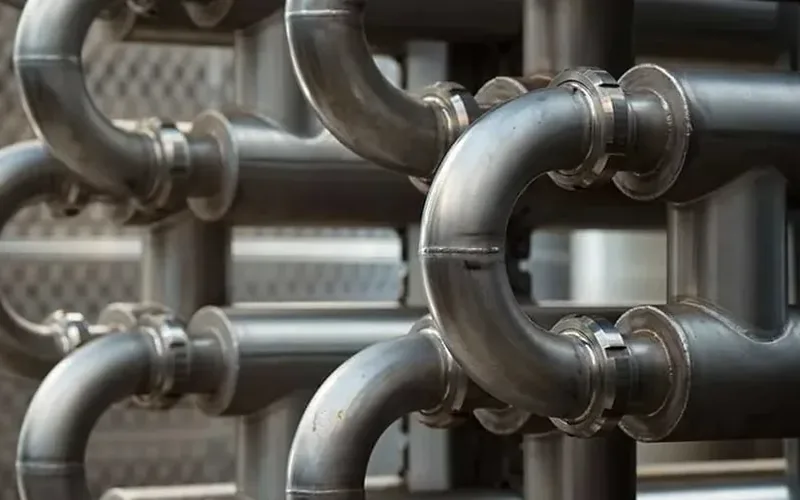
Single tube heat exchanger with a full sanitary bore for dairy product carrying fruit pieces, pulp or grains, built in 316L to 3-A 12-08.
+ Learn More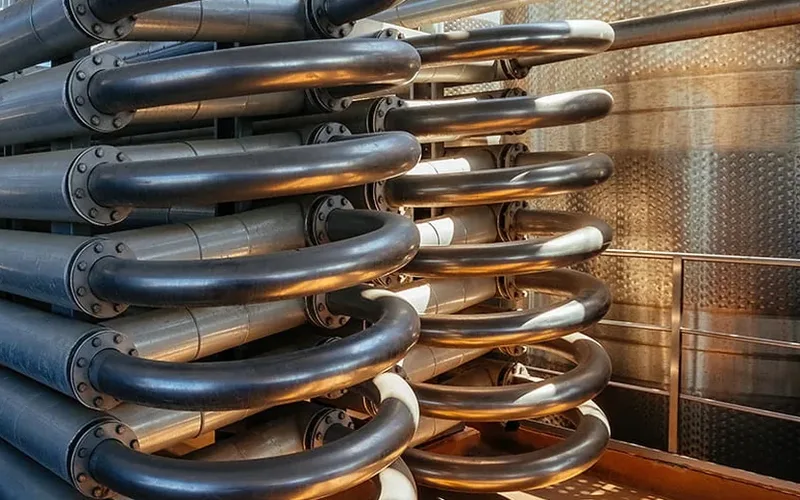
Heat Exchangers
Multi-Tube
Multi tube heat exchanger for dairy: parallel 316L product tubes in one shell for capacity on milk, cream, whey and fine-particle product.
+ Learn More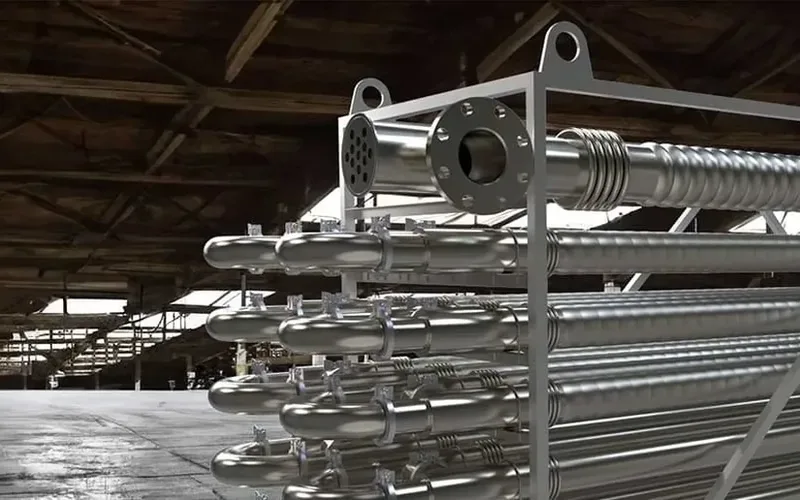
Heat Exchangers
Corrugated Tube
Corrugated tube heat exchanger for viscous and cultured dairy product: low-shear cooling of stirred yogurt, sour cream and kefir after the break.
+ Learn More