
1-805-484-2992
Quotes - Engineering - SalesCultured cream puts fat on the gaskets and body in the tube
Plate up to the culture tank, tubular after it
Sour cream starts as cream standardized to at least 18 percent milkfat, usually with added nonfat solids and sometimes a stabilizer. Before culturing it is a heavy liquid that a gasketed plate frame can pasteurize, at 166°F for 15 seconds because the fat is over 10 percent, with the homogenizer placed between the heater and the cooler. Fat swells EPDM, so the gaskets on that frame are NBR or HNBR rather than the EPDM a milk unit carries.
The cooling section brings the cream down to culture temperature, around 70–75°F for the mesophilic cultures most plants use, and incubation then runs for many hours in a tank or in the cup. Overshooting that temperature on the cold side slows the culture and stretches the schedule, so this section usually runs on tempered water.
Once a tank-cultured batch has set, it is broken and pumped as a thick, partly structured body that will not go back through plate channels without losing texture and plugging the pack. Cooling toward filling temperature moves to corrugated tube-in-tube with a generous bore, often in partial steps, with the cooling room finishing the job.
See the Corrugated Tube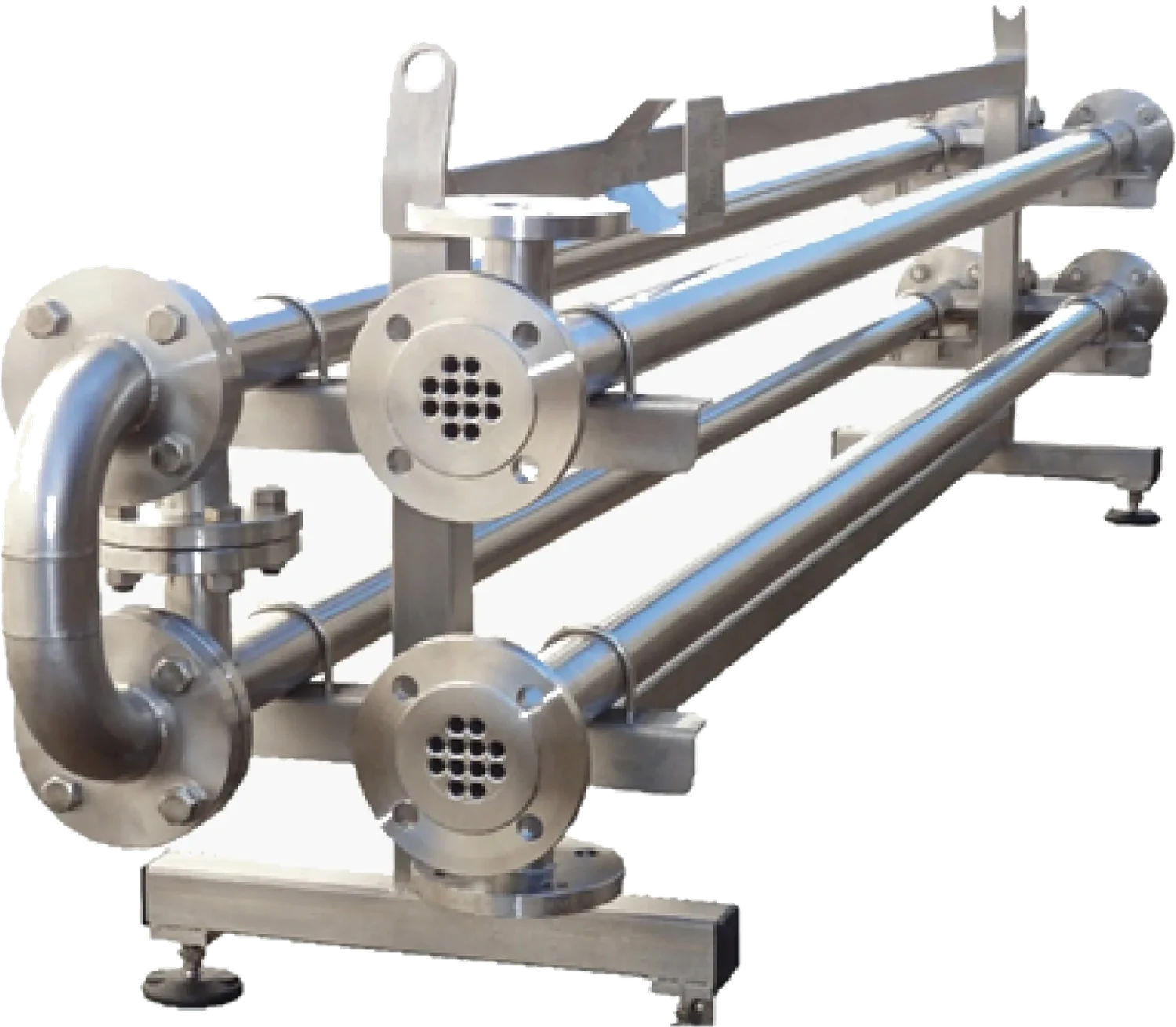
Sour cream process conditions
Light and reduced-fat recipes move the fat figure but leave the construction choice the same. Send the actual recipe range when you ask for a quote.
| Condition | Typical value |
| Milkfat, standard sour cream | 18% or more |
| HTST pasteurizing | 166°F for 15 seconds |
| Vat pasteurizing alternative | 150°F for 30 minutes |
| Culture temperature | around 70–75°F, mesophilic |
| Plate gaskets | NBR, or HNBR where CIP runs hot |
| Post-culture cooler | corrugated tube-in-tube, larger bore |
| Product-contact finish | 32 Ra standard |
| Connections | tri-clamp, self-draining product side |
Where sour cream lines go wrong
Gasket choice on the cream frame
EPDM in contact with high-fat product swells, softens and starts to extrude from its groove, and a frame that seals on day one weeps within months. NBR resists the fat but ages faster in hot caustic and acid. HNBR covers both at a higher price. The trade-off between these compounds, and the FDA compliance each must carry, is set out under 316L and elastomers.
The tubular cooler after the culture tank carries far less elastomer: clamp gaskets at the connections and seals at the return bends. Those take the same compound as the plate frame, so one spare-parts list covers the line and nobody fits an EPDM clamp seal on a high-fat product by mistake.
Homogenizing hot, cooling to culture
Most plants homogenize sour cream hot, after the heater, and many use two-stage homogenization to build body. The cooler that follows has a small temperature drop and a sensitive target. Chilled water on that section is the common mistake: the controller hunts, the cream dips below culture temperature in places, and set time drifts by an hour or more.
- Tempered water on the culture-temperature section
- Modulating control on the water side, product flow held steady
- Outlet sensor at the line feeding the culture tank
After the culture: keep the body
Broken sour cream is far thicker than stirred yogurt, so the film coefficient on the product side is low and the cooler is long for its duty. The bore is chosen first to keep pressure drop inside what the positive-displacement pump can deliver, then the length follows. Corrugation helps the coefficient at low velocity without tightening the passage.
- Apparent viscosity of the broken product at inlet and outlet
- Pump type and the pressure it can deliver
- Target filling temperature and whether the cooling room finishes
- Batch size and how fast each tank must empty
Light and reduced-fat recipes
Cutting fat rarely makes the product thinner, because the recipe adds nonfat solids or stabilizer to hold the body. The post-culture cooler stays tubular. The plate frame may be able to drop to EPDM if every recipe on it sits well below cream-level fat, but a plant that runs full-fat on the same frame should keep NBR.
Sour cream questions
A wide-gap channel handles cream and ice cream mix, but broken sour cream is a structured body, not a viscous liquid. The plate contact points and gasket edges tear that structure, and curd builds up in the corners of the channel until pressure drop climbs. Tube-in-tube has neither problem, which is why it follows the culture tank.
No. Cup-set product is filled warm at culture temperature, incubated in the package and then chilled in a cooling room. The only exchanger on that line is the plate frame that pasteurizes the cream and brings it down to culture temperature. The tubular cooler belongs to tank-cultured product that is broken and pumped before filling.
It can if the gaskets are NBR or HNBR and the plates suit the fat. Above about 30 percent fat, cream thickens sharply when cold and a standard 3–5 mm channel starts to load up, so a frame shared with heavy cream usually needs wide-gap plates in the cooling section. Send both recipes and we size for the harder one.
Fat does not bake onto plates the way protein does, but the added nonfat solids in a sour cream recipe raise the protein load per gallon, and the heater sees all of it. Hold the hot-water approach to 2–5°F above the outlet and keep plate velocity up. A heater built with a wide approach to save plates fouls first at its hot end.
Related
Dairy Solutions
Cheese Milk
Cheese milk heat exchanger for pasteurizing or thermizing, then trimming the milk to vat set temperature. Plate frame sizing, regeneration and outlet control.
+ Learn More
Dairy Solutions
Yogurt & Cultured Product
Tube in tube yogurt cooling after the break, plus plate heating of the milk base to 185–195°F and cooling to incubation temperature.
+ Learn More
Dairy Solutions
Cottage Cheese
Cottage cheese heat exchangers for skim milk pasteurizing, curd wash water chilling and cream dressing pasteurized at 166°F, then cooled to 40°F or lower.
+ Learn More