
1-805-484-2992
Quotes - Engineering - SalesThe hold is fixed, the cooling is not
Where a plate frame earns its place beside a batch vat
A vat pasteurizer heats a batch, holds every particle at temperature for 30 minutes with the agitator running, and then has to get the product cold. For milk the hold is 145°F; cream, mixes, high-solids and sweetened products need 150°F, and eggnog 155°F. The hold time is set by the ordinance. How long the batch then spends warm is set by the equipment.
Cooling through the vat jacket is slow because the wall area is small for the volume and the temperature difference shrinks as the batch cools. Product sitting between 145°F and refrigeration temperature is product losing flavor and shelf life. Pumping the batch out through a plate cooler on tower water and then chilled water or glycol brings it to 45°F or below in the time it takes to empty the vat.
We supply the cooler and, where it pays, a raw-milk preheater for the next fill. The vat, its leak-protector valves and its recorders stay as the regulator approved them.
See the Gasketed Plate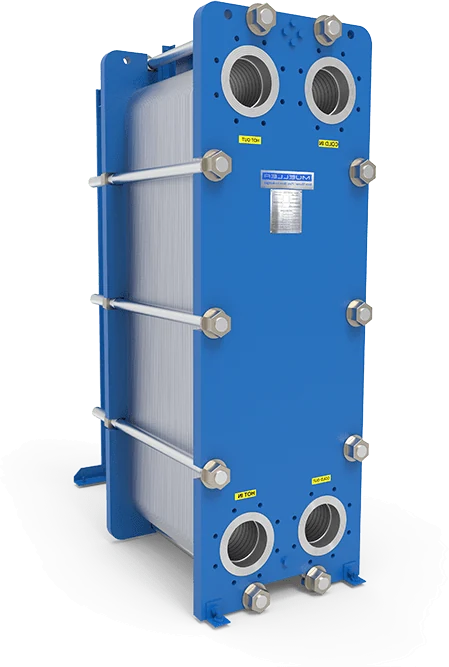
Typical vat cooling duty
These are the figures we start from. Batch size and the time the plant can give to emptying the vat set the flow, and the flow sets the plate count.
| Condition | Typical value |
| Milk hold in the vat | 145°F for 30 minutes |
| Cream, mixes, 18% solids or sweetened | 150°F for 30 minutes |
| Eggnog | 155°F for 30 minutes |
| Airspace during the hold | at least 5°F above hold temperature |
| Pasteurized product leaving the cooler | 45°F or below, often 36–40°F |
| First cooler section | tower or well water |
| Second cooler section | chilled water or propylene glycol |
| Pump-out flow | batch volume divided by the emptying time |
| Gaskets | EPDM; NBR on high-fat batches |
Sizing a cooler around a batch
Flow comes from the emptying time
A continuous pasteurizer has a fixed flow. A vat does not, so we work back from the batch. A 500 gal vat that the plant wants empty in 20 minutes needs 25 gpm through the cooler; the same vat emptied in 40 minutes needs half that, and a smaller frame. Tell us the largest batch, the emptying time the schedule allows and whether two vats ever empty at once.
Two sections, two utilities
Taking 145°F product straight to 38°F on glycol wastes refrigeration on heat that tower or well water can remove for almost nothing. A first section on water brings the batch into the 70s or 80s, and a second section on chilled water or glycol finishes it. The split point depends on the water temperature in the hottest month, so send that rather than the annual average.
- Largest batch volume and the emptying time
- Product: milk, cream, mix, dressing or cultured base
- Fat and total solids, hot and cold viscosity
- Water and chilled water or glycol temperatures in summer
- Outlet temperature the filler or storage tank needs
Preheating the next fill
Raw milk entering the vat at 38°F has to be lifted more than 100°F in the jacket before the hold can start. A small plate on hot water warms the fill on its way in, which shortens heat-up and the batch cycle. The preheater handles raw milk only and the cooler handles pasteurized product only, so the two never share a plate and raw product can not reach the pasteurized side through a gasket.
Cream dressing and cultured bases
Many vats in cheese and cultured plants heat cream dressing or a yogurt base rather than milk. Dressing for cottage cheese is held at 150°F for 30 minutes and must reach 40°F or lower afterward, and it is thicker than milk, so the cooler gets the wider channel of a wide-gap plate. A base that has already set into a gel goes to a tube instead.
Vat and batch cooling questions
It can, and small plants often accept that. The jacket has little area for the volume, and its driving force falls as the batch cools, so the last stretch to refrigeration temperature is the slowest. If the batch must be cold before the next fill, or the product loses quality while warm, a plate cooler on the pump-out line usually pays for itself in vat hours.
The vat keeps its own controls: the recording and indicating thermometers, airspace heating and leak-protector valves stay as approved. The cooler sits downstream of the outlet valve and handles only pasteurized product. Plants send the regulator the piping drawing before installation, and we supply the frame drawing and material documents for that review.
Yes, when the vats empty one after the other. Size it for the larger batch at the shortest emptying time on the schedule. If two vats can empty at the same moment, the frame needs the combined flow or a second cooler, and the pump-out piping needs a clear rule for which vat feeds the frame.
Chilled water at 33–34°F reaches 38–40°F product on a close-approach plate and is simpler to run. Glycol is worth it when the outlet must sit at 36°F or colder, or when the plant already runs a glycol loop. A freeze interlock on the glycol side protects the plates when product flow stops.
Related
Dairy Solutions
Raw Milk Cooling
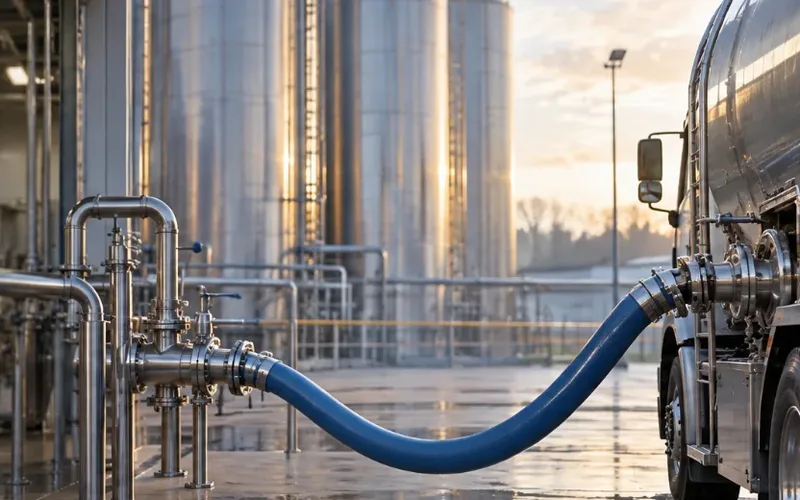
A raw milk cooler on the plant receiving line takes tanker milk to 36–40°F before the silo. Plate sizing, chilled water or glycol, and 3-A build.
+ Learn More
Dairy Solutions
HTST & Regeneration
An HTST plate heat exchanger puts regenerator, heater and cooler in one frame. How regeneration percent, the 1 psi rule and the section layout are sized.
+ Learn More
Dairy Solutions
White Milk
White milk processing runs skim, 1%, 2% and whole milk through one HTST frame. Where standardization and the homogenizer sit, and how the pack is sized.
+ Learn More