
1-805-484-2992
Quotes - Engineering - SalesAccu-Therm plate units in a dairy plant
Paul Mueller Company builds its plate heat exchangers under the Accu-Therm name, and the sanitary model is offered for sanitary process work with ASME registration available. The maker describes a gasket that locates positively in its groove, with a lock-in feature on most models, a separate gasket for each fluid, and the space between those gaskets open to atmosphere so a failed seal shows outside the pack.
For dairy, the useful features are the ones that let one frame do several jobs. An Accu-Therm unit can carry two or more sections in one frame by adding intermediate divider sections, which is how a fluid milk unit puts regeneration, heating and cooling in a single press. The maker also publishes multiple embossed plate patterns, a free-flow plate design and a double-wall plate, and it presents the range as handling viscous solutions and particulates.
HeatX sizes and supplies the Mueller line. A dairy engineer who already runs Accu-Therm frames, or wants one, can get the whole decision from us: which plate pattern suits the product, how many sections the frame needs, and what the build must carry to meet 3-A and the PMO.
Matching Accu-Therm features to dairy duty
The left column sets each feature against the dairy duty it serves; the right lists what we need to size a Mueller unit for your plant.
Feature and duty
- Embossed chevron plates: Fluid milk, skim, whey and permeate
- Free-flow plate: Heavy cream, ice cream mix, product with fines
- Double-wall plate: Milk-to-milk regenerator kept behind two walls
- Divider sections: Regenerator, heater and cooler in one frame
- Gasket styles: Loc-in, glue-in and clip-in, as the maker publishes
- ASME registration: Utility side above 15 psig
What we need to size it
- Product: Type, fat and solids, particulates
- Flow: lb/h or gal/h, with any seasonal peak
- Temperatures: Inlet and outlet, product and utility sides
- Utility: Hot water, chilled water or propylene glycol
- Regeneration: Target percent, or once-through
- Compliance: 3-A, PMO and any double-wall requirement
One frame, several sections, sized as one decision
Divider sections let a single Accu-Therm frame regenerate, heat and cool. Size the sections together, because a change in regeneration moves load between heater and cooler and changes the plate count in each.
Choosing the plate for the product
Water-like streams such as skim, whole milk, whey and permeate run on an embossed chevron plate, which gives the highest film coefficient and the smallest frame. Typical approaches on chilled water are 2–4°F, and about 5–8°F on propylene glycol.
Viscosity changes the answer. Heavy cream at 36–40 percent fat and ice cream mix thicken as they cool, and the open channel of a free-flow plate keeps pressure drop in hand where a chevron would choke. Once the stream carries real pieces or broken curd, a plate is no longer the right construction, and we move the duty to tube-in-tube.
Gasket styles and the PMO
The maker publishes instructions for three ways of holding a gasket, loc-in, glue-in and clip-in, plus a mixed-gasket manual for frames carrying more than one style. Note which style each section uses before ordering parts, because the groove pressed into the plate decides it.
On a milk regenerator the PMO requires the pasteurized side to run at least 1 psi above raw, so any leak flows toward the raw side. A double-wall plate adds a second barrier with a vented space between. Many plants use both, and the full Mueller sanitary range is set out on our Mueller heat exchanger site.
Call and talk it through with an engineer: 1-805-484-2992
Mueller plate questions
Plants can specify 3-A construction where the inspector expects the symbol, together with 316L product-contact parts finished to 32 Ra, or 20 Ra if your audit asks for the finer finish. Raise it at the start, because the 3-A build and its paperwork are priced into the quote, and the quote states what the unit will carry.
In separate sections, yes, using divider sections and the right plate in each: chevron plates on milk, free-flow plates on the cream cooler. The gaskets differ too, EPDM on milk and hot water, nitrile on cream. Running cream through a section sized for milk is the usual cause of short runs between cleanings.
On a milk-to-milk regenerator where the plant, its customer or the state wants two walls between raw and pasteurized milk on top of the PMO pressure rule. It costs heat transfer, so the regenerator needs more plates for the same regeneration, typicaly 85–94 percent on an HTST unit.
Yes. Send the pasteurizing temperature, 161°F for milk or 166°F where fat is 10 percent or more, the hot-water supply temperature and flow, and the approach you can accept, typically 2–5°F at the outlet. Steam reaches the heater through a hot-water set, never straight onto milk plates.
Related
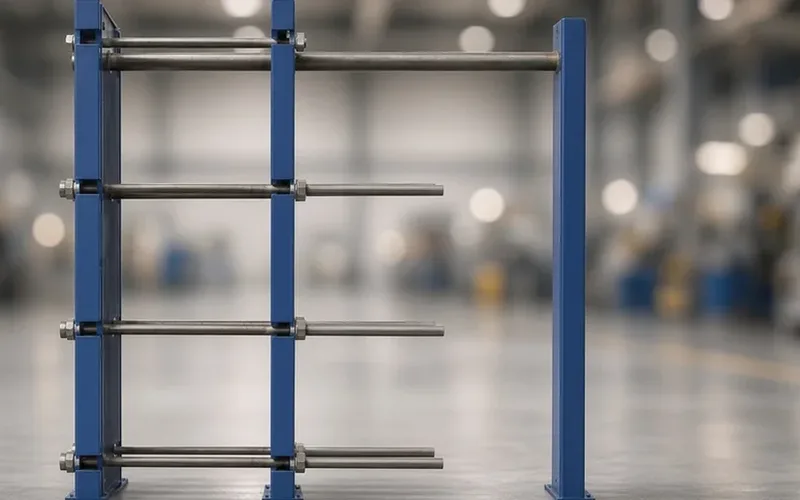
Sizing & Selection
Look Up by Manufacturer & Model
Plate heat exchanger replacement by model: find the make on your nameplate, see what to read off its frame, and request new plates, gaskets or a unit.
+ Learn More
Sizing & Selection
Read the Nameplate
How to read a plate heat exchanger nameplate or a tubular unit's plate: serial, model, design pressure and temperature, year, and what to photograph.
+ Learn More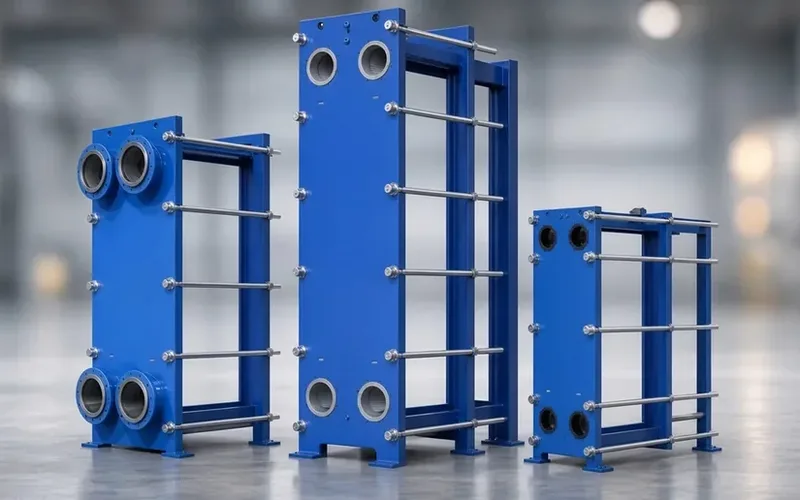
Sizing & Selection
Plates, Gap & Passes
How a replacement pack is matched: plate heat exchanger plate count, plate model, gap, chevron, passes, port size and the compression dimension.
+ Learn More