
1-805-484-2992
Quotes - Engineering - SalesAlfa Laval frames in a dairy plant
The Alfa Laval plate units a dairy replacement buyer meets most often belong to two sanitary families the maker publishes. FrontLine is the range it describes for dairy, food and beverage duty, with a frame that can carry several sections for pasteurizing. BaseLine is a classic plate-and-frame design the maker lists for milk processing and CIP heating. There is also FrontLine Automatic, a frame that opens and closes under motor and PLC control for high-throughput pasteurizing.
The published frame sizes run Front6, Front8, Front10 and Front15 for FrontLine, and Base3 through Base11 for BaseLine. That designation is the first thing we ask for, because it fixes plate height, port diameter and carrying-bar length before any thermal question comes up. A FrontLine press holding a regenerator, heater and cooler is a multi-section unit, and each section is matched on its own.
Plate choice is the second decision. The plate family published for these frames uses clip-on gaskets and comes as a standard chevron, a WideStream version with a wider pattern and fewer contact points for product carrying pulp or fiber, and a Gemini double-wall plate, two plates pressed together to guard against cross-contamination. Which of the three hangs in each section changes what we quote.
Reading the frame and quoting the pack
The left column is what to copy from the frame and from one plate per section; the right column is what we build and the facts that let us price it without a second round of questions.
Off the frame and plate
- Series and size: FrontLine or BaseLine, plus the size on the nameplate
- Serial number: From the nameplate on the fixed head
- Plates per section: Counted between connection plates
- Plate variant: Standard chevron, WideStream or Gemini double wall
- Tightened length: Head to follower, measured closed
- Gasket compound: EPDM or nitrile, from the plate or the last order
What we supply
- New plates: Made to fit the frame series and size
- New gaskets: Clip-on profile to suit the plate family
- Equivalent new unit: A complete frame sized to the current duty
- Sections: Regenerator, heater and cooler priced one by one
- Quote basis: Product, flows, temperatures and 3-A or PMO scope
Send the series and size before you count a single plate
The series name and size number fix plate height and port bore. With those and a photo of the pattern we can match a pack; a plate count on its own fits several frames and invites the wrong order.
When a new frame beats a new pack
A FrontLine press set up for a smaller plant often has no room left on its carrying bar. If throughput has grown, more plates will not fit, and the fair comparison is a new pack in the old frame against an equivalent new unit sized for the flow you run now. When the bar is full we price both.
The same holds when raw and pasteurized milk now need two walls between them in the regenerator. Moving a section from standard plates to a double-wall plate changes plate count and pressure drop, so we size it as a new duty rather than a like-for-like swap. Double-wall plate construction shows how the leak path works.
Clip-on gaskets and compound
A clip-on gasket hangs on the plate edge without glue, so it changes quickly, but only the right profile will sit flat in the groove. We match the profile to the plate family and the compound to the section: EPDM where hot water and CIP chemistry dominate, nitrile where cream or other high-fat product runs, since fat swells EPDM.
We sell new plates and new gaskets; we do not regasket or refurbish a pack the plant already owns. Plan the changeover with your own crew, and consider keeping one spare section of plates on the shelf for the regenerator, which in many plants is the first section to need new plates.
Call and talk it through with an engineer: 1-805-484-2992
Source note: Alfa Laval is a trademark of its owner and appears here only to identify equipment for cross-reference. The series and plate names above come from the maker's own published literature, checked in October 2026; details it does not publish are left out.
Replacement plate questions
Only inside one section, and only if pattern, gap and gasket profile match exactly. Putting a WideStream plate among standard chevrons changes how flow divides between channels and raises the pressure drop unevenly. Most plants replace a whole section at once, usually the regenerator or the heater, because those plates see the most thermal cycling.
Yes, as new double-wall plates sized for the regenerator duty, or as part of an equivalent new unit. Tell us the differential your controls hold across that section; under the PMO the pasteurized side stays at least 1 psi above raw. A second wall adds a barrier but does not replace the pressure rule.
The automatic opening does not alter the pack, so the series, size and plate count still let us match it. Say the frame is automatic anyway, because the follower travel and tightened dimension decide how many plates the frame can carry if the plant later adds capacity.
Check the regenerator and the heater first. The heater plates see hot water every run and the regenerator plates carry the pressure differential that keeps the unit legal, so pinholes there matter most. A dye-penetrant check on a few plates from each section tells you whether to order one section or the whole pack.
Related
Sizing & Selection
Look Up by Manufacturer & Model
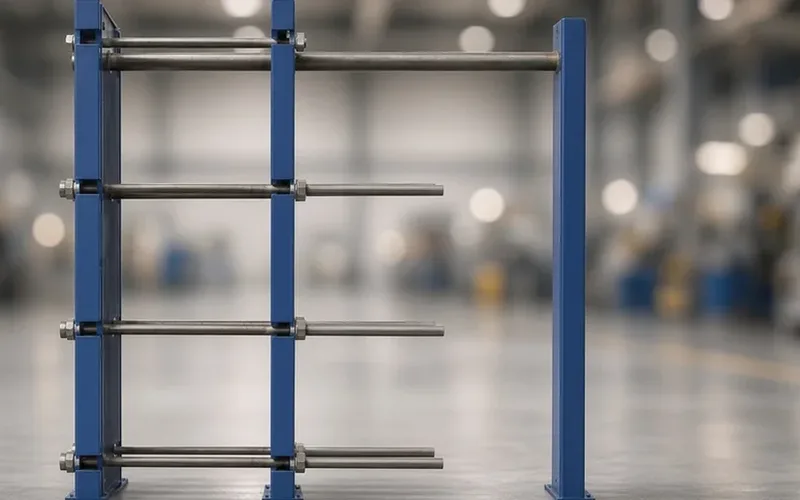
Plate heat exchanger replacement by model: find the make on your nameplate, see what to read off its frame, and request new plates, gaskets or a unit.
+ Learn More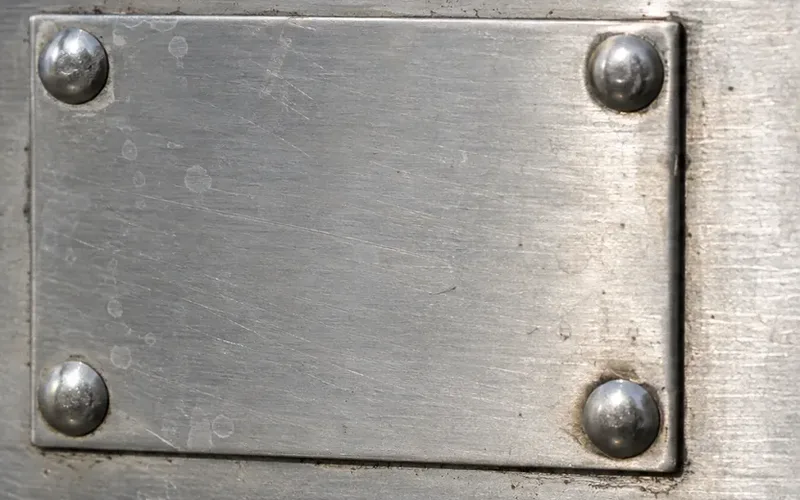
Sizing & Selection
Read the Nameplate
How to read a plate heat exchanger nameplate or a tubular unit's plate: serial, model, design pressure and temperature, year, and what to photograph.
+ Learn More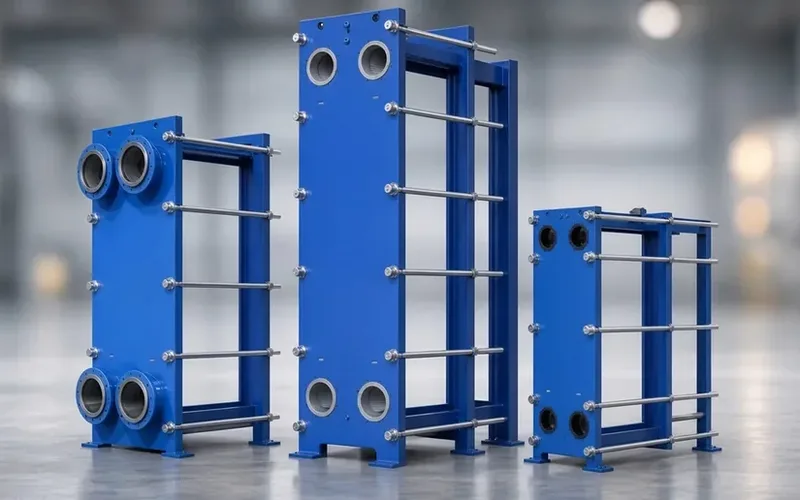
Sizing & Selection
Plates, Gap & Passes
How a replacement pack is matched: plate heat exchanger plate count, plate model, gap, chevron, passes, port size and the compression dimension.
+ Learn More