
1-805-484-2992
Quotes - Engineering - SalesAPV plate packs and the pattern question
APV is published today as an SPX Flow brand, and its sanitary plate range is described by plate configuration rather than by one model name. The published options are EnergySaver, a narrow-gap plate with many contact points for thermal efficiency; DuraFlow, a wide-gap plate with fewer contact points for viscous product and small particles; EasyFlow, a wide-gap plate aimed at pulp and viscous flow; and DuoSafety, a double-wall build of two plate layers per flow plate.
Those names matter to a buyer because a dairy plant often bought one pattern for a duty that has since moved on. A frame that ran skim milk on a narrow-gap plate may now carry cream at 40 percent fat or an ice cream mix, and reordering the same plate brings back the same high pressure drop and the same short run between cleanings.
When we quote new plates for an APV frame we start from the product now in the line, not the product the frame was bought for. If the duty still suits the original pattern, we match it. If it does not, we show which section should move to a wide-gap plate and what that change does to plate count and pressure drop.
From the frame to a firm quote
A pattern question cannot be answered from the nameplate alone. Pull one plate from each section, or photograph it square-on, and send these readings together with the product data.
Read off the frame and plates
- Nameplate: Model and serial, from the fixed frame
- Plate pattern: Narrow chevron or wide, open channel
- Double wall: Two plate layers pressed together
- Plates per section: Counted with the frame open
- Passes: Port arrangement at each connection plate
What we quote
- New plates: Same pattern, or a wide-gap change where the product needs it
- New gaskets: EPDM, nitrile or HNBR to suit each section
- Equivalent new unit: Sized to the product now in the line
- From you: Product, fat percent, particulates, flows, temperatures both sides
- Scope: Plates only, plates and gaskets, or a complete unit
Reorder for the product you run today
A pack bought for skim and now asked to carry heavy cream fouls sooner and loses flow as the product cools. Matching the old plate repeats that trouble; matching the product removes it.
When wide gap earns its place
Standard dairy plates run a channel gap of about 3–5 mm. Wide-gap plates open it to about 6–12 mm, which keeps cream above about 30 percent fat and ice cream mix moving without the pressure drop climbing as the product cools. The trade is a lower film coefficient, so a wide-gap section needs more area for the same duty.
Particulates decide it too. Fines and small pieces bridge the contact points of a narrow chevron, while a wide-gap plate with fewer contact points lets them through. Once real pieces or broken cultured product are in the stream, a plate is the wrong answer and a tube-in-tube unit takes over.
Double wall on a regenerator
A double-wall plate puts two sheets between the media, so a perforation drains to atmosphere where an operator can see it instead of crossing into the other stream. In dairy it belongs in the milk-to-milk regenerator where the plant or its inspector will not accept a single sheet between raw and pasteurized product.
A double-wall section moves less heat per plate than the single-wall plate it replaces, so converting a regenerator usually adds plates. Check the carrying bar before assuming the new pack fits the old frame; if it does not, an equivalent new unit can cost less than stretching the old one.
Call and talk it through with an engineer: 1-805-484-2992
Source note: APV and SPX Flow are trademarks of their owner, named on this page solely so equipment can be cross-referenced. Plate configuration names are taken from the maker's published product pages as reviewed in October 2026, and anything it does not publish has been omitted.
Before you order new plates
Sometimes, section by section, when the two plates share the frame's port size and hanging dimensions. A plant might keep a narrow-gap regenerator for milk and fit a wide-gap cooling section for cream. We confirm the fit from the frame model and a plate sample before quoting rather than assume two patterns interchange.
Send a square photograph of a whole plate with a tape measure accross it, the port diameter and the depth of the pressing. From those we can tell a narrow chevron from an open wide-gap pattern and judge whether a matched plate or an equivalent new unit suits the plant better.
On viscous product it usually cleans better, because CIP flow is not split around as many contact points. Every channel still needs turbulent cleaning velocity, so a wide-gap section sized for a slow product flow may need its own CIP flow check. We size the production run and the clean together.
No. We supply new plates, new gaskets and complete equivalent units. If your plates are pitted, cracked at the ports or stretched at the gasket groove, new plates are the fix; a plate that fails a dye-penetrant check should not go back into a dairy press under a fresh gasket.
Related
Sizing & Selection
Look Up by Manufacturer & Model
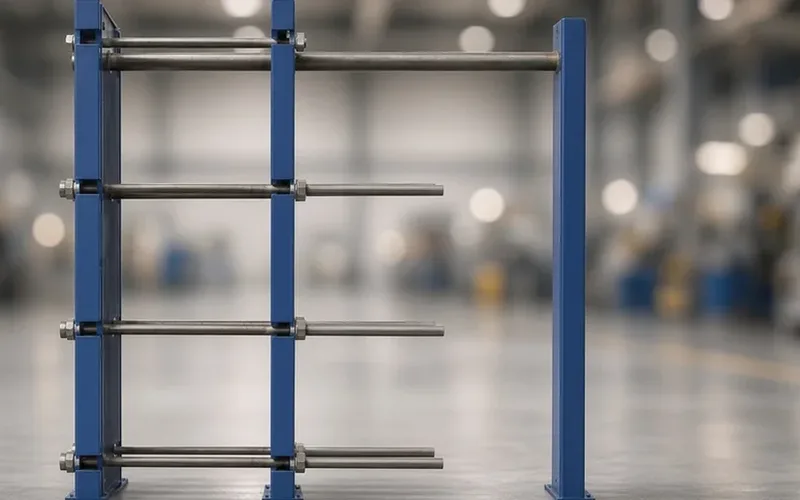
Plate heat exchanger replacement by model: find the make on your nameplate, see what to read off its frame, and request new plates, gaskets or a unit.
+ Learn More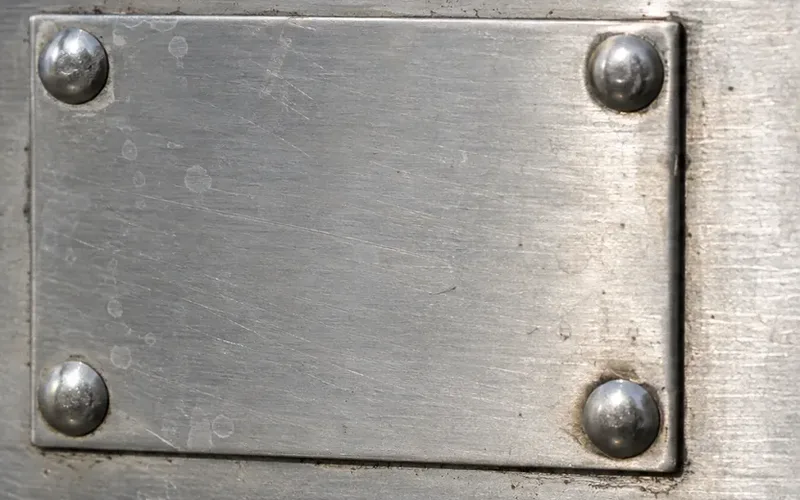
Sizing & Selection
Read the Nameplate
How to read a plate heat exchanger nameplate or a tubular unit's plate: serial, model, design pressure and temperature, year, and what to photograph.
+ Learn More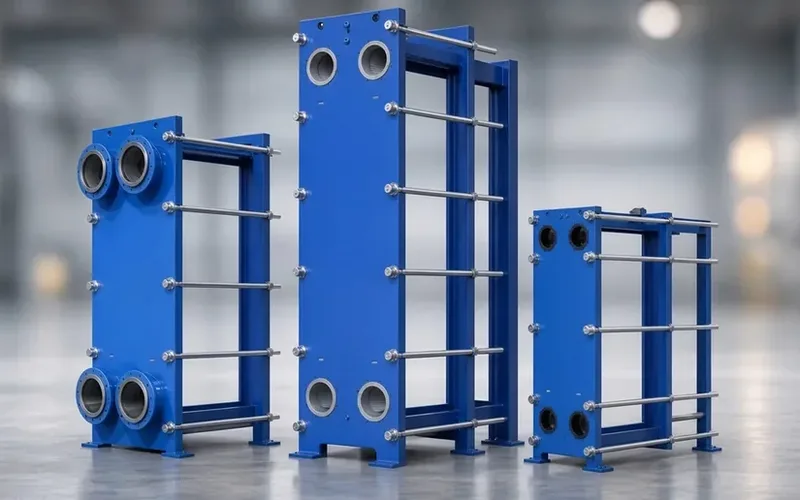
Sizing & Selection
Plates, Gap & Passes
How a replacement pack is matched: plate heat exchanger plate count, plate model, gap, chevron, passes, port size and the compression dimension.
+ Learn More