
1-805-484-2992
Quotes - Engineering - SalesSchmidt SIGMA plates in dairy duty
API Heat Transfer publishes its gasketed plate range under the Schmidt name as SIGMA plate heat exchangers, and states that its Schmidt sanitary plate units are built to 3-A Sanitary Standards and EHEDG guidelines for dairy duty, milk pasteurization included. The same industry page lists plate exchangers for HTST and UHT pasteurization of dairy, juice and beverage products.
For a buyer the most useful detail in that literature is how the gasket is held. The maker publishes two ways: glued gaskets, and SIGMAFIX, an adhesive-free system that fixes the gasket mechanically to the plate. It also publishes a universal plate and a high-performance plate, and a free-flow F-corrugation with stamped spacers; the high-performance plate is published for clean, solid-free liquids.
Gasket fixing decides more of the order than most buyers expect. A plate pressed for a mechanically fixed gasket and a plate pressed for a glued one do not share a groove, so the gasket must match the plate, not only the frame. Ordering the wrong style is a common reason a new set will not seat.
Gasket style and the rest of the order
Pull one plate and look at the groove before you order. Glue residue, or tabs locking the gasket to the plate edge, tells you which style you own.
Read off the plate
- Gasket fixing: Glued, or mechanically fixed without adhesive
- Plate type: Universal or high-performance pressing
- Corrugation: Standard chevron or free-flow with spacers
- Frame nameplate: SIGMA model and serial number
- Plates per section: Counted between connection plates
What we supply
- New gaskets: Same fixing style, compound by section
- New plates: Pressed for the same groove and pattern
- Equivalent new unit: Sized to the duty now in the line
- Needed to quote: Product, fat, solids, flows, temperatures, utility
- Product side: 316L, 32 Ra, 3-A 11-10 where required
Match the gasket to the plate, not only to the frame
Glued and adhesive-free gaskets sit in different grooves. A gasket that fits the frame but not the groove leaks from the first CIP cycle, so send a plate photo with every gasket order.
Glued gaskets in a dairy plant
A glued gasket stays put through repeated opening, which suits a frame that is opened often for inspection. The cost is the changeover: old adhesive must come off clean, and the new bond needs time to cure before the plate goes back under compression. A rushed cure is a frequent cause of gaskets walking out of the groove at the next CIP.
Plants with glued plates and short shutdown windows often order a full set of new plates for the worn section rather than gaskets alone, so the plant crew is not cleaning and bonding grooves against the clock.
Adhesive-free gaskets and compound choice
A mechanically fixed gasket changes quickly per plate and needs no cure, which is why many dairy plants prefer it. It depends on the plate edge being intact; a bent or cracked fixing point lets the gasket lift, and then new plates, not new gaskets, are the cure.
Choose the compound by section. EPDM handles hot water, steam-heated water and CIP chemistry; nitrile resists the fat swelling that cream and butter cream cause; HNBR covers both at a cost. Every product-contact compound we supply meets FDA 21 CFR 177.2600.
Call and talk it through with an engineer: 1-805-484-2992
Source note: API Heat Transfer, Schmidt, SIGMA and SIGMAFIX are trademarks of their owner, cited only to cross-reference installed plates. Names come from the maker's published brochure and food industry page, read in October 2026; unpublished details are left off.
Gasket questions for this frame
Not by changing the gasket alone. The groove and fixing points are pressed into the plate, so a conversion means new plates made for the mechanically fixed gasket. If the plant is renewing a whole section anyway, that is a sensible moment to switch, and we can quote both options.
Start with the data sheet that came with the unit. If it is gone, send a square photograph of a plate, the overall dimensions, the port diameter and the pressing depth. We match the pattern from those readings before quoting new plates, rather than guess from the frame.
Whey and permeate are water-like and run well on a standard chevron, so a free-flow plate would only add area. Cream above about 30 percent fat and product with fines are where a free-flow or wide-gap channel earns it's place, mainly in the cooling section where viscosity climbs.
When your inspector expects the symbol, the plate unit we supply is built to 3-A 11-10, the current edition of the 3-A plate standard. The product side is 316L at 32 Ra, or 20 Ra when the audit calls for it. Say so at quote stage so the documents ship with the unit.
Related
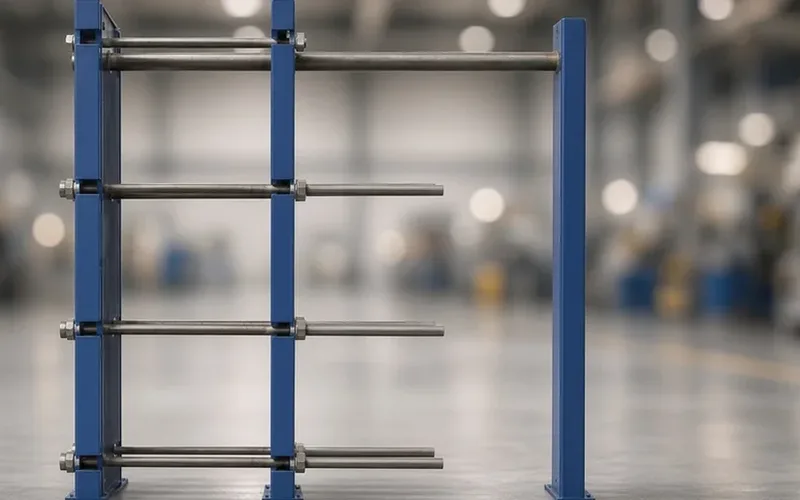
Sizing & Selection
Look Up by Manufacturer & Model
Plate heat exchanger replacement by model: find the make on your nameplate, see what to read off its frame, and request new plates, gaskets or a unit.
+ Learn More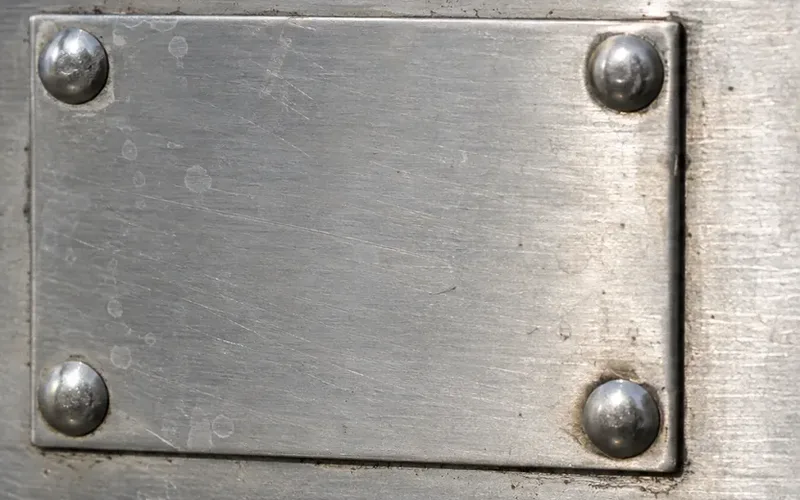
Sizing & Selection
Read the Nameplate
How to read a plate heat exchanger nameplate or a tubular unit's plate: serial, model, design pressure and temperature, year, and what to photograph.
+ Learn More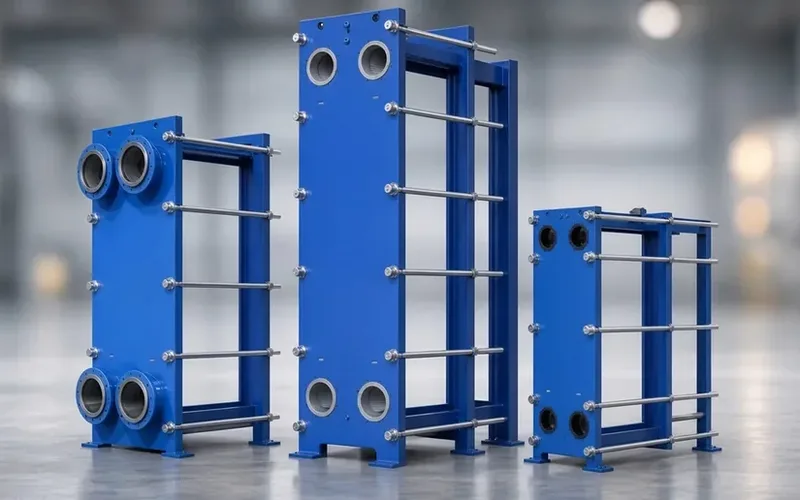
Sizing & Selection
Plates, Gap & Passes
How a replacement pack is matched: plate heat exchanger plate count, plate model, gap, chevron, passes, port size and the compression dimension.
+ Learn More