
1-805-484-2992
Quotes - Engineering - SalesAGC frames on a dairy floor
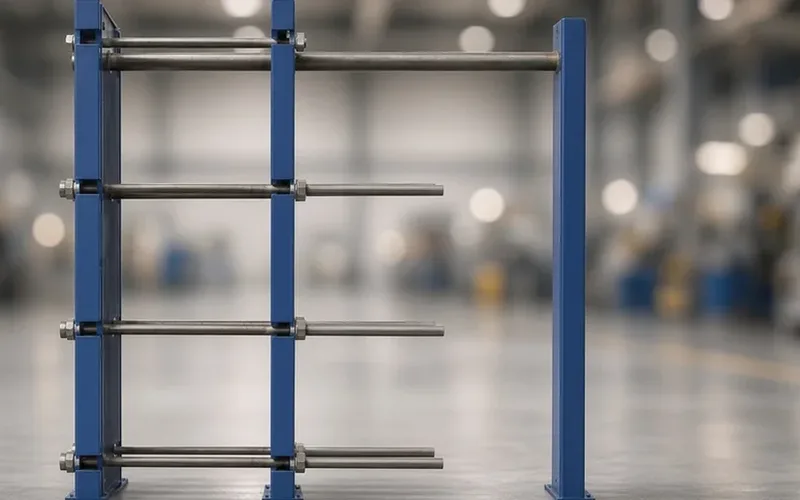
AGC Heat Transfer builds plate heat exchangers in several frame styles, and its own published list names hydraulic frames, twin spindle frames, stainless tie-bar frames, powder-coated mild steel tie-bar frames and SA frames. It also lists matched hot water sets and pilot-scale units, and states that several of its sanitary frames carry a bead-blasted finish and are built to 3-A specifications.
For plates, the maker publishes the ProFlow series, food-specific plates with a widened inlet meant to spread viscous product to the plate edges and lower pressure drop. The published plate sizes are Pro2, Pro3, Pro5, Pro5Plus, Pro8 and Pro10. With the serial number, the plate size and the frame style usually identify an AGC unit quickly.
Frame style matters to a buyer for one practical reason: it decides how the pack is opened, how far it can be lengthened, and whether the plant can add plates without changing the frame. A hydraulic frame and a tie-bar frame carrying the same plate are different jobs once you need more capacity.
What identifies an AGC unit
Most of what we need is visible from the operator side with the frame closed. The plate count needs the frame open or the record from the last pack change.
Read off the frame
- Frame style: Hydraulic, twin spindle, tie-bar or SA
- Frame finish: Stainless or powder-coated mild steel
- Plate size: ProFlow designation, if stamped or on record
- Plates per section: Between each pair of connection plates
- Bar room: Free carrying bar behind the follower
- Hot water set: Whether a matched set feeds the heater
What we supply
- New plates: Made to fit the frame and plate size
- New gaskets: Compound chosen section by section
- Equivalent new unit: Sized with room to grow when the bar is full
- 3-A scope: Built to 3-A 11-10 where the inspector expects it
- Needed to quote: Product, fat, flows, temperatures both sides, utility
Know how the frame closes before you plan more plates
Tie-bar, spindle and hydraulic frames carrying the same plate stretch differently. Measure the free carrying bar behind the follower; that, not the plate count, tells you whether new capacity fits the frame you own.
Adding capacity to an existing frame
Before ordering more plates, measure how much carrying bar is free with the pack tightened to its working dimension. Each added plate takes its own thickness plus a compressed gasket, and a regenerator pushed from 85 to 90 percent can need many extra plates, because the last points of regeneration cost the most area.
If the bar is full, the choice is a longer frame or an equivalent new unit sized for today's flow. On a small spindle or tie-bar frame, a complete new unit is often the simpler order, because the plant gets a frame with room already built in.
Viscous product on ProFlow plates
A widened inlet helps cream, mix and condensed product spread across the plate instead of channeling down the port side. The maker does not publish ProFlow channel gaps, so we measure a plate before deciding whether cream above about 30 percent fat or ice cream mix can stay on that section or needs a 6–12 mm wide-gap plate.
When we quote new plates for an AGC frame running a viscous product, we check the cooling-section pressure drop at the cold end first. If it is past what the pump can give, the answer for that duty is a wide-gap plate unit.
Call and talk it through with an engineer: 1-805-484-2992
Source note: AGC is used here as the trademark of its owner, purely to cross-reference installed frames. Frame and plate names were checked against the maker's own published product list in October 2026; specifications it does not make public are omitted.
What to read off the frame
Sometimes. Plate height and port size are visible from the end of the frame, and the nameplate may carry the model. If neither is legible, open the frame, measure a plate's overall height and width and the port diameter, and photograph the pattern. Those four readings identify the plate.
The frame does not touch product, so a powder-coated mild steel frame can serve a Grade A room while the coating stays intact and the plant keeps it clean. Plants that wash down hard or see chipped coating often move to a stainless frame when they buy an equivalent new unit.
It sets the approach. A hot-water heater section usually runs 2–5°F above pasteurizing temperature at the outlet, so changing heater plates without checking the water side can leave the set unable to hold temperature. Send the hot-water supply and return temperatures with the plate order.
Related
Sizing & Selection
Look Up by Manufacturer & Model
Plate heat exchanger replacement by model: find the make on your nameplate, see what to read off its frame, and request new plates, gaskets or a unit.
+ Learn More
Sizing & Selection
Read the Nameplate
How to read a plate heat exchanger nameplate or a tubular unit's plate: serial, model, design pressure and temperature, year, and what to photograph.
+ Learn More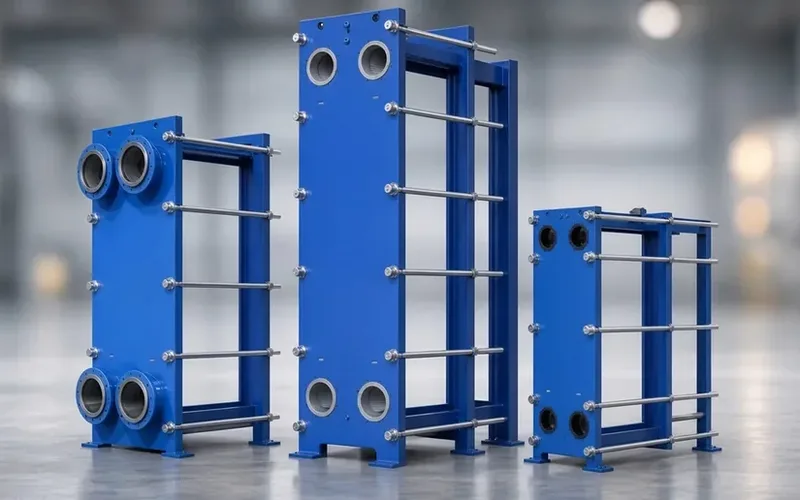
Sizing & Selection
Plates, Gap & Passes
How a replacement pack is matched: plate heat exchanger plate count, plate model, gap, chevron, passes, port size and the compression dimension.
+ Learn More