
1-805-484-2992
Quotes - Engineering - SalesWhat an HTST pasteurizer is, and which parts we supply
A continuous system built around one plate frame
A high-temperature short-time pasteurizer heats milk to 161°F, holds every particle there for at least 15 seconds, and cools it again, all in a continuous stream. The system is more than an exchanger: a constant-level balance tank, a timing pump that fixes the flow, a holding tube, a flow-diversion device that sends under-temperature milk back to the tank, a booster pump, recorders and the hot-water set that feeds the heater.
The plate frame sits at the center of it. Raw milk picks up heat from pasteurized milk in the regenerator, the heater closes the last gap on hot water, and the cooler brings pasteurized milk to storage temperature on chilled water or glycol. The same frame can carry a separator and homogenizer loop between regenerator stages.
We supply the plate frame with its sections and the hot-water set, and we size both to the flow, the temperatures and the regeneration the plant wants. The timing pump, holding tube, diversion valve and recorders stay with the plant's pasteurizer supplier and the regulator's seal program.
See the Multi-Section Frames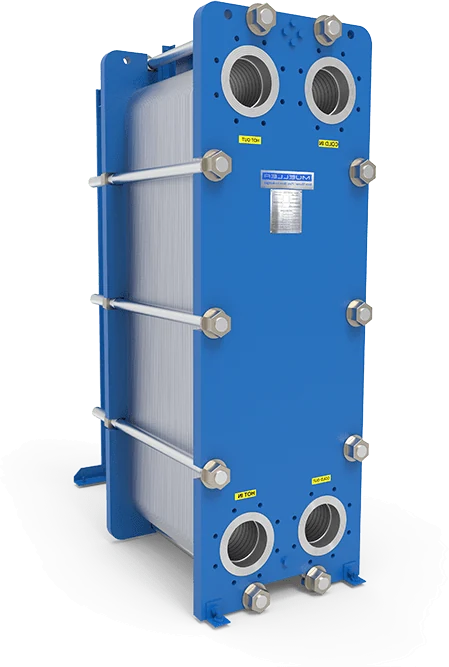
HTST pasteurizer figures we size from
The flow and the three temperatures set the frame. Regeneration decides how much of the duty the plates do for free and how much the hot-water set and the cooler carry.
| Item | Typical value |
| Pasteurizing temperature and hold | 161°F for 15 seconds; 166°F for 10% fat or sweetened |
| Raw milk at the balance tank | 36–45°F |
| Pasteurized milk to storage | 36–40°F |
| Regeneration | 85–94 percent on milk |
| Heater utility | hot-water set, 2–5°F above the outlet |
| Cooler utility | chilled water at 33–34°F or propylene glycol |
| Regenerator pressure rule | pasteurized side at least 1 psi above raw |
| Plates and gaskets | 316L, EPDM for milk, NBR above about 10% fat |
| Sanitary build | 3-A 11-10 where the inspector expects the symbol |
Sizing the pasteurizer around its parts
The heater and the hot-water set
The heater section lifts milk the last 15 to 25 degrees to 161°F, and the hot-water set supplies the water that does it. A set that runs its water only a few degrees above the milk outlet keeps the plate wall cool enough to slow protein burn-on, which is what decides how many hours the frame runs between cleanings. Plant steam reaches that water through a small shell-and-tube or plate heater inside the set, and that steam heater is sized with the frame so the two never fight each other.
Regeneration sets the frame length
At 90 percent regeneration, nine tenths of the heat in the pasteurized milk goes back into the raw milk. The heater and the cooler each carry only a tenth of the duty, so the utility bills are small, but the regenerator needs a lot of plates and a close approach to do it. Moving from 90 to 94 percent roughly doubles the regenerator plate count for a few more points of recovery. The trade is worked through on regeneration or once-through, and the frame itself on HTST and regeneration.
- Flow in gal/h or lb/h, and the hours per day the pasteurizer runs
- Raw milk inlet and storage outlet temperatures
- Regeneration the plant wants, or the utility it has
- Hot-water and chilled-water or glycol supply temperatures
- Separator and homogenizer positions, if they sit in the loop
The 1 psi rule and where the pumps go
The regulator requires pasteurized milk in the regenerator to run at least 1 psi above the raw milk at every point, so a plate failure leaks the safe way. That sets where the booster pump sits, how the timing pump is placed and how the pressure switches are wired. A double-wall regenerator puts a vented gap between the two streams and is specified where the plant wants a visible leak instead of a pressure argument.
Replacing the frame inside an existing pasteurizer
Many requests are for a new plate frame inside a pasteurizer that keeps its tank, pumps, holding tube and controls. We match the new frame to the timing pump flow and the holding tube so the hold stays legal, and we size the new regenerator to the plant's current recorder setpoints rather than to the old nameplate alone. A nameplate photo and the recorder chart are enough to start.
HTST pasteurizer questions
The heat exchanger and the hot-water set. The balance tank, timing pump, holding tube, flow-diversion device and recorders are regulated controls that come from the pasteurizer builder and are sealed by the regulator after testing. Our frame and hot-water set are sized to fit that system, and we supply the drawings and material records the plant sends in with its piping review.
It can, with care. Cream pasteurizes at 166°F, has more fat for the gaskets and runs thicker in the channels, so a frame sized for milk will cover cream only at a lower flow and with NBR gaskets. Many plants run cream on its own smaller frame instead. Tell us both products and the hours each runs, and we size for the harder duty.
Six to eight hours is common on fluid milk; longer runs ask for a lower hot-water approach and more heater area. Protein deposit in the heater and the hot end of the regenerator sets the limit, not the cooler. Tell us the run lenght the schedule needs and we choose plate velocity and hot-water temperature to hold it.
Steam at the plant's regulated pressure, usually 15 to 50 psig at the set, and a condensate return. The set holds its water loop a few degrees above the heater outlet with a modulating steam valve, so the milk never sees steam temperature on a plate wall. The small steam-to-water heater inside the set carries the ASME stamp.
Related
Dairy Solutions
Raw Milk Cooling
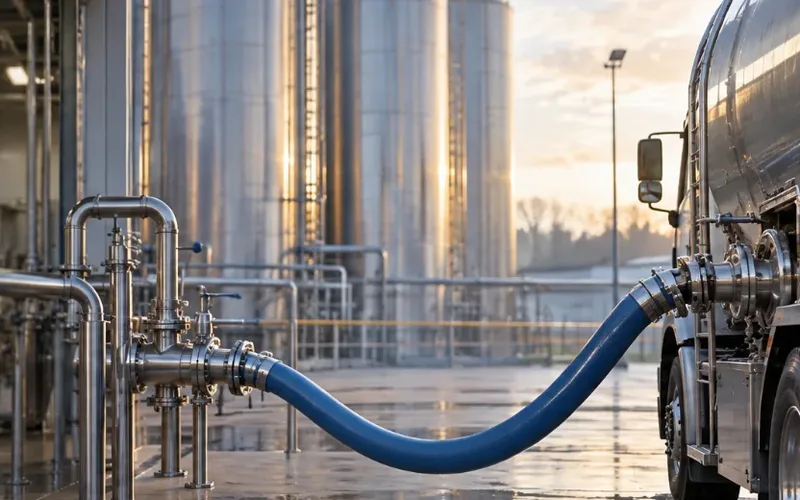
A raw milk cooler on the plant receiving line takes tanker milk to 36–40°F before the silo. Plate sizing, chilled water or glycol, and 3-A build.
+ Learn More
Dairy Solutions
HTST & Regeneration
An HTST plate heat exchanger puts regenerator, heater and cooler in one frame. How regeneration percent, the 1 psi rule and the section layout are sized.
+ Learn More
Dairy Solutions
White Milk
White milk processing runs skim, 1%, 2% and whole milk through one HTST frame. Where standardization and the homogenizer sit, and how the pack is sized.
+ Learn More